
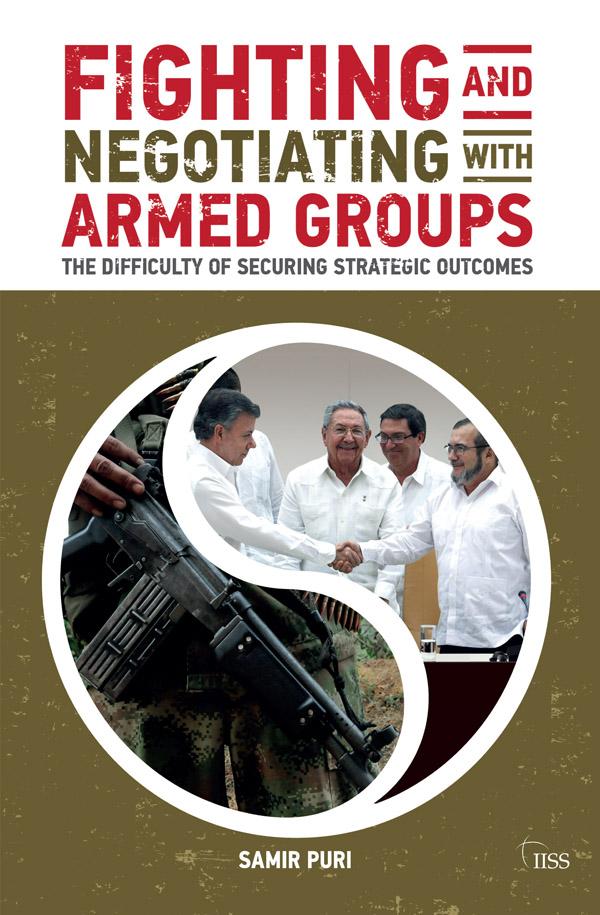
What constitutes an effective and realistic strategy for dealing with non-state armed groups? This question has bedevilled states the world over. From Colombia and FARC, Turkey and the PKK, the Taliban in Afghanistan and Pakistan, and the persistent insurgency in Iraq – the governments concerned struggle to either fight or negotiate their way to an end.
Fighting armed groups is an uncertain business, and so is negotiating. Doing both alternately, concurrently or selectively, is highly demanding. This book develops a framework to help analysts and policymakers understand the challenges of using a combination of coercion and diplomacy in dealing with armed groups. It considers which complexities have proved most inhibiting, and which have been worked around. What are the obvious traps that states fall into? What appear to be the smarter moves?
Thinking in terms or ‘military’ or ‘political’ solutions is unhelpful – to be genuinely strategic, a response must concern itself with managing the mix. Ten examples from around the world are worked through to examine this theme. The net is cast wide purposefully, so that the lessons for strategy can be made explicit, rather than lost amid a bloody contemporary history of wars involving armed groups.
Betal nemt med kort, Klarna, Apple Pay eller Google Pay. Ikke tilfreds? Du har altid 14 dages fortrydelsesret. Læs mere i vores vilkår. Har du spørgsmål, så send os en mail på hello@memmo.org.
Memmo gør det nemmere at studere – uanset hvor du er i verden. Hos os samler du dine kursusbøger og smarte studieværktøjer ét sted: resuméer, quizzer, podcasts og flashcards. Og så er der Ted, din studieven, der svarer på alt, du undrer dig over. Over 50 000 studerende studerer allerede her – bygget til at hjælpe dig med at lære hurtigere og stresse mindre.