
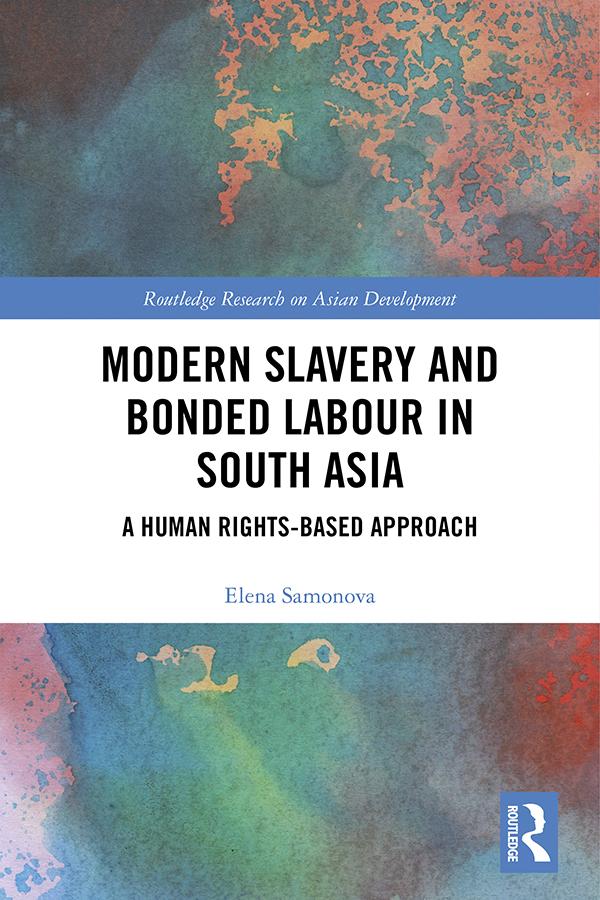
This book investigates one of the most pervasive forms of modern slavery: bonded labour, whereby labour is linked with a credit agreement, leaving a debtor bound to repay their debt through long-term servitude. Drawing on cases from Nepal and India, the author adopts a human rights-based approach, interpreting slavery as a violation of human rights, and focusing on the empowerment of slaves as rights holders. Ultimately the book aims to explore the links between rights, power inequality and oppression, and to uncover ways to achieve the full liberation of bonded labourers.
Identifying the factors and forces that contribute to and reinforce the situation of bonded labour in South Asia, the book demonstrates how systems of bonded labour are connected to long-term processes of colonisation, dispossession, migration, nationalisation of natural resources, and the introduction of private land ownership. Despite the fact that the United Nations has reported debt bondage as the most prevalent form of forced labour worldwide, there it is still little known about the real practical impacts of this approach to the lives of marginalised people.
Based on extensive ethnographic research, this book will be a useful guide to students and scholars of modern slavery, international development, and South Asian studies.
Betal nemt med kort, Klarna, Apple Pay eller Google Pay. Ikke tilfreds? Du har altid 14 dages fortrydelsesret. Læs mere i vores vilkår. Har du spørgsmål, så send os en mail på hello@memmo.org.
Memmo gør det nemmere at studere – uanset hvor du er i verden. Hos os samler du dine kursusbøger og smarte studieværktøjer ét sted: resuméer, quizzer, podcasts og flashcards. Og så er der Ted, din studieven, der svarer på alt, du undrer dig over. Over 50 000 studerende studerer allerede her – bygget til at hjælpe dig med at lære hurtigere og stresse mindre.