
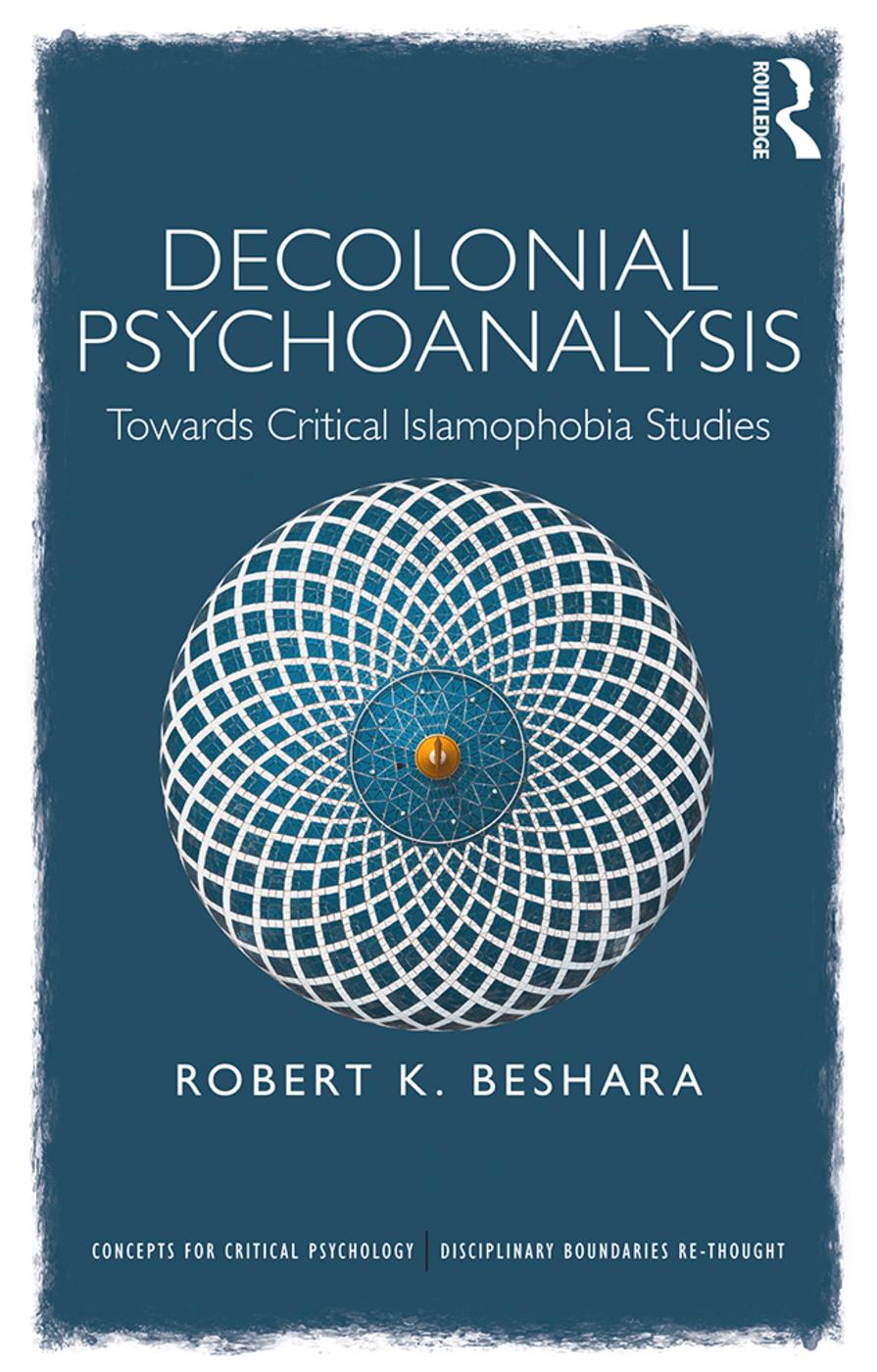
In this provocative and necessary book, Robert K. Beshara uses psychoanalytic discursive analysis to explore the possibility of a genuinely anti-colonial critical psychology. Drawing on postcolonial and decolonial approaches to Islamophobia, this book enhances understandings of Critical Border Thinking and Lacanian Discourse Analysis, alongside other theoretico-methodological approaches.
Using a critical decolonial psychology approach to conceptualize everyday Islamophobia, the author examines theoretical resources situated within the discursive turn, such as decoloniality/transmodernity, and carries out an archeology of (counter)terrorism, a genealogy of the conceptual Muslim, and a Žižekian ideology critique. Conceiving of Decolonial Psychoanalysis as one theoretical resource for Critical Islamophobia Studies (CIS), the author also applies Lacanian Discourse Analysis to extracts from interviews conducted with US Muslims to theorize their ethico-political subjectivity and considers a politics of resistance, adversarial aesthetics, and ethics of liberation.
Essential to any attempt to come to terms with the legacy of racism in psychology, and the only critical psychological study on Islamophobia in the United States, this is a fascinating read for anyone interested in a critical approach to Islamophobia.
Betal nemt med kort, Klarna, Apple Pay eller Google Pay. Ikke tilfreds? Du har altid 14 dages fortrydelsesret. Læs mere i vores vilkår. Har du spørgsmål, så send os en mail på hello@memmo.org.
Memmo gør det nemmere at studere – uanset hvor du er i verden. Hos os samler du dine kursusbøger og smarte studieværktøjer ét sted: resuméer, quizzer, podcasts og flashcards. Og så er der Ted, din studieven, der svarer på alt, du undrer dig over. Over 50 000 studerende studerer allerede her – bygget til at hjælpe dig med at lære hurtigere og stresse mindre.