
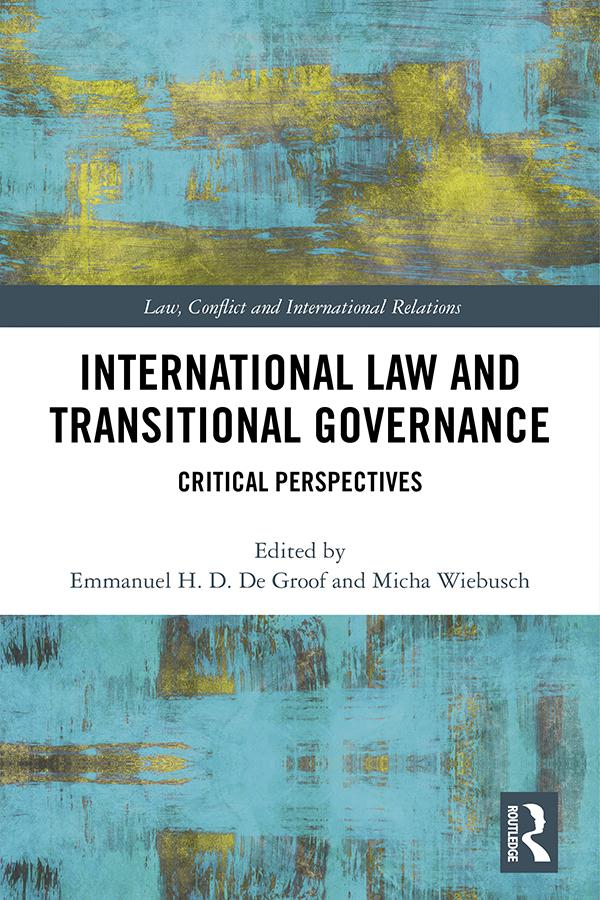
This volume examines the role of international law in shaping and regulating transitional contexts, including the institutions, policies, and procedures that have been developed to steer constitutional regime changes in countries affected by catalytic events.
The book offers a new perspective on the phenomenon of conflict-related transitions, whereby societies are re-constitutionalized through a set of interim governance arrangements subject to variable degrees of internationalization. Specifically, this volume interrogates the relevance, contribution, and perils of international law for this increasingly widespread phenomenon of inserting an auxiliary phase between two ages of constitutional government. It develops a nuanced understanding of the various international legal discourses surrounding conflict- and political crisis-related transitional governance by studying the contextual factors that influence the transitional arrangements themselves, with a specific focus on international aspects, including norms, actors, and related forms of expertise. In doing so, the book builds a bridge between comparative constitutional law and international legal scholarship in the practical and highly dynamic terrain of transitional governance.
This book will be of much interest to practitioners and students of international law, diplomacy, mediation, security studies, and international relations.
Betal nemt med kort, Klarna, Apple Pay eller Google Pay. Ikke tilfreds? Du har altid 14 dages fortrydelsesret. Læs mere i vores vilkår. Har du spørgsmål, så send os en mail på hello@memmo.org.
Memmo gør det nemmere at studere – uanset hvor du er i verden. Hos os samler du dine kursusbøger og smarte studieværktøjer ét sted: resuméer, quizzer, podcasts og flashcards. Og så er der Ted, din studieven, der svarer på alt, du undrer dig over. Over 50 000 studerende studerer allerede her – bygget til at hjælpe dig med at lære hurtigere og stresse mindre.