
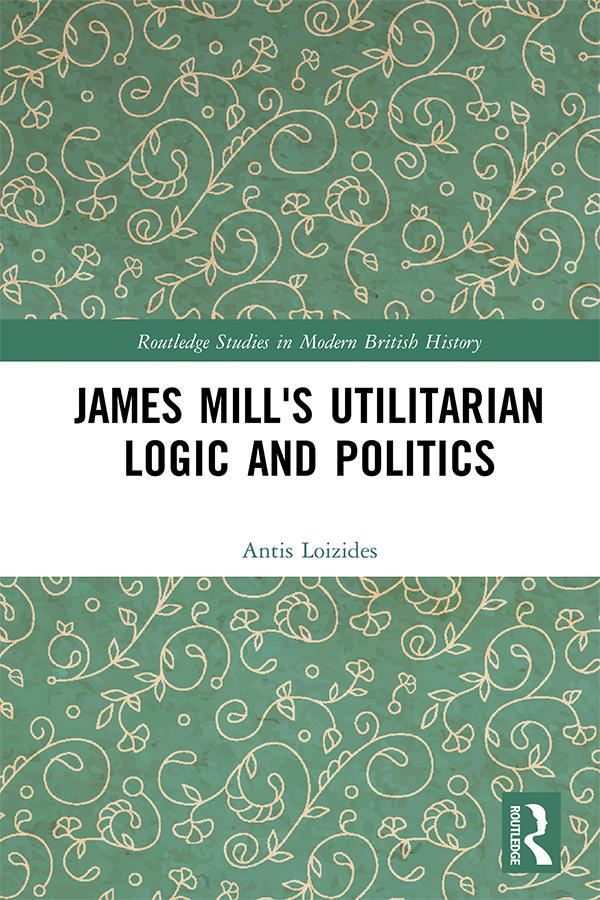
James Mill’s (1773–1836) role in the development of utilitarian thought in the nineteenth century has been overshadowed both by John Stuart Mill (1806–1873) and by Jeremy Bentham (1748–1832). Of the three, the elder Mill is considered to be the least original and with the least important, if any, contributions to utilitarian theory. True as this statement may be, even those who have tried to challenge some of its aspects take the common portrayal of Mill – "the rationalist, the maker of syllogisms, the geometrician" – as given. This book does not. Studying James Mill’s background has surprising results with reference to influences outside the Benthamite tradition as well as unexpected implications for his contributions to debates of his time. The book focuses on his political ideas, the ways in which he communicated them and the ways in which he formed them in an attempt to reveal a portrait of Mill unencumbered from the legacy of Thomas Babington Macaulay’s (1800–1859) brilliant essay "Utilitarian Logic and Politics".
Betal nemt med kort, Klarna, Apple Pay eller Google Pay. Ikke tilfreds? Du har altid 14 dages fortrydelsesret. Læs mere i vores vilkår. Har du spørgsmål, så send os en mail på hello@memmo.org.
Memmo gør det nemmere at studere – uanset hvor du er i verden. Hos os samler du dine kursusbøger og smarte studieværktøjer ét sted: resuméer, quizzer, podcasts og flashcards. Og så er der Ted, din studieven, der svarer på alt, du undrer dig over. Over 50 000 studerende studerer allerede her – bygget til at hjælpe dig med at lære hurtigere og stresse mindre.