
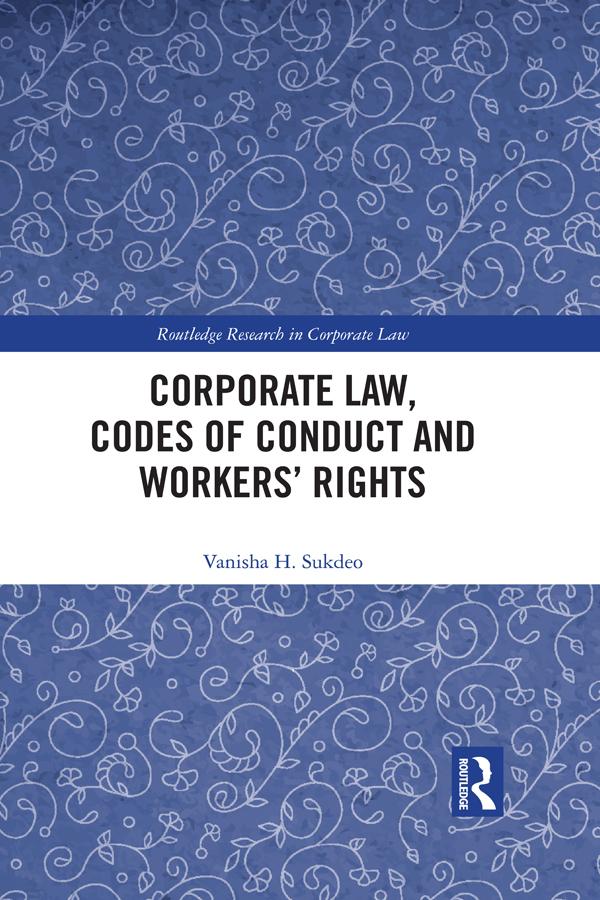
This book critically explores how increased regulation and governance of corporations can be used to help improve the rights of workers amidst an era of union decline.
The book posits that soft law techniques such as codes of conduct are more effective in protecting workers than "hard law" i.e. domestic regulation. It starts by analysing the transnational regulation of corporations and codes of conduct, and then puts forward a model code of conduct that can be used by corporations to help increase the protection of workers. Through this model's use of a monitoring scheme, shareholders, activists, and NGOs put pressure on the corporation to reform itself and enact a code which has obligations flowing both ways between the corporation and its employees. The book then looks at the expansions of fiduciary duties and changes to corporate governance, including Benefit Corporations and how they can be used to increase the rights of workers. It then discusses changes to standard union contracts before concluding with an assessment of the best way forward for workers’ rights.
By providing a new contribution to the current dialogue on corporate social responsibility and codes of conduct, this book will be a valuable resource for academics working on labour, employment, and business law as well as corporate lawyers.
Betal nemt med kort, Klarna, Apple Pay eller Google Pay. Ikke tilfreds? Du har altid 14 dages fortrydelsesret. Læs mere i vores vilkår. Har du spørgsmål, så send os en mail på hello@memmo.org.
Memmo gør det nemmere at studere – uanset hvor du er i verden. Hos os samler du dine kursusbøger og smarte studieværktøjer ét sted: resuméer, quizzer, podcasts og flashcards. Og så er der Ted, din studieven, der svarer på alt, du undrer dig over. Over 50 000 studerende studerer allerede her – bygget til at hjælpe dig med at lære hurtigere og stresse mindre.