
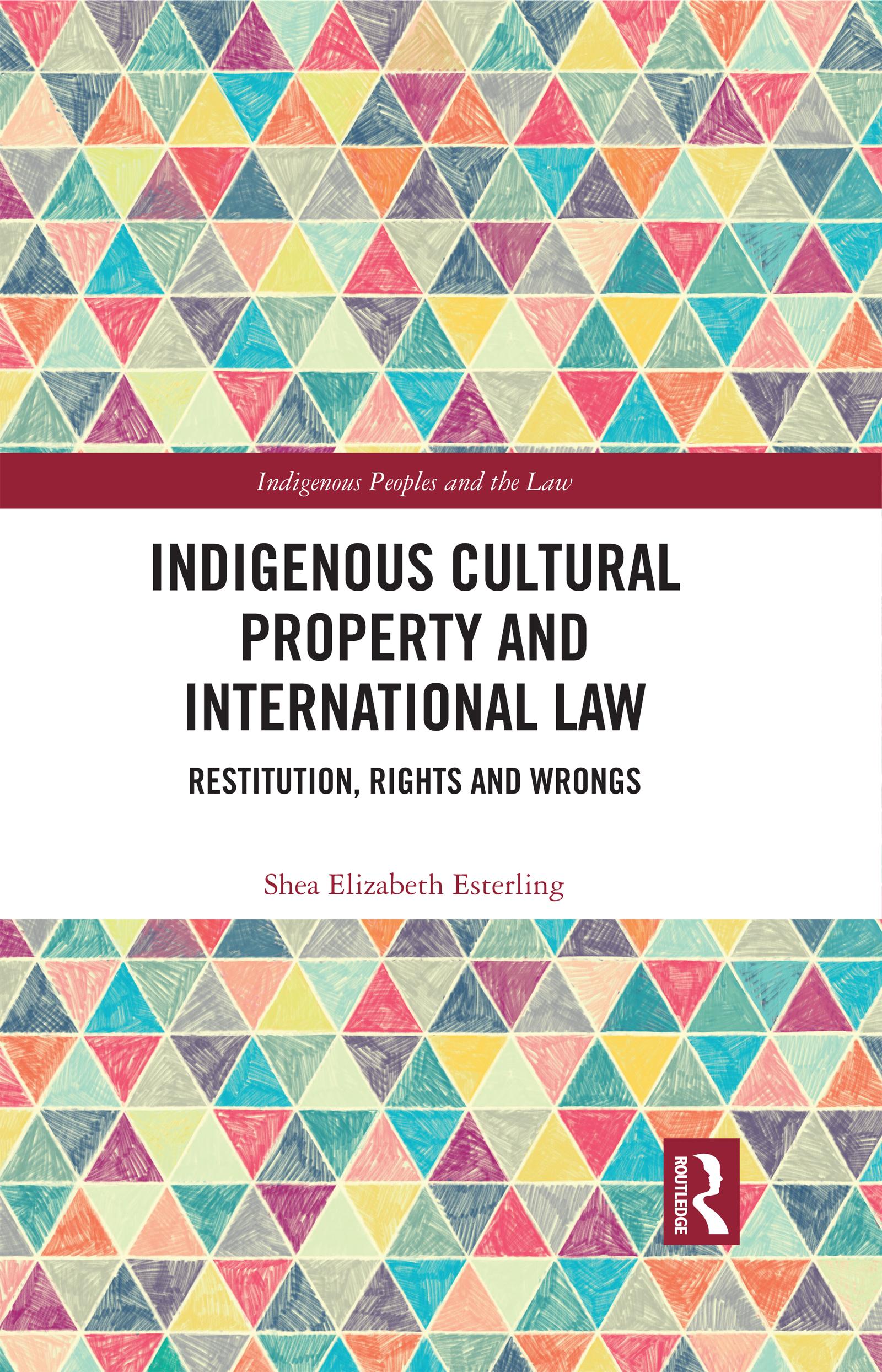
Examining the restitution of cultural property to Indigenous Peoples in human rights law, this book offers a detailed analysis of the opportunities and constraints of international law as a tool of resistance and social transformation for marginalized groups.
In accordance with an increasing insistence on respect for diverse cultures, and through their own international mobilization, Indigenous Peoples have participated in the construction of a distinct human rights framework. Significant academic inquiry has focused on the substantive gains made by Indigenous Peoples in this context, along with its impact on a body of law that had previously denied Indigenous Peoples a basis for claims to their own cultural materials and practices. Accordingly, this book acknowledges that Indigenous Peoples, as non-state actors, have generated greater substantive and procedural legitimacy in human rights law making. Offering normative insights into the participation of non-state actors in international law making, however, it also demonstrates that, despite their significant role in constructing the legal framework of human rights in the 21st century, the participation of Indigenous Peoples continues to be structurally limited.
With its interdisciplinary approach to the field, this book will appeal to scholars and students in the fields of law, politics, anthropology and indigenous studies.
Betal nemt med kort, Klarna, Apple Pay eller Google Pay. Ikke tilfreds? Du har altid 14 dages fortrydelsesret. Læs mere i vores vilkår. Har du spørgsmål, så send os en mail på hello@memmo.org.
Memmo gør det nemmere at studere – uanset hvor du er i verden. Hos os samler du dine kursusbøger og smarte studieværktøjer ét sted: resuméer, quizzer, podcasts og flashcards. Og så er der Ted, din studieven, der svarer på alt, du undrer dig over. Over 50 000 studerende studerer allerede her – bygget til at hjælpe dig med at lære hurtigere og stresse mindre.