
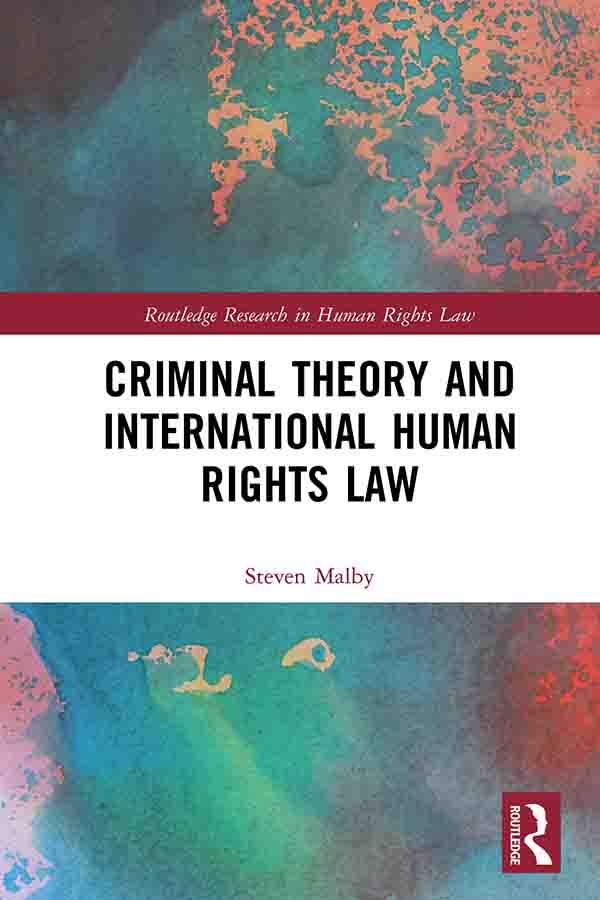
The development of an international human rights jurisprudence on criminalization is in its relative infancy. Nonetheless, systematic examination of international decisions on acts engaging the criminal law reveals an emerging human rights approach to the acceptability, or not, of criminalization. This book provides an in-depth characterization of the reasoning and principles that underpin those decisions.
The work builds upon and adds value to existing literature by bringing together two fields of study – international human rights law and criminal theory – that usually receive separate treatment. It provides an in-depth analysis of human rights criminalization jurisprudence and presents a systematic identification of underlying reasoning and concepts that influence international human rights decisions on criminalization. The work thus advances both fields independently, as well as providing an example of inter-(sub)disciplinary analysis.
The book will be a valuable resource for academics and students working in the areas of International Human Rights Law, Criminal Law, and Moral Philosophy.
Betal nemt med kort, Klarna, Apple Pay eller Google Pay. Ikke tilfreds? Du har altid 14 dages fortrydelsesret. Læs mere i vores vilkår. Har du spørgsmål, så send os en mail på hello@memmo.org.
Memmo gør det nemmere at studere – uanset hvor du er i verden. Hos os samler du dine kursusbøger og smarte studieværktøjer ét sted: resuméer, quizzer, podcasts og flashcards. Og så er der Ted, din studieven, der svarer på alt, du undrer dig over. Over 50 000 studerende studerer allerede her – bygget til at hjælpe dig med at lære hurtigere og stresse mindre.