
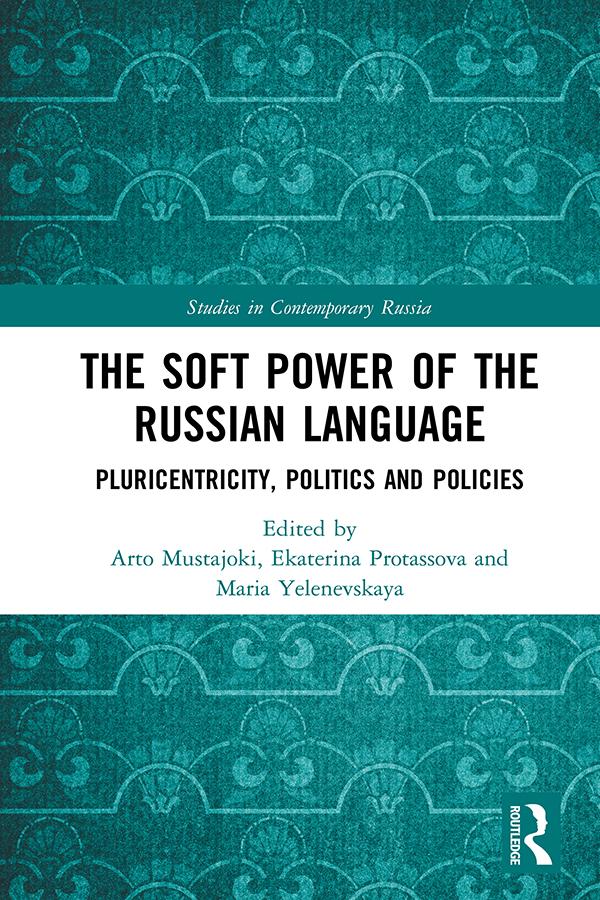
Exploring Russian as a pluricentric language, this book provides a panoramic view of its use within and outside the nation and discusses the connections between language, politics, ideologies, and cultural contacts.
Russian is widely used across the former Soviet republics and in the diaspora, but speakers outside Russia deviate from the metropolis in their use of the language and their attitudes towards it. Using country case studies from across the former Soviet Union and beyond, the contributors analyze the unifying role of the Russian language for developing transnational connections and show its value in the knowledge economy. They demonstrate that centrifugal developments of Russian and its pluricentricity are grounded in the language and education policies of their host countries, as well as the goals and functions of cultural institutions, such as schools, media, travel agencies, and others created by émigrés for their co-ethnics. This book also reveals the tensions between Russia’s attempts to homogenize the 'Russian world' and the divergence of regional versions of Russian reflecting cultural hybridity of the diaspora.
Interdisciplinary in its approach, this book will prove useful to researchers of Russian and post-Soviet politics, Russian studies, Russian language and culture, linguistics, and immigration studies. Those studying multilingualism and heritage language teaching may also find it interesting.
Betal nemt med kort, Klarna, Apple Pay eller Google Pay. Ikke tilfreds? Du har altid 14 dages fortrydelsesret. Læs mere i vores vilkår. Har du spørgsmål, så send os en mail på hello@memmo.org.
Memmo gør det nemmere at studere – uanset hvor du er i verden. Hos os samler du dine kursusbøger og smarte studieværktøjer ét sted: resuméer, quizzer, podcasts og flashcards. Og så er der Ted, din studieven, der svarer på alt, du undrer dig over. Over 50 000 studerende studerer allerede her – bygget til at hjælpe dig med at lære hurtigere og stresse mindre.