
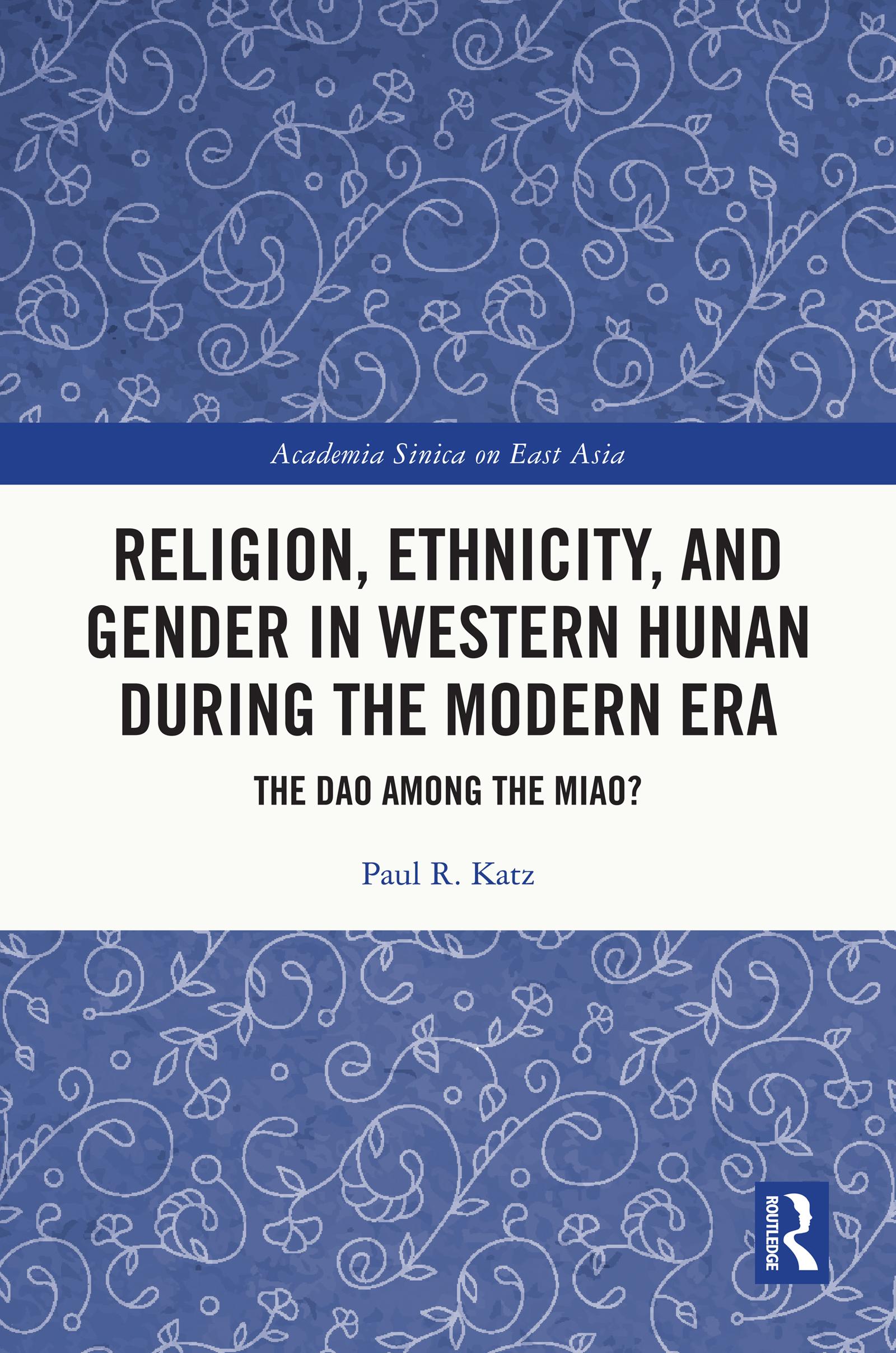
This book explores how beliefs and practices have shaped the interactions between different ethnic groups in Western Hunan, as well as considering how religious life has adapted to the challenges of modern Chinese history.
Combining historical and ethnographic methodologies, chapters in this book are structured around changes that occurred during the interaction between Miao ritual traditions and religions such as Daoism, with particular focus on the commonalities and differences seen between Western Hunan and other areas of Southwest China. In addition, investigation is made into how gender and ethnicity have shaped such processes, and what these phenomena can teach about larger questions of modern Chinese history. As such, this study transcends existing scholarship on Western Hunan – which has stressed the impact of state policies and elite agendas – by focusing instead on the roles played by ritual specialists. Such findings call into question conventional wisdom about the ‘standardization’ of Chinese culture, as well as the integration of local society into the state by means of written texts.
Religion, Ethnicity, and Gender in Western Hunan during the Modern Era will prove valuable to students and scholars of history, ethnography, anthropology, ethnic studies, and Asian studies more broadly.
Betal nemt med kort, Klarna, Apple Pay eller Google Pay. Ikke tilfreds? Du har altid 14 dages fortrydelsesret. Læs mere i vores vilkår. Har du spørgsmål, så send os en mail på hello@memmo.org.
Memmo gør det nemmere at studere – uanset hvor du er i verden. Hos os samler du dine kursusbøger og smarte studieværktøjer ét sted: resuméer, quizzer, podcasts og flashcards. Og så er der Ted, din studieven, der svarer på alt, du undrer dig over. Over 50 000 studerende studerer allerede her – bygget til at hjælpe dig med at lære hurtigere og stresse mindre.