
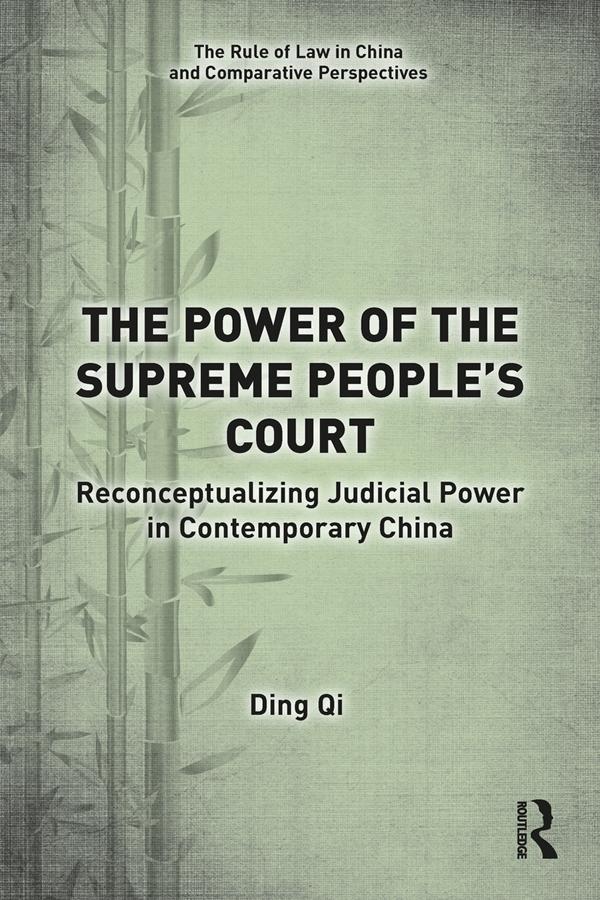
This book explores the recent development of the Supreme People’s Court of China, the world’s largest highest court. Recognizing that its approach to exercising power in an authoritarian context has presented a challenge to the understanding of judicial power in both democratic and non-democratic legal settings, it captures the essence of the Court through its institutional design as well as functional practice. It argues that regardless of the deep-seated political and institutional constraints, the Court has demonstrated a highly pragmatic interest in fulfilling its primary functions and prudently expanding judicial power in the context of reform-era China. This notwithstanding, it also discusses how the Court’s incompetence and reluctance to challenge the bureaucratism and politicization suggests that the call for an impartial and authoritative judicial power will continue to be jeopardized while the Court operates in the shadow of Party authority and lacks meaningful checks and balances. Drawing on the experience of the Court, this book reflects on some deep-rooted misunderstandings of legal development in China, providing a source of inspiration for reconceptualizing the internal logic of a distinct category of judicial power.
Betal nemt med kort, Klarna, Apple Pay eller Google Pay. Ikke tilfreds? Du har altid 14 dages fortrydelsesret. Læs mere i vores vilkår. Har du spørgsmål, så send os en mail på hello@memmo.org.
Memmo gør det nemmere at studere – uanset hvor du er i verden. Hos os samler du dine kursusbøger og smarte studieværktøjer ét sted: resuméer, quizzer, podcasts og flashcards. Og så er der Ted, din studieven, der svarer på alt, du undrer dig over. Over 50 000 studerende studerer allerede her – bygget til at hjælpe dig med at lære hurtigere og stresse mindre.