
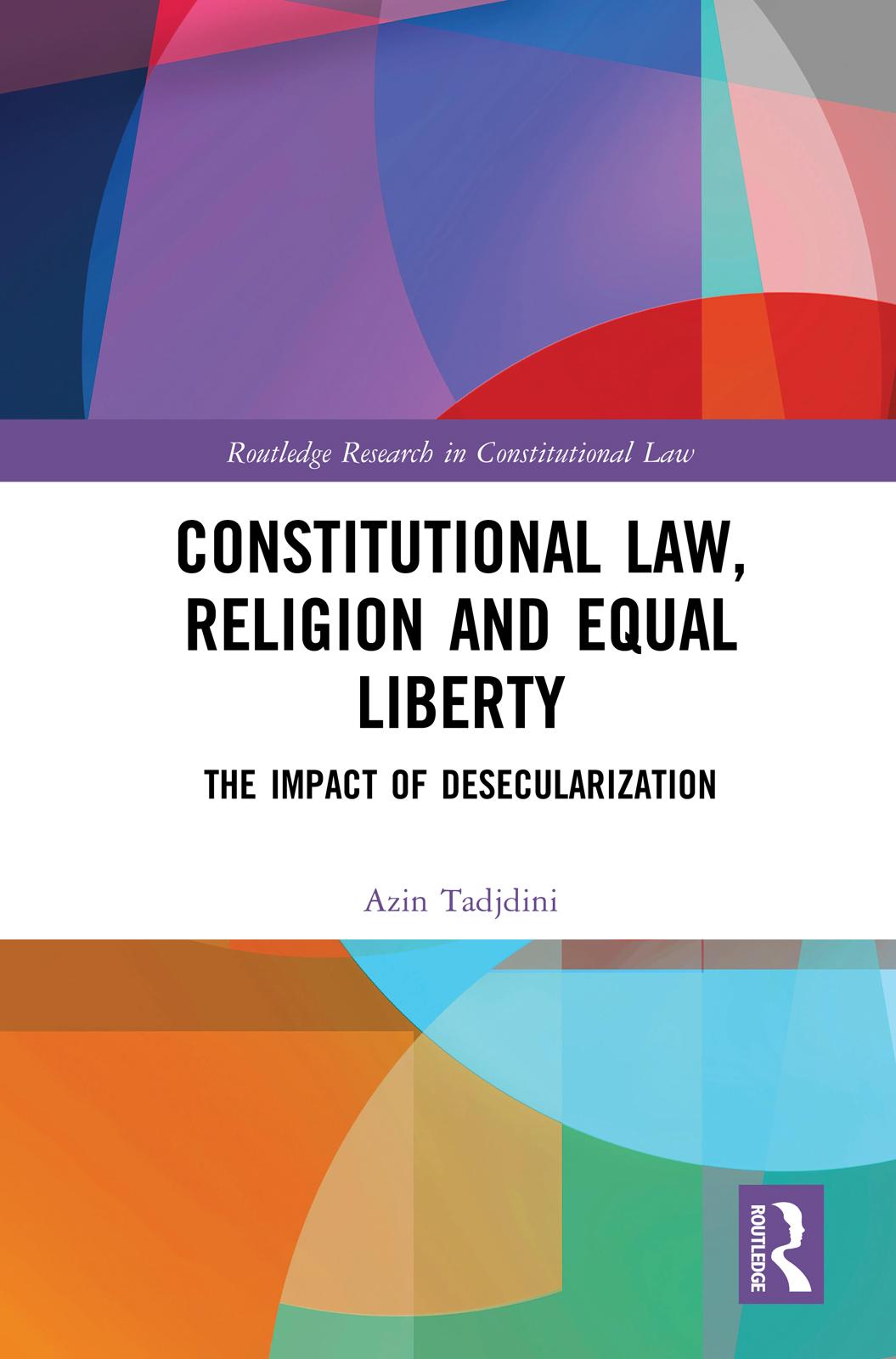
During the 20th century many countries embarked on a process of constitutional secularization by which the role of religion gradually became limited. Yet, by the late 20th century, and increasingly following the end of the Cold War, this development began to be challenged. This book examines the return of religion in constitutions through the concept of constitutional de-secularization. It places this phenomenon in the context of the constitutional memory of the countries in which it has taken place and critically examines it against the development and standards of constitutionalism, as the prevailing constitutional legal and political theory. Central to this analysis is the impact of constitutional de-secularization on the regulation of equality in liberty, that is, both the regulation of constitutional rights and the scope for equality of those who are granted such rights. The book argues that equal liberty forms an essential part of constitutionalism as a theory, and that constitutionalism therefore entails a continuous development towards expanding it. The first and second part of the book presents a conceptual framework for the study of constitutional de-secularization. The third part presents and analyses three cases of constitutional de-secularization in Afghanistan, Iran and Iraq. The book will be of interest to researchers and policy-makers interested in constitutional history and theory, and the role of religion in law and its compatibility with human rights.
Betal nemt med kort, Klarna, Apple Pay eller Google Pay. Ikke tilfreds? Du har altid 14 dages fortrydelsesret. Læs mere i vores vilkår. Har du spørgsmål, så send os en mail på hello@memmo.org.
Memmo gør det nemmere at studere – uanset hvor du er i verden. Hos os samler du dine kursusbøger og smarte studieværktøjer ét sted: resuméer, quizzer, podcasts og flashcards. Og så er der Ted, din studieven, der svarer på alt, du undrer dig over. Over 50 000 studerende studerer allerede her – bygget til at hjælpe dig med at lære hurtigere og stresse mindre.