
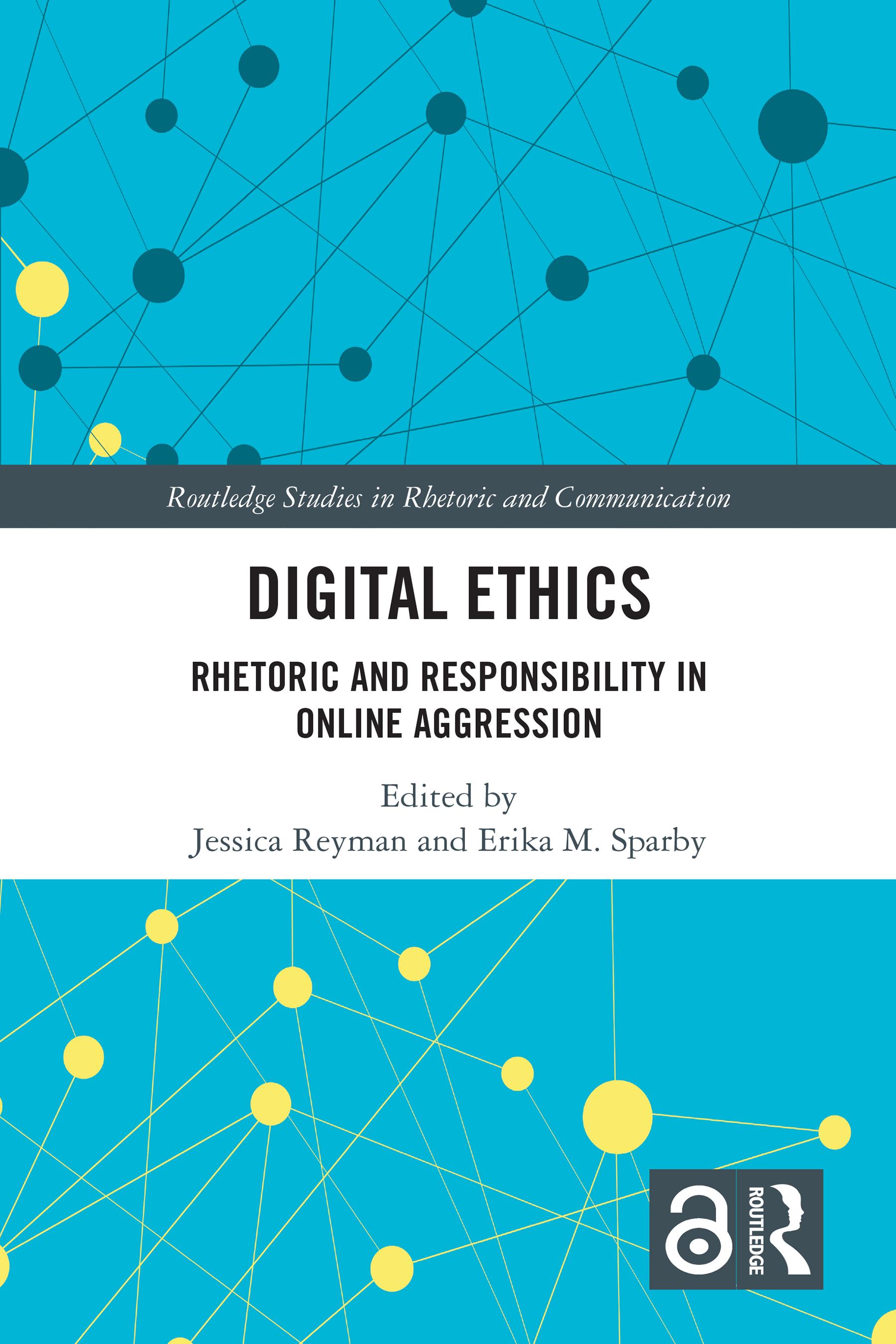
Digital Ethics delves into the shifting legal and ethical landscape in digital spaces and explores productive approaches for theorizing, understanding, and navigating through difficult ethical issues online.
Contributions from leading scholars address how changing technologies and media over the last decade have both created new ethical quandaries and reinforced old ones in rhetoric and writing studies. Through discussions of rhetorical theory, case studies and examples, research methods and methodologies, and pedagogical approaches and practical applications, this collection will further digital rhetoric scholars’ inquiry into digital ethics and writing instructors’ approaches to teaching ethics in the current technological moment.
A key contribution to the literature on ethical practices in digital spaces, this book will be of interest to researchers and teachers in the fields of digital rhetoric, composition, and writing studies.
Chapter 9 of this book is freely available as a downloadable Open Access PDF at http://www.taylorfrancis.com under a Creative Commons Attribution-Non Commercial-No Derivatives (CC-BY-NC-ND) 4.0 license.
Betal nemt med kort, Klarna, Apple Pay eller Google Pay. Ikke tilfreds? Du har altid 14 dages fortrydelsesret. Læs mere i vores vilkår. Har du spørgsmål, så send os en mail på hello@memmo.org.
Memmo gør det nemmere at studere – uanset hvor du er i verden. Hos os samler du dine kursusbøger og smarte studieværktøjer ét sted: resuméer, quizzer, podcasts og flashcards. Og så er der Ted, din studieven, der svarer på alt, du undrer dig over. Over 50 000 studerende studerer allerede her – bygget til at hjælpe dig med at lære hurtigere og stresse mindre.