
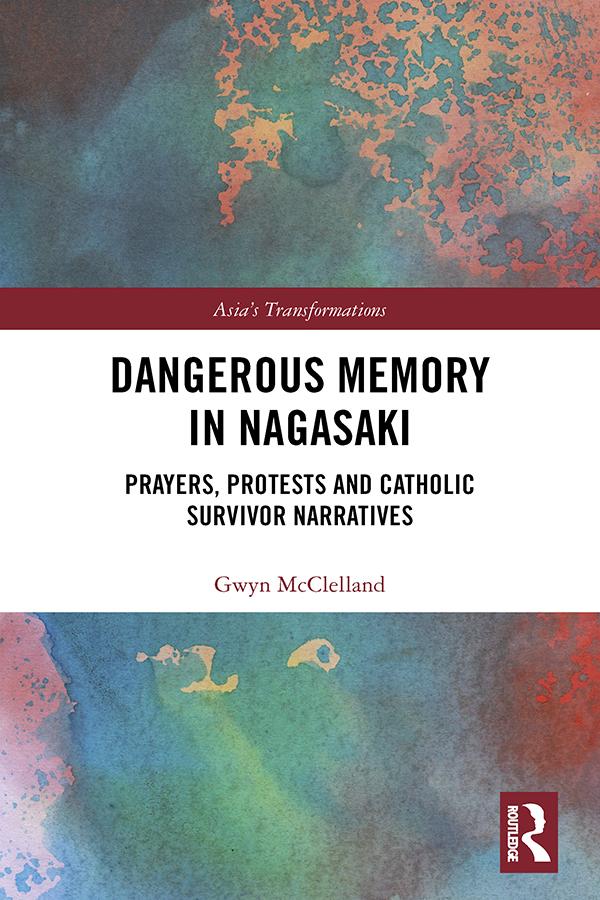
On 9th August 1945, the US dropped the second atomic bomb on Nagasaki. Of the dead, approximately 8500 were Catholic Christians, representing over sixty percent of the community. In this collective biography, nine Catholic survivors share personal and compelling stories about the aftermath of the bomb and their lives since that day.
Examining the Catholic community’s interpretation of the A-bomb, this book not only uses memory to provide a greater understanding of the destruction of the bombing, but also links it to the past experiences of religious persecution, drawing comparisons with the ‘Secret Christian’ groups which survived in the Japanese countryside after the banning of Christianity. Through in-depth interviews, it emerges that the memory of the atomic bomb is viewed through the lens of a community which had experienced suffering and marginalisation for more than 400 years. Furthermore, it argues that their dangerous memory confronts Euro-American-centric narratives of the atomic bombings, whilst also challenging assumptions around a providential bomb.
Dangerous Memory in Nagasaki presents the voices of Catholics, many of whom have not spoken of their losses within the framework of their faith before. As such, it will be invaluable to students and scholars of Japanese history, religion and war history.
Betal nemt med kort, Klarna, Apple Pay eller Google Pay. Ikke tilfreds? Du har altid 14 dages fortrydelsesret. Læs mere i vores vilkår. Har du spørgsmål, så send os en mail på hello@memmo.org.
Memmo gør det nemmere at studere – uanset hvor du er i verden. Hos os samler du dine kursusbøger og smarte studieværktøjer ét sted: resuméer, quizzer, podcasts og flashcards. Og så er der Ted, din studieven, der svarer på alt, du undrer dig over. Over 50 000 studerende studerer allerede her – bygget til at hjælpe dig med at lære hurtigere og stresse mindre.