
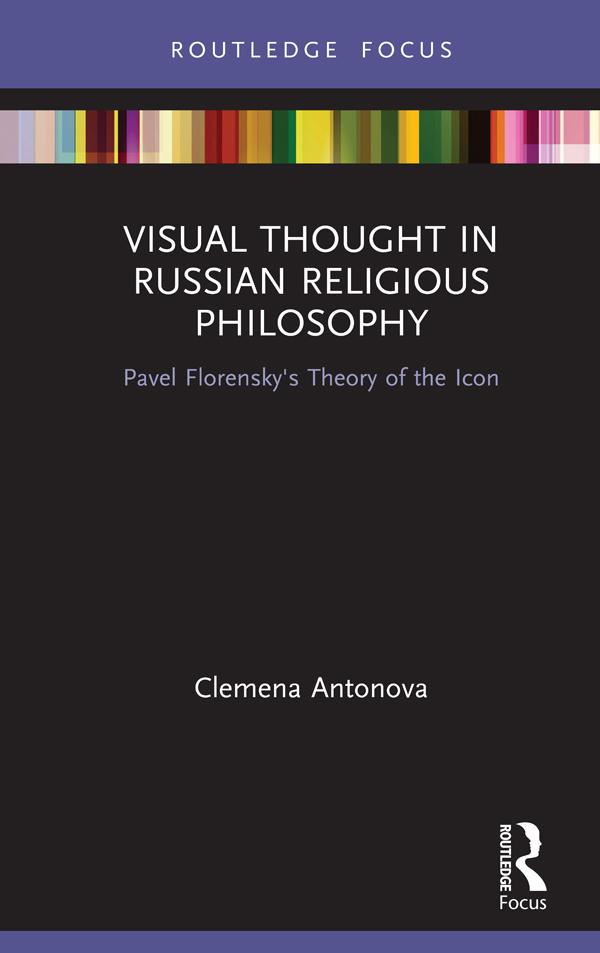
This book considers a movement within Russian religious philosophy known as "full unity" (vseedinstvo), with a focus on one of its main representatives, Pavel Florensky (1882–1937). Often referred to as "the Russian Leonardo," Florensky was an important figure of the Russian religious renaissance around the beginning of the twentieth century. This book shows that his philosophy, conceptualized in his theory of the icon, brings together the problem of the "religious turn" and the "pictorial turn" in modern culture, as well as contributing to contemporary debates on religion and secularism.
Organized around the themes of full unity and visuality, the book examines Florensky’s definition of the icon as "energetic symbol," drawing on St. Gregory Palamas, before offering a theological reading of Florensky’s theory of the pictorial space of the icon. It then turns to Florensky’s idea of space in the icon as Non-Euclidean. Finally, the icon is placed within wider debates provoked by Bolshevik cultural policy, which extend to current discussions concerning religion, modernity, and art.
Offering an important contribution from Russian religious philosophy to issues of contemporary modernity, this book will be of interest to scholars of religious philosophy, Russian studies, theology and the arts, and the medieval icon.
Betal nemt med kort, Klarna, Apple Pay eller Google Pay. Ikke tilfreds? Du har altid 14 dages fortrydelsesret. Læs mere i vores vilkår. Har du spørgsmål, så send os en mail på hello@memmo.org.
Memmo gør det nemmere at studere – uanset hvor du er i verden. Hos os samler du dine kursusbøger og smarte studieværktøjer ét sted: resuméer, quizzer, podcasts og flashcards. Og så er der Ted, din studieven, der svarer på alt, du undrer dig over. Over 50 000 studerende studerer allerede her – bygget til at hjælpe dig med at lære hurtigere og stresse mindre.