
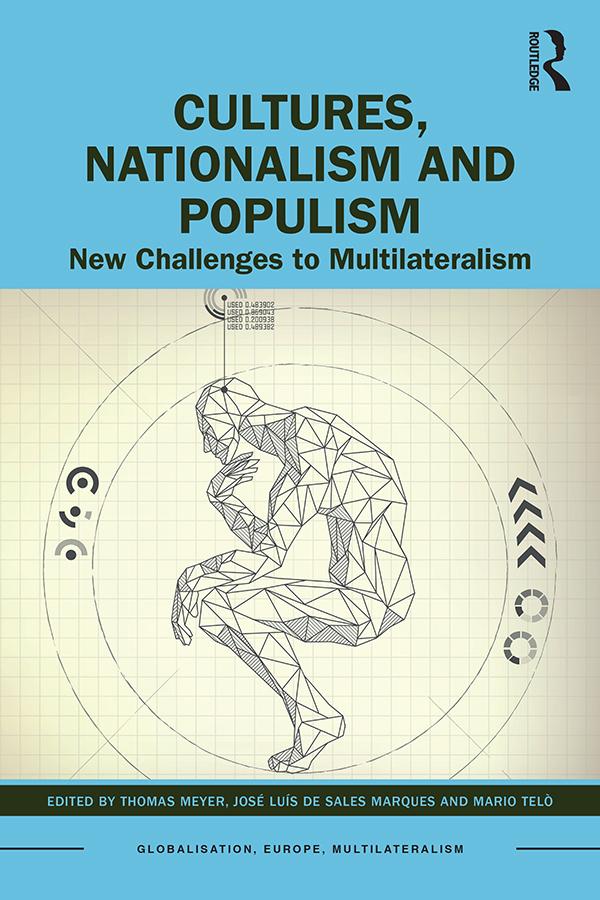
This book examines the role of the cultural factor, and patterns of its interaction with social, economic and political developments, in fostering identity-based new populisms and various forms of political authoritarianism across the globe.
Comparing authoritarianism in the Asian and Western context, this book attempts to shed light on the different ways in which new political actors make use of cultural traditions or constructs in order to justify their claims to power and challenge the culture of modernity as understood in the Western world. Lastly, the book focuses on the consequence of these new challenges for multilateral cooperation at regional and global levels, asking the question: is the world going towards fragmentation and anarchy or a pluralist and innovative form of multilateral cooperation?
This book will be of key interest to scholars and students of populism and authoritarianism studies, democracy, global governance and more broadly to international relations.
Betal nemt med kort, Klarna, Apple Pay eller Google Pay. Ikke tilfreds? Du har altid 14 dages fortrydelsesret. Læs mere i vores vilkår. Har du spørgsmål, så send os en mail på hello@memmo.org.
Memmo gør det nemmere at studere – uanset hvor du er i verden. Hos os samler du dine kursusbøger og smarte studieværktøjer ét sted: resuméer, quizzer, podcasts og flashcards. Og så er der Ted, din studieven, der svarer på alt, du undrer dig over. Over 50 000 studerende studerer allerede her – bygget til at hjælpe dig med at lære hurtigere og stresse mindre.