
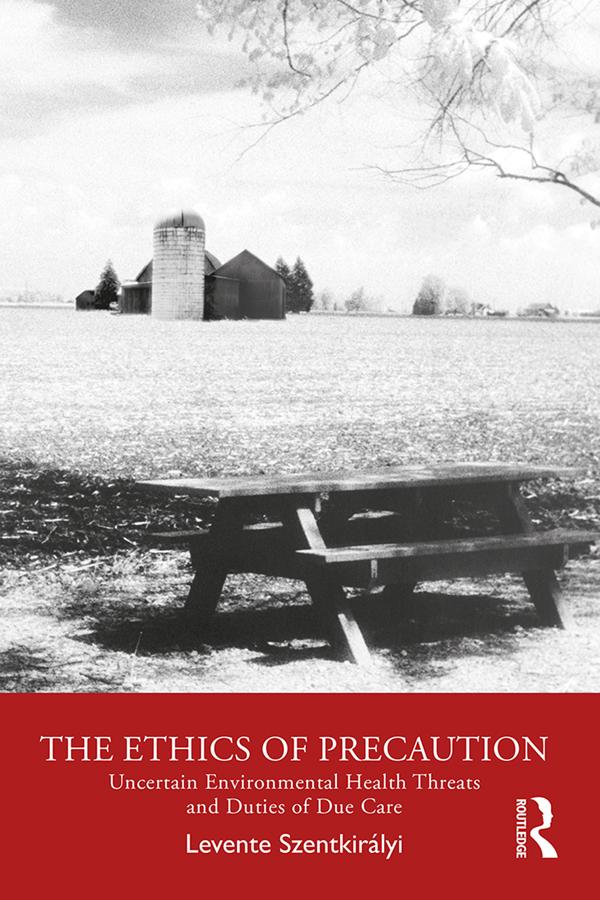
There are thousands of substances manufactured in the United States to which the public is routinely exposed and for which toxicity data are limited or absent. Some insist that uncertainty about the severity of potential harm justifies implementing precautionary regulations, while others claim that uncertainty justifies the absence of regulations until sufficient evidence confirms a strong probability of severe harm.
In this book, Levente Szentkirályi overcomes this impasse in his defense of precautionary environmental risk regulation by shifting the focus from how to manage uncertainty to what it is we owe each other morally. He argues that actions that create uncertain threats wrongfully gamble with the welfare of those who are exposed and neglect the reciprocity that our equal moral standing demands. If we take the moral equality and rights of others seriously, we have a duty to exercise due care to strive to prevent putting them in possible harm’s way.
The Ethics of Precaution will be of great interest to researchers, educators, advanced students, and practitioners working in the fields of environmental political theory, ethics of risk, and environmental policy.
Betal nemt med kort, Klarna, Apple Pay eller Google Pay. Ikke tilfreds? Du har altid 14 dages fortrydelsesret. Læs mere i vores vilkår. Har du spørgsmål, så send os en mail på hello@memmo.org.
Memmo gør det nemmere at studere – uanset hvor du er i verden. Hos os samler du dine kursusbøger og smarte studieværktøjer ét sted: resuméer, quizzer, podcasts og flashcards. Og så er der Ted, din studieven, der svarer på alt, du undrer dig over. Over 50 000 studerende studerer allerede her – bygget til at hjælpe dig med at lære hurtigere og stresse mindre.