
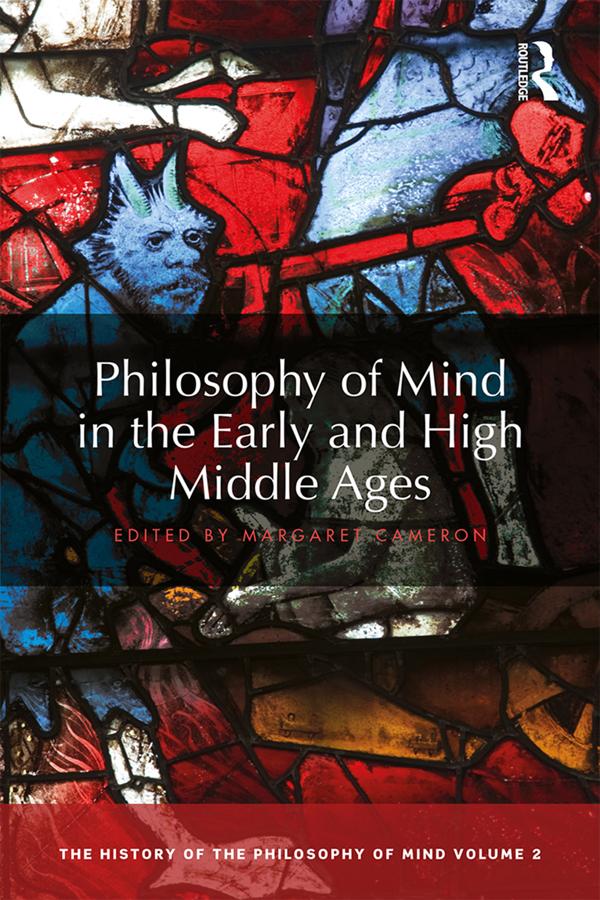
Philosophy of Mind in the Early and High Middle Ages provides an outstanding overview to a tumultuous 900-year period of discovery, innovation, and intellectual controversy that began with the Roman senator Boethius (c480-524) and concluded with the Franciscan theologian and philosopher John Duns Scotus (c1266-1308). Relatively neglected in philosophy of mind, this volume highlights the importance of philosophers such as Abelard, Duns Scotus, and the Persian philosopher and polymath Avicenna to the history of philosophy of mind.
Following an introduction by Margaret Cameron, twelve specially commissioned chapters by an international team of contributors discuss key topics, thinkers and debates, including:
- mental perception;
- Avicenna and the intellectual abstraction of intelligibles;
- Duns Scotus;
- soul, will, and choice in Islamic and Jewish contexts;
- perceptual experience;
- the systematization of the passions;
- the complexity of the soul and the problem of unity;
- the phenomenology of immortality;
- morality; and
- the self.
Essential reading for students and researchers in philosophy of mind, medieval philosophy, and the history of philosophy, Philosophy of Mind in the Early and High Middle Ages is also a valuable resource for those in related disciplines such as Religion.
Betal nemt med kort, Klarna, Apple Pay eller Google Pay. Ikke tilfreds? Du har altid 14 dages fortrydelsesret. Læs mere i vores vilkår. Har du spørgsmål, så send os en mail på hello@memmo.org.
Memmo gør det nemmere at studere – uanset hvor du er i verden. Hos os samler du dine kursusbøger og smarte studieværktøjer ét sted: resuméer, quizzer, podcasts og flashcards. Og så er der Ted, din studieven, der svarer på alt, du undrer dig over. Over 50 000 studerende studerer allerede her – bygget til at hjælpe dig med at lære hurtigere og stresse mindre.