
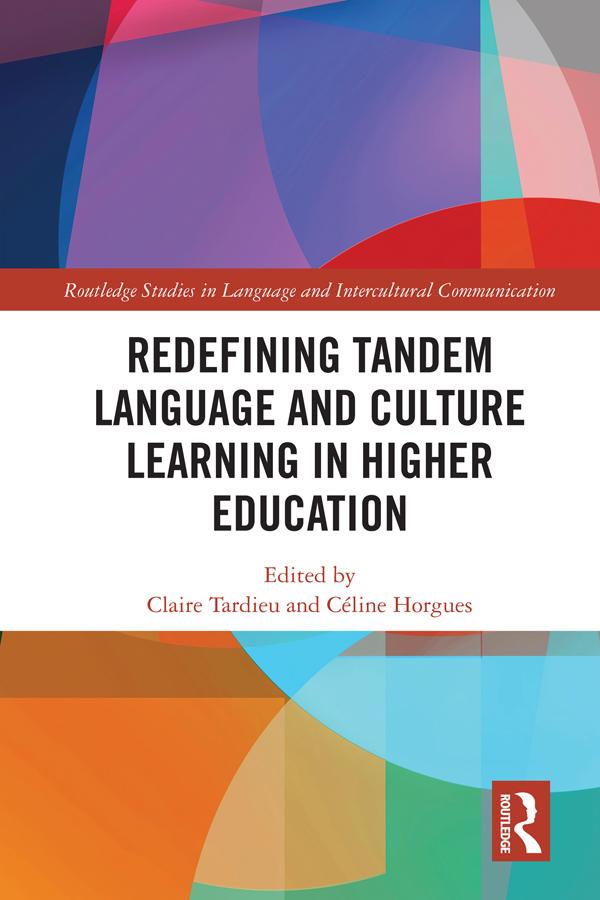
This book provides a comprehensive critical account of tandem learning, charting it evolution from its origins in European educational settings to modern programs offering new perspectives on the approach’s role within higher education. Taking stock of the ways in which increased globalization has produced new linguistic and sociocultural realities, the volume begins by looking back at the development of tandem learning over the last several decades, growing out of a need to create more opportunities for L2 learners to communicate in their target language. The book then examines the different learning objectives and learning outcomes of tandem learning arrangements, moving toward a discussion of tandem learning’s potential role in shaping language policy and the unique challenges involved in implementing tandem programs at higher education institutions. The final section of the book brings the previous discussions together to consider new tools and technology and the ways in which they can better equip language educators to implement tandem learning in their own practice. Highlighting tandem learning’s potential to promote multilingual and multicultural learning on a global scale, this volume will be of particular interest to students and researchers in intercultural communication, language education, multilingualism, and applied linguistics.
Betal nemt med kort, Klarna, Apple Pay eller Google Pay. Ikke tilfreds? Du har altid 14 dages fortrydelsesret. Læs mere i vores vilkår. Har du spørgsmål, så send os en mail på hello@memmo.org.
Memmo gør det nemmere at studere – uanset hvor du er i verden. Hos os samler du dine kursusbøger og smarte studieværktøjer ét sted: resuméer, quizzer, podcasts og flashcards. Og så er der Ted, din studieven, der svarer på alt, du undrer dig over. Over 50 000 studerende studerer allerede her – bygget til at hjælpe dig med at lære hurtigere og stresse mindre.