
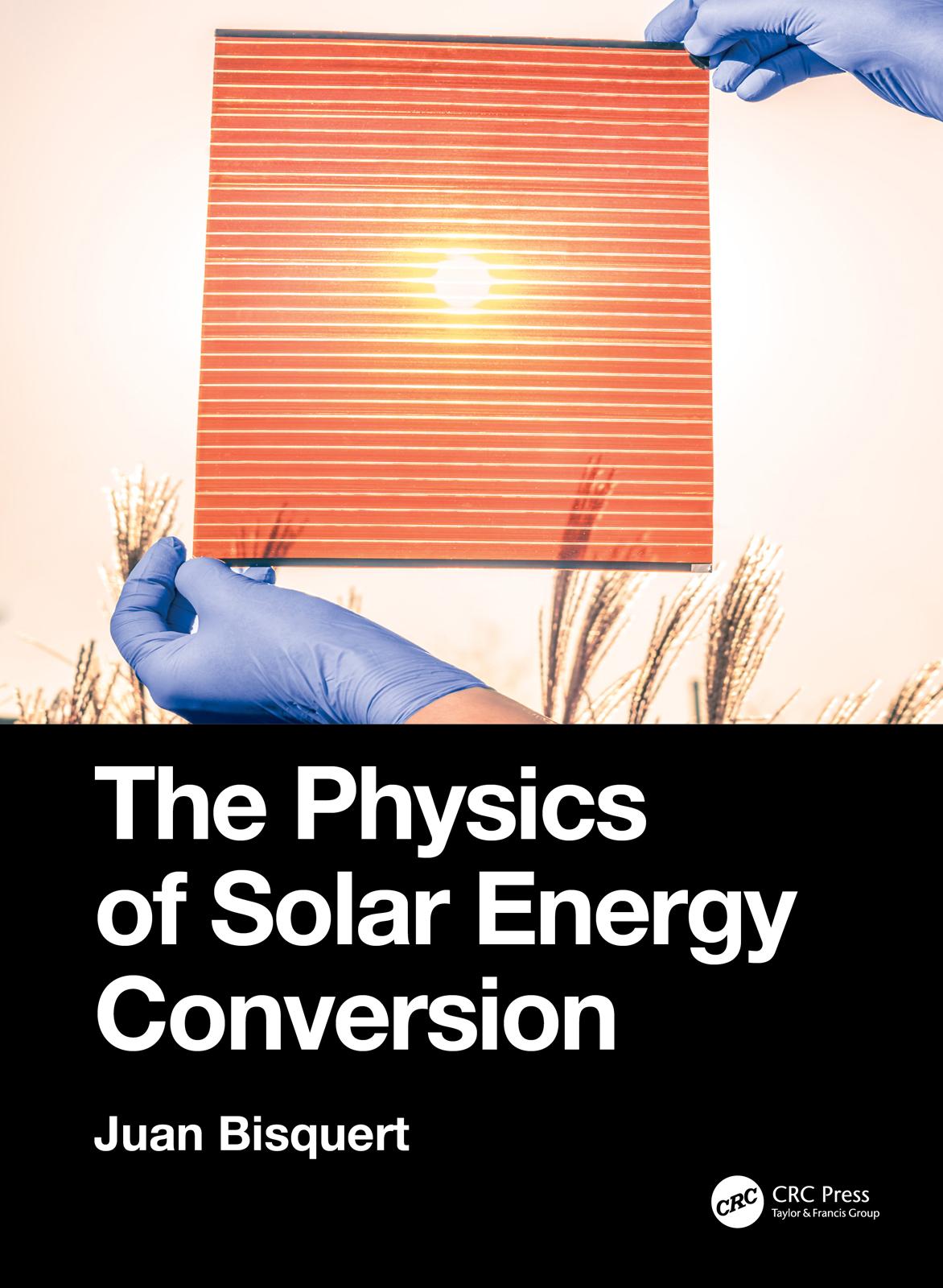
Research on advanced energy conversion devices such as solar cells has intensified in the last two decades. A broad landscape of candidate materials and devices were discovered and systematically studied for effective solar energy conversion and utilization. New concepts have emerged forming a rather powerful picture embracing the mechanisms and limitation to efficiencies of different types of devices. The Physics of Solar Energy Conversion introduces the main physico-chemical principles that govern the operation of energy devices for energy conversion and storage, with a detailed view of the principles of solar energy conversion using advanced materials.
Key Features include:
- Highlights recent rapid advances with the discovery of perovskite solar cells and their development.
- Analyzes the properties of organic solar cells, lithium ion batteries, light emitting diodes and the semiconductor materials for hydrogen production by water splitting.
- Embraces concepts from nanostructured and highly disordered materials to lead halide perovskite solar cells
- Takes a broad perspective and comprehensively addresses the fundamentals so that the reader can apply these and assess future developments and technologies in the field.
- Introduces basic techniques and methods for understanding the materials and interfaces that compose operative energy devices such as solar cells and solar fuel converters.
Betal nemt med kort, Klarna, Apple Pay eller Google Pay. Ikke tilfreds? Du har altid 14 dages fortrydelsesret. Læs mere i vores vilkår. Har du spørgsmål, så send os en mail på hello@memmo.org.
Memmo gør det nemmere at studere – uanset hvor du er i verden. Hos os samler du dine kursusbøger og smarte studieværktøjer ét sted: resuméer, quizzer, podcasts og flashcards. Og så er der Ted, din studieven, der svarer på alt, du undrer dig over. Over 50 000 studerende studerer allerede her – bygget til at hjælpe dig med at lære hurtigere og stresse mindre.