
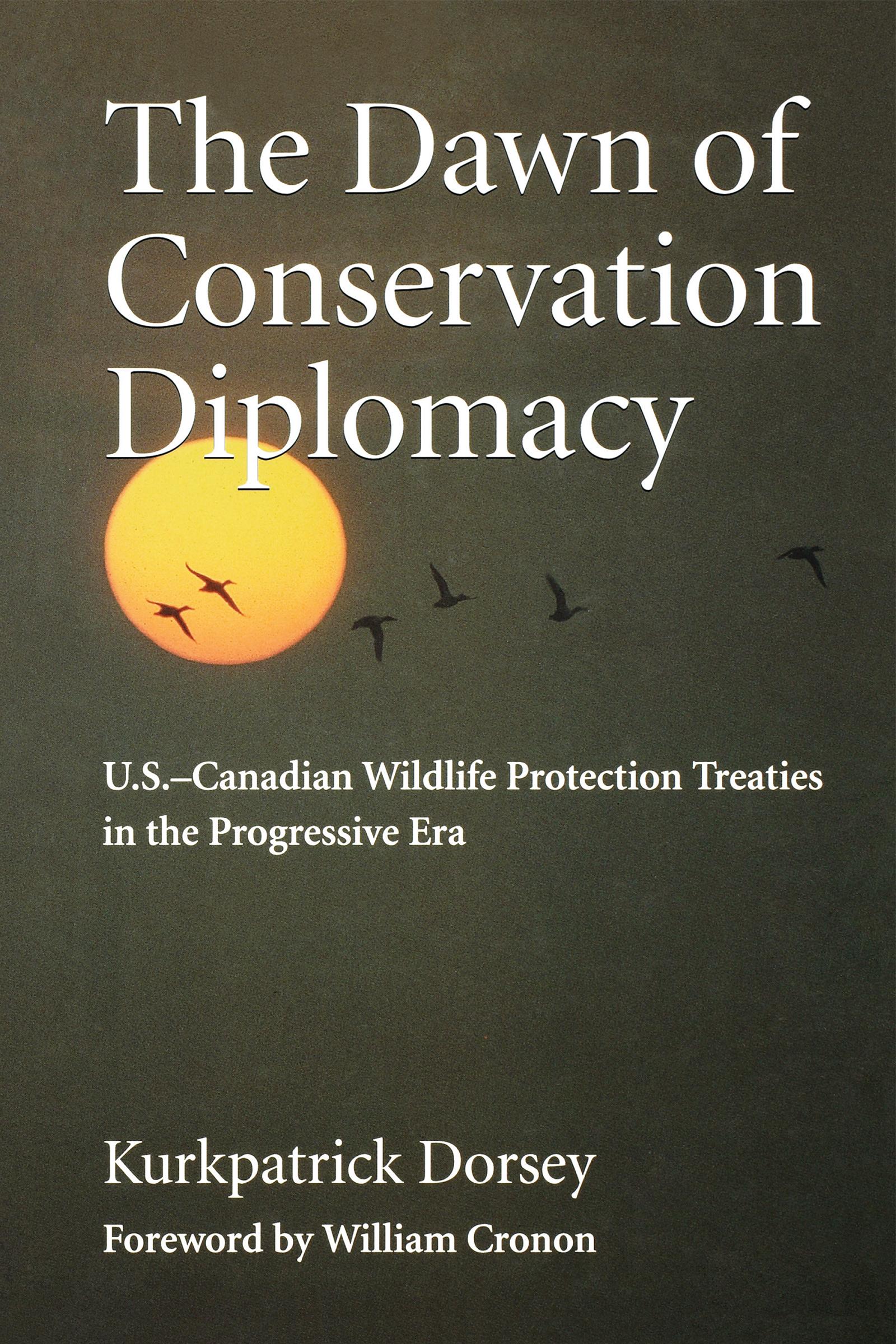
In the first decades of the twentieth century, fish in the Great Lakes and Puget Sound, seals in the North Pacific, and birds across North America faced a common threat: over harvesting that threatened extinction for many species. Progressive era conservationists saw a need for government intervention to protect threatened animals. And because so many species migrated across international political boundaries, their protectors saw the necessity of international conservation agreements. In The Dawn of Conservation Diplomacy, Kurkpatrick Dorsey examines the first three comprehensive wildlife conservation treaties in history, all between the United States and Canada: the Inland Fisheries Treaty of 1908, the North Pacific Fur Seal Convention of 1911, and the Migratory Bird Treaty of 1916.
In his highly readable text, Dorsey argues that successful conservation treaties came only after conservationists learned to marshal scientific evidence, public sentiment, and economic incentives in their campaigns for protective legislation. The first treaty, intended to rescue the overfished boundary waters, failed to gain the necessary support and never became law. Despite scientific evidence of the need for conservation, politicians, and the general public were unable to counter the vocal opposition of fishermen across the continent. A few years later, conservationists successfully rallied popular sympathy for fur seals threatened with slaughter and the North Pacific Fur Seal Convention was adopted. By the time of the Migratory Bird Treaty of 1916, the importance of aesthetic appeal was clear: North American citizens were joining chapters of the Audubon Society in efforts to protect beautiful songbirds. Conservationists also presented economic evidence to support their efforts as they argued that threatened bird species provided invaluable service to farmers.
Dorsey recounts the story of each of these early treaties, examining the scientific research that provided the basis for each effort, acknowledging the complexity of the issues, and presenting the personalities behind the politics. He argues that these decades-old treaties both directly affect us today and offer lessons for future conservation efforts.
Betal nemt med kort, Klarna, Apple Pay eller Google Pay. Ikke tilfreds? Du har altid 14 dages fortrydelsesret. Læs mere i vores vilkår. Har du spørgsmål, så send os en mail på hello@memmo.org.
Memmo gør det nemmere at studere – uanset hvor du er i verden. Hos os samler du dine kursusbøger og smarte studieværktøjer ét sted: resuméer, quizzer, podcasts og flashcards. Og så er der Ted, din studieven, der svarer på alt, du undrer dig over. Over 50 000 studerende studerer allerede her – bygget til at hjælpe dig med at lære hurtigere og stresse mindre.