
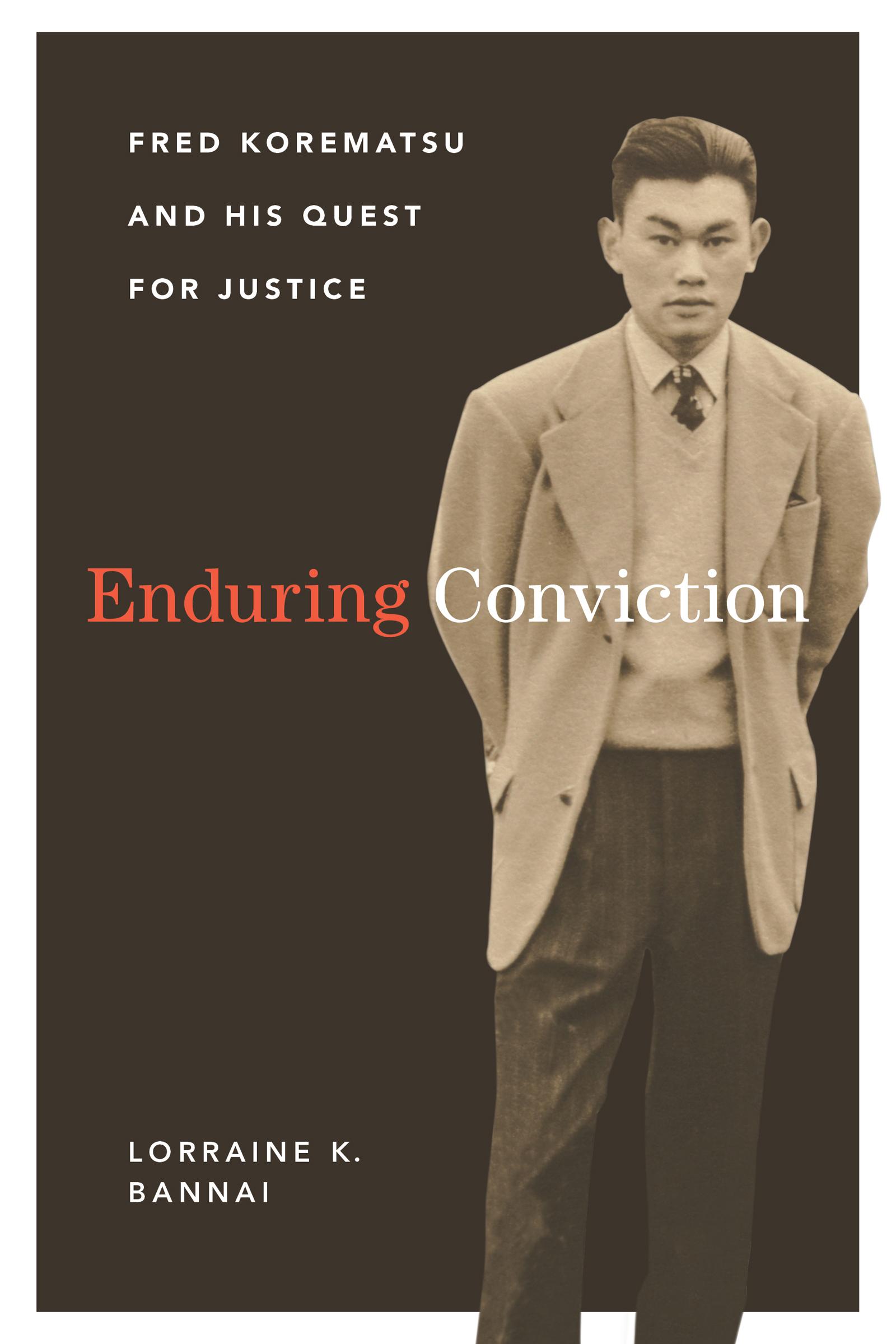
Fred Korematsu’s decision to resist F.D.R.’s Executive Order 9066, which provided authority for the internment of Japanese Americans during World War II, was initially the case of a young man following his heart: he wanted to remain in California with his white fiancée. However, he quickly came to realize that it was more than just a personal choice; it was a matter of basic human rights.
After refusing to leave for incarceration when ordered, Korematsu was eventually arrested and convicted of a federal crime before being sent to the internment camp at Topaz, Utah.
He appealed his conviction to the Supreme Court, which, in one of the most infamous cases in American legal history, upheld the wartime orders. Forty years later, in the early 1980s, a team of young attorneys resurrected Korematsu’s case. This time, Korematsu was victorious, and his conviction was overturned, helping to pave the way for Japanese American redress.
Lorraine Bannai, who was a young attorney on that legal team, combines insider knowledge of the case with extensive archival research, personal letters, and unprecedented access to Korematsu his family, and close friends. She uncovers the inspiring story of a humble, soft-spoken man who fought tirelessly against human rights abuses long after he was exonerated. In 1998, President Bill Clinton awarded Korematsu the Presidential Medal of Freedom.
Betal nemt med kort, Klarna, Apple Pay eller Google Pay. Ikke tilfreds? Du har altid 14 dages fortrydelsesret. Læs mere i vores vilkår. Har du spørgsmål, så send os en mail på hello@memmo.org.
Memmo gør det nemmere at studere – uanset hvor du er i verden. Hos os samler du dine kursusbøger og smarte studieværktøjer ét sted: resuméer, quizzer, podcasts og flashcards. Og så er der Ted, din studieven, der svarer på alt, du undrer dig over. Over 50 000 studerende studerer allerede her – bygget til at hjælpe dig med at lære hurtigere og stresse mindre.