
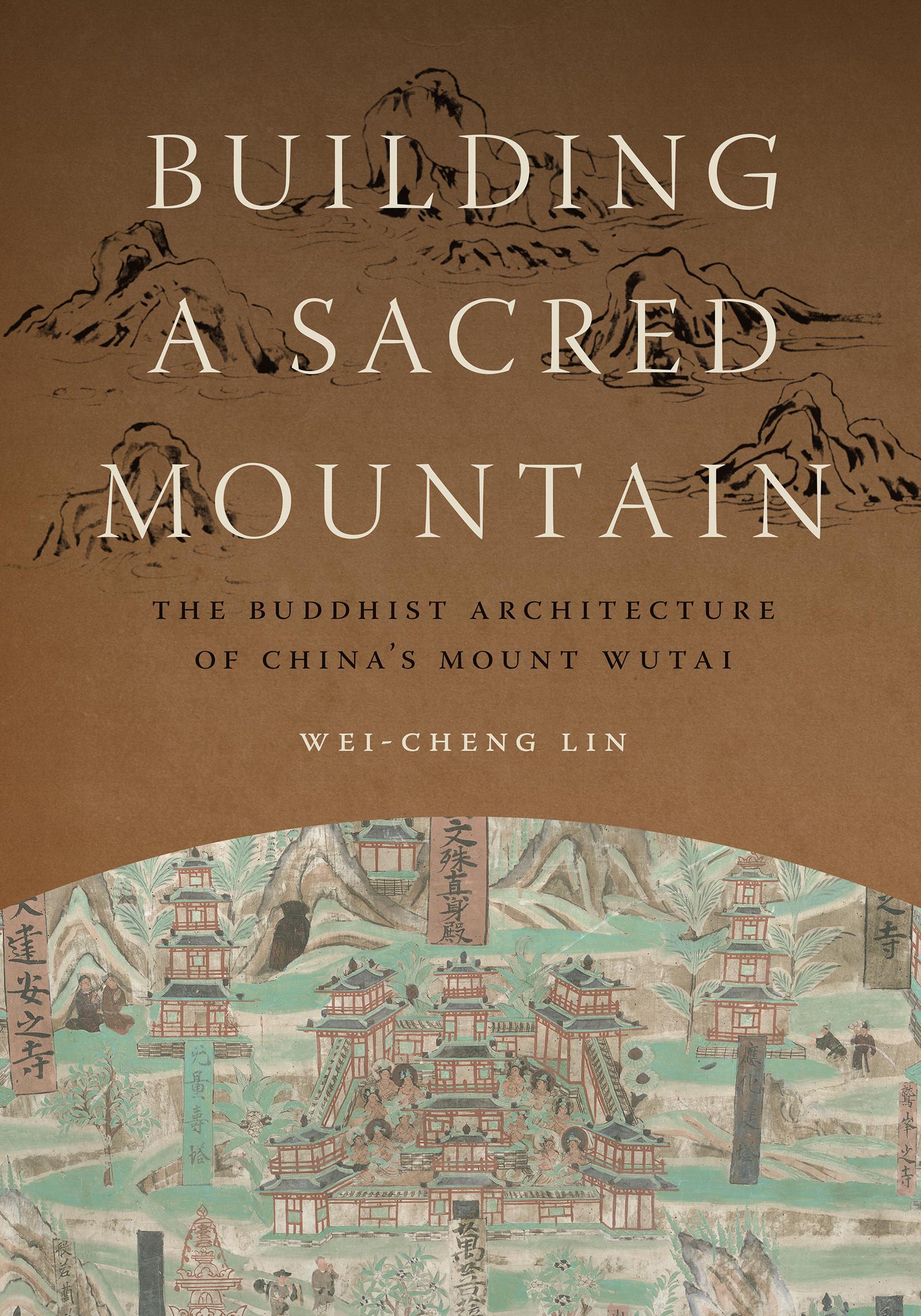
By the tenth century CE, Mount Wutai had become a major pilgrimage site within the emerging culture of a distinctively Chinese Buddhism. Famous as the abode of the bodhisattva Mañjuśrī (known for his habit of riding around the mountain on a lion), the site in northeastern China’s Shanxi Province was transformed from a wild area, long believed by Daoists to be sacred, into an elaborate complex of Buddhist monasteries.
In Building a Sacred Mountain, Wei-Cheng Lin traces the confluence of factors that produced this transformation and argues that monastic architecture, more than texts, icons, relics, or pilgrimages, was the key to Mount Wutai’s emergence as a sacred site. Departing from traditional architectural scholarship, Lin’s interdisciplinary approach goes beyond the analysis of forms and structures to show how the built environment can work in tandem with practices and discourses to provide a space for encountering the divine.
Art History Publication Initiative. For more information, visit http://arthistorypi.org/books/building-a-sacred-mountain
Betal nemt med kort, Klarna, Apple Pay eller Google Pay. Ikke tilfreds? Du har altid 14 dages fortrydelsesret. Læs mere i vores vilkår. Har du spørgsmål, så send os en mail på hello@memmo.org.
Memmo gør det nemmere at studere – uanset hvor du er i verden. Hos os samler du dine kursusbøger og smarte studieværktøjer ét sted: resuméer, quizzer, podcasts og flashcards. Og så er der Ted, din studieven, der svarer på alt, du undrer dig over. Over 50 000 studerende studerer allerede her – bygget til at hjælpe dig med at lære hurtigere og stresse mindre.