
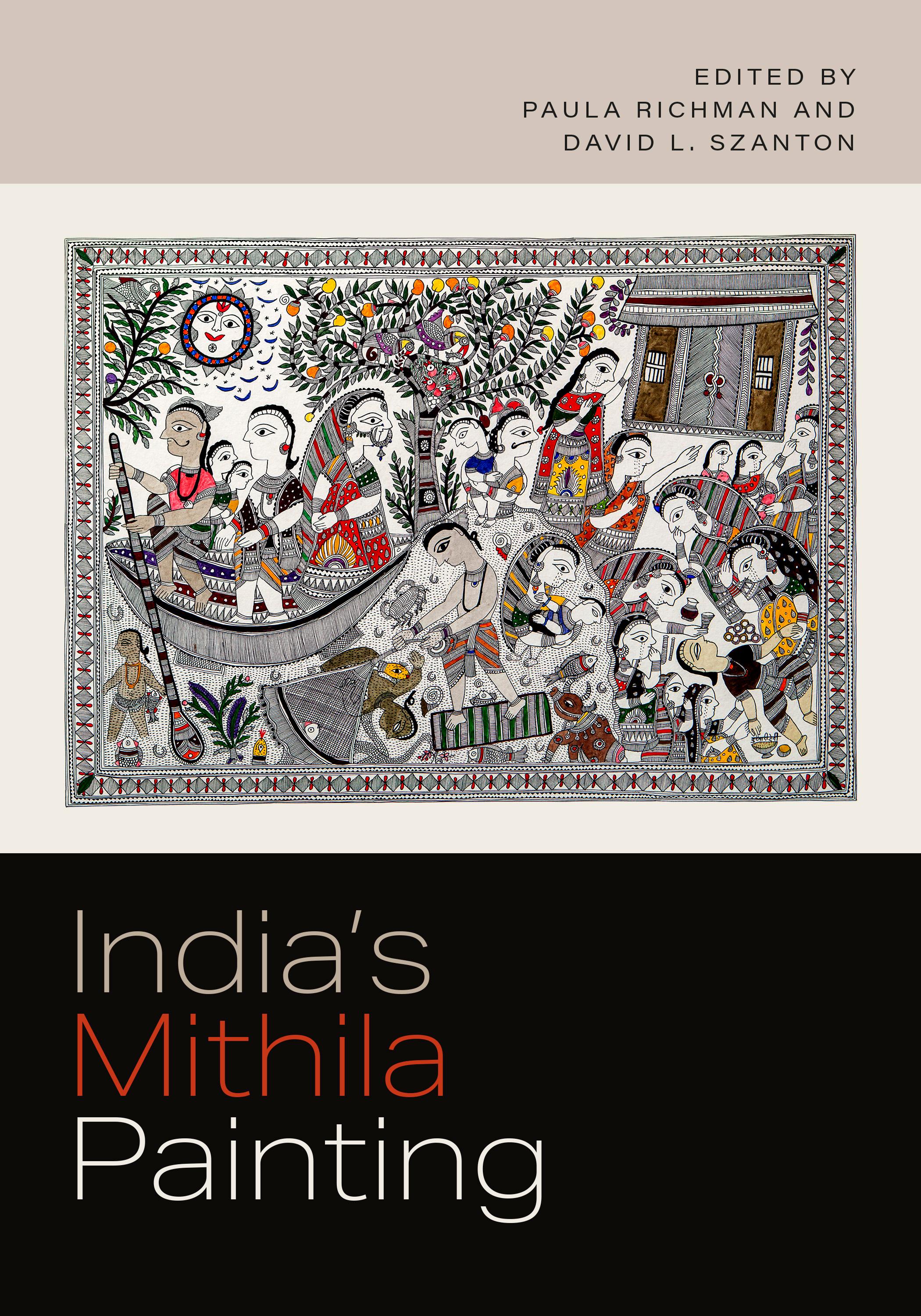
A woman's art form transforms from home to high art
Since at least the fifteenth century, Hindu women in the Mithila region of northern India have been painting images of deities, flora and fauna symbolizing fertility and prosperity, and floor designs that sacralize sites for ritual within their homes. Their artwork remained ephemeral since its plant-based colors faded over time. In response to an extended drought that led to widespread crop failure in the 1960s, the Indian government's All India Handicraft Board provided high-quality paper to the women of Mithila to test the income-generating possibilities of transferring wall and floor artwork to a new medium. The unique Mithila aesthetic, novel compositions, and precise linework won enthusiastic buyers in New Delhi and abroad. The small number of women painters expanded across the ranks of the social hierarchy and even included a few men. They developed individual styles and depicted novel subjects such as village history, their own life stories, the tsunami in Sri Lanka, social justice, protecting trees, and changing social norms.
Major international museums now house Mithila collections, and individuals around the world own paintings. This volume, the first to present an up-to-date analysis of the history and practitioners of Mithila painting, includes contributions from Mithila artists, anthropologists, art historians, historians of Indian religions and specialists of visual culture, gender studies, and translation studies.
Betal nemt med kort, Klarna, Apple Pay eller Google Pay. Ikke tilfreds? Du har altid 14 dages fortrydelsesret. Læs mere i vores vilkår. Har du spørgsmål, så send os en mail på hello@memmo.org.
Memmo gør det nemmere at studere – uanset hvor du er i verden. Hos os samler du dine kursusbøger og smarte studieværktøjer ét sted: resuméer, quizzer, podcasts og flashcards. Og så er der Ted, din studieven, der svarer på alt, du undrer dig over. Over 50 000 studerende studerer allerede her – bygget til at hjælpe dig med at lære hurtigere og stresse mindre.