
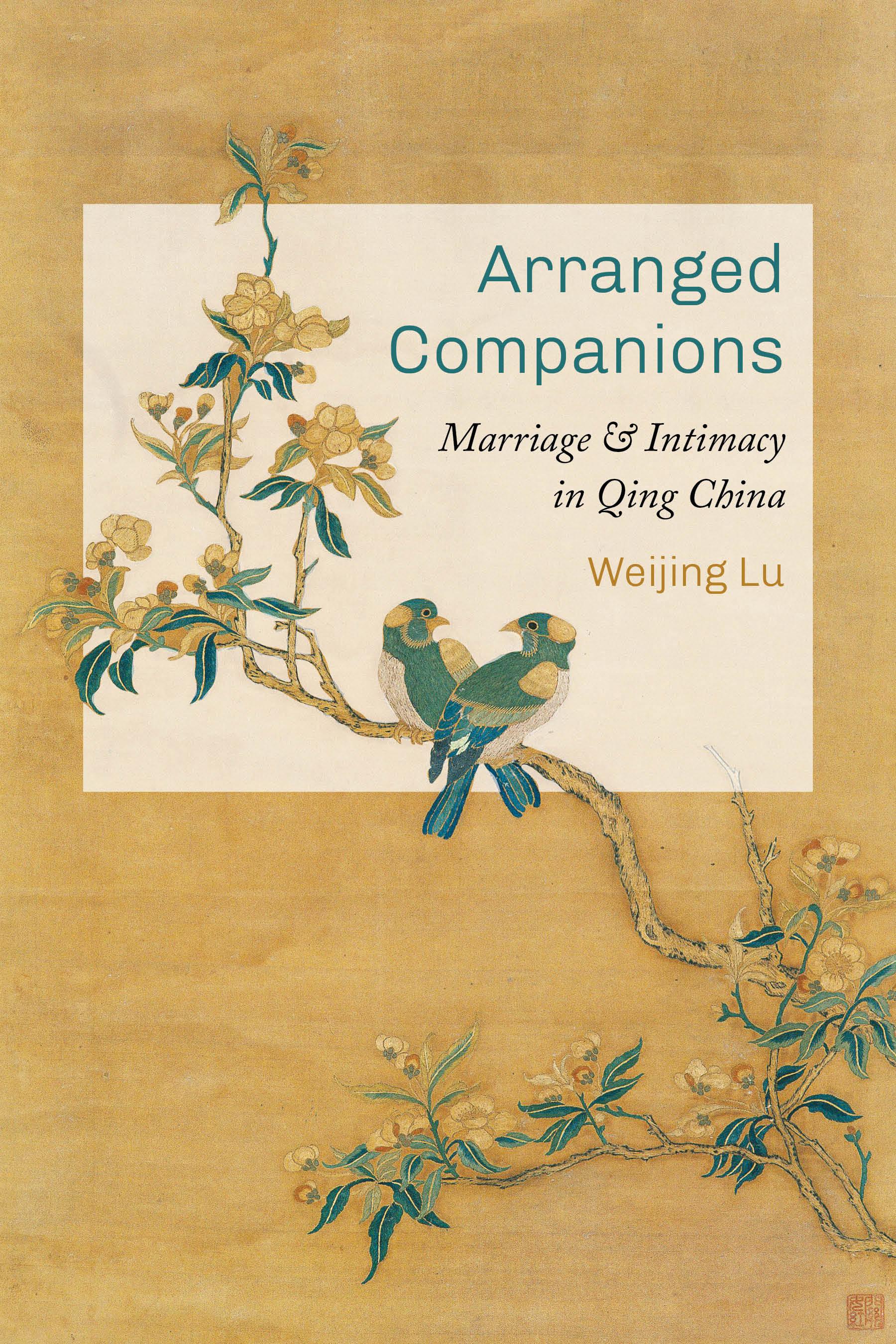
Questions conventional assumptions about premodern conjugal relationships
Although commonly associated with patriarchal oppression, arranged marriages have adapted over the centuries to changing cultural norms and the lived experiences of men and women. In Arranged Companions, historian Weijing Lu chronicles how marital behaviors during the early and High Qing (mid-seventeenth through mid-nineteenth centuries) were informed by rich and complex traditions and mediated by the historical conditions of the period, during which marital affection was celebrated as a basic ingredient of an ideal marriage.
Lu finds public representation and private communication of marital affection in personal records, including poetry, biographies, letters, and memoirs. During this unique historical moment, ideals of marital companionship and love came to fruition while social changes also created new tensions for couples and extended families. Offering surprising revelations about conjugal relations during this time of change, Arranged Companions raises provocative questions about the cultural construction of intimacy and the meaning of a “happy marriage.”
Betal nemt med kort, Klarna, Apple Pay eller Google Pay. Ikke tilfreds? Du har altid 14 dages fortrydelsesret. Læs mere i vores vilkår. Har du spørgsmål, så send os en mail på hello@memmo.org.
Memmo gør det nemmere at studere – uanset hvor du er i verden. Hos os samler du dine kursusbøger og smarte studieværktøjer ét sted: resuméer, quizzer, podcasts og flashcards. Og så er der Ted, din studieven, der svarer på alt, du undrer dig over. Over 50 000 studerende studerer allerede her – bygget til at hjælpe dig med at lære hurtigere og stresse mindre.