
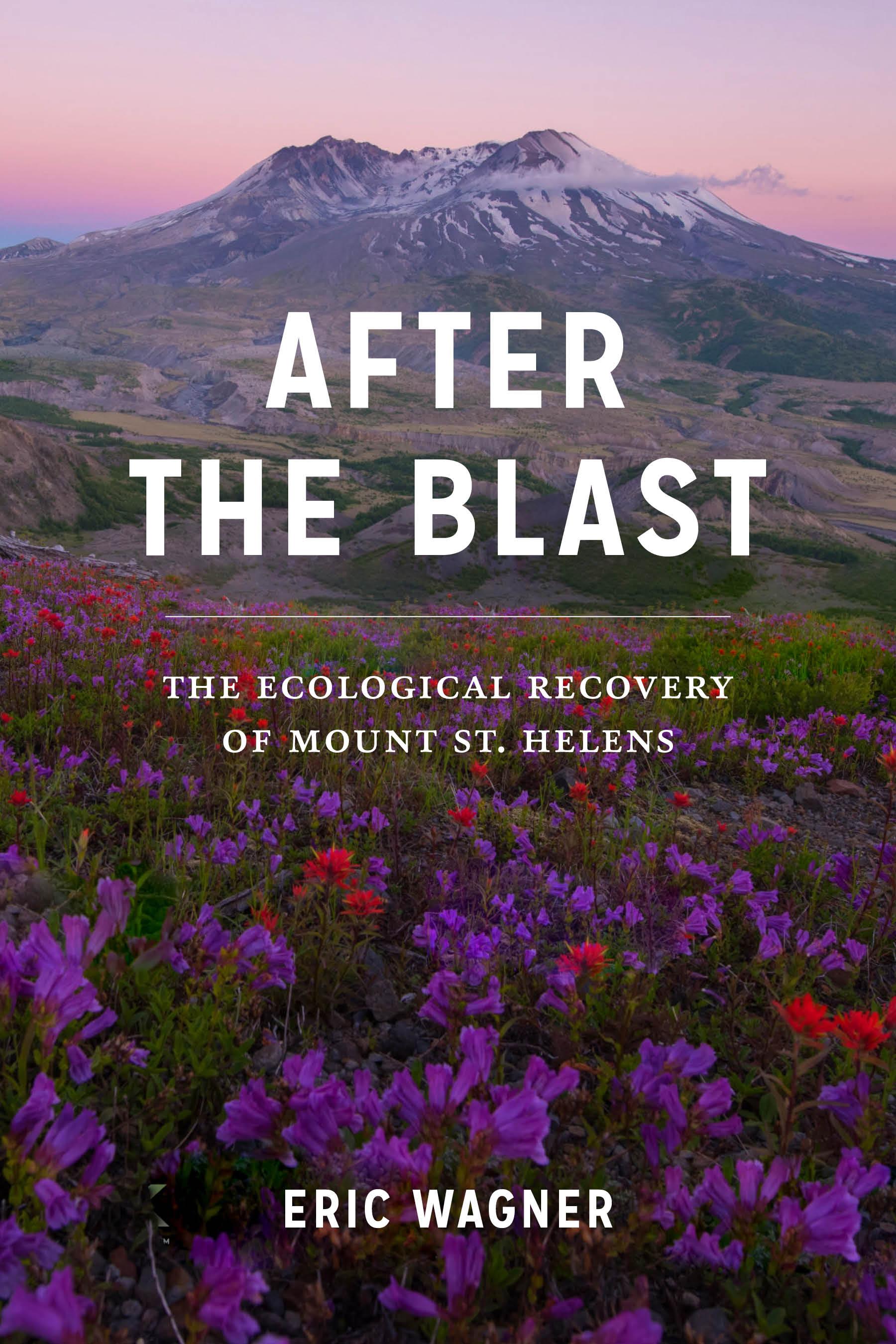
On May 18, 1980, people all over the world watched with awe and horror as Mount St. Helens erupted. Fifty-seven people were killed and hundreds of square miles of what had been lush forests and wild rivers were to all appearances destroyed.
Ecologists thought they would have to wait years, or even decades, for life to return to the mountain, but when forest scientist Jerry Franklin helicoptered into the blast area a couple of weeks after the eruption, he found small plants bursting through the ash and animals skittering over the ground. Stunned, he realized he and his colleagues had been thinking of the volcano in completely the wrong way. Rather than being a dead zone, the mountain was very much alive.
Mount St. Helens has been surprising ecologists ever since, and in After the Blast Eric Wagner takes readers on a fascinating journey through the blast area and beyond. From fireweed to elk, the plants and animals Franklin saw would not just change how ecologists approached the eruption and its landscape, but also prompt them to think in new ways about how life responds in the face of seemingly total devastation.
Betal nemt med kort, Klarna, Apple Pay eller Google Pay. Ikke tilfreds? Du har altid 14 dages fortrydelsesret. Læs mere i vores vilkår. Har du spørgsmål, så send os en mail på hello@memmo.org.
Memmo gør det nemmere at studere – uanset hvor du er i verden. Hos os samler du dine kursusbøger og smarte studieværktøjer ét sted: resuméer, quizzer, podcasts og flashcards. Og så er der Ted, din studieven, der svarer på alt, du undrer dig over. Over 50 000 studerende studerer allerede her – bygget til at hjælpe dig med at lære hurtigere og stresse mindre.