
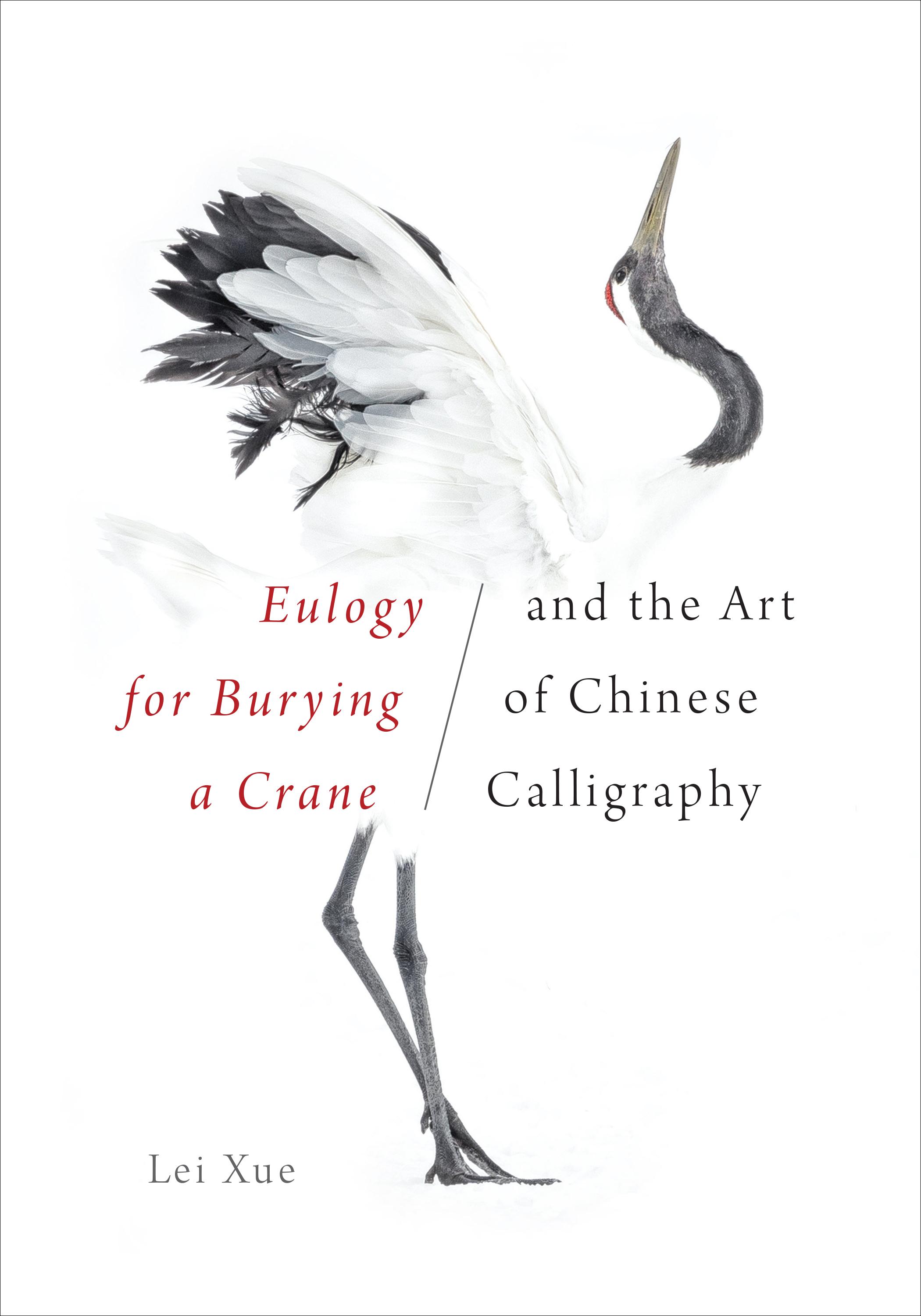
Eulogy for Burying a Crane (Yi he ming) is perhaps the most eccentric piece in China’s calligraphic canon. Apparently marking the burial of a crane, the large inscription, datable to 514 CE, was once carved into a cliff on Jiaoshan Island in the Yangzi River. Since the discovery of its ruins in the early eleventh century, it has fascinated generations of scholars and calligraphers and been enshrined as a calligraphic masterpiece. Nonetheless, skeptics have questioned the quality of the calligraphy and complained that its fragmentary state and worn characters make assessment of its artistic value impossible. Moreover, historians have trouble fitting it into the storyline of Chinese calligraphy. Such controversies illuminate moments of discontinuity in the history of the art form that complicate the mechanism of canon formation.
In this volume, Lei Xue examines previous epigraphic studies and recent archaeological finds to consider the origin of the work in the sixth century and then trace its history after the eleventh century. He suggests that formation of the canon of Chinese calligraphy over two millennia has been an ongoing process embedded in the sociopolitical realities of particular historical moments. This biography of the stone monument Eulogy for Burying a Crane reveals Chinese calligraphy to be a contested field of cultural and political forces that have constantly reconfigured the practice, theory, and historiography of this unique art form.
Art History Publication Initiative
A McLellan Book
Betal nemt med kort, Klarna, Apple Pay eller Google Pay. Ikke tilfreds? Du har altid 14 dages fortrydelsesret. Læs mere i vores vilkår. Har du spørgsmål, så send os en mail på hello@memmo.org.
Memmo gør det nemmere at studere – uanset hvor du er i verden. Hos os samler du dine kursusbøger og smarte studieværktøjer ét sted: resuméer, quizzer, podcasts og flashcards. Og så er der Ted, din studieven, der svarer på alt, du undrer dig over. Over 50 000 studerende studerer allerede her – bygget til at hjælpe dig med at lære hurtigere og stresse mindre.