
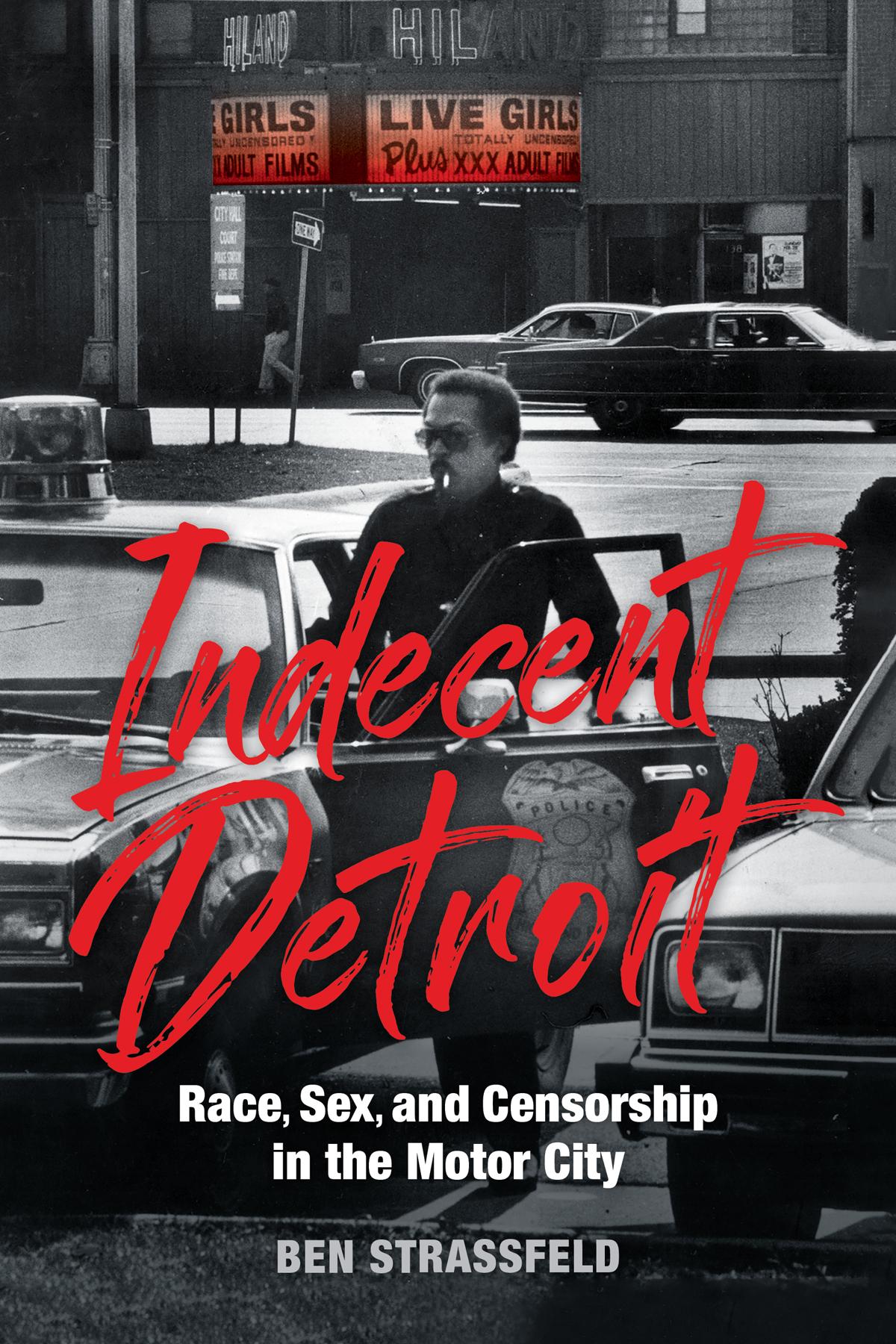
While Detroit has been a major focus in urban history, little has been written on censorship in the very city that—due to shifting legalities, the urban crisis, and racial tensions—profoundly shaped media suppression in the United States.
By examining censorship in film and literature, Indecent Detroit recounts the evolution of media control from the end of WWII through the 1970s, when the US saw a major change in the legal mechanisms used to censor media due to court rulings that curtailed censorship laws. Ben Strassfeld reveals how Detroit altered its censorial tactics and rhetoric from an obscenity-based system of censorship centered in the Detroit Police Department to a regulatory model based in zoning law that was then expanded nationwide. This shift was connected to broader social and political trends, including the sexual revolution, that led the public to increasingly turn against censorship.
A must-read for film and media scholars, Indecent Detroit highlights how one Midwest city's ordinance was imitated across the country after it was upheld by the US Supreme Court, making this more than a local curiosity but also an influential model for the cultural, political, and moral control of urban space through media regulation.
Betal nemt med kort, Klarna, Apple Pay eller Google Pay. Ikke tilfreds? Du har altid 14 dages fortrydelsesret. Læs mere i vores vilkår. Har du spørgsmål, så send os en mail på hello@memmo.org.
Memmo gør det nemmere at studere – uanset hvor du er i verden. Hos os samler du dine kursusbøger og smarte studieværktøjer ét sted: resuméer, quizzer, podcasts og flashcards. Og så er der Ted, din studieven, der svarer på alt, du undrer dig over. Over 50 000 studerende studerer allerede her – bygget til at hjælpe dig med at lære hurtigere og stresse mindre.