
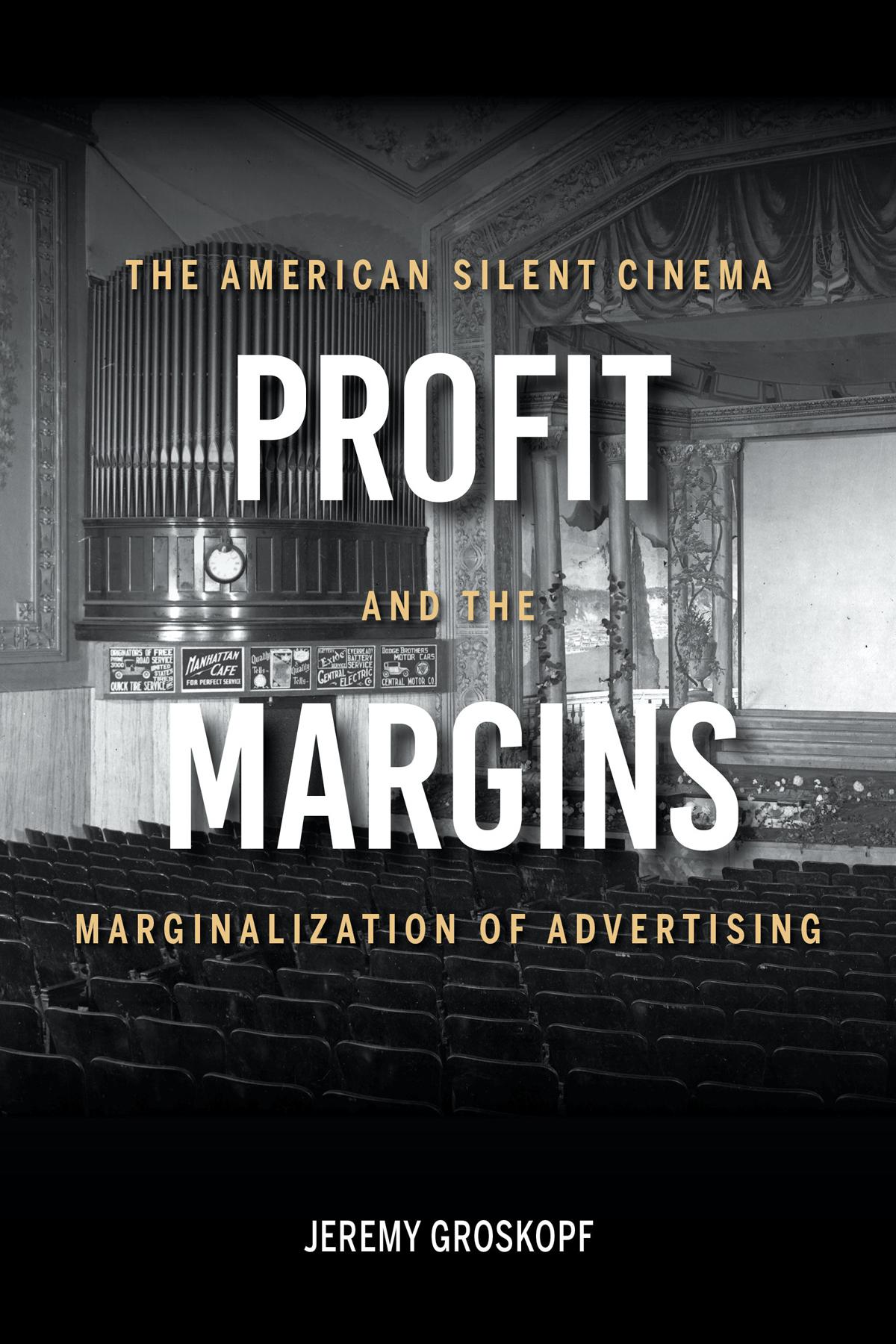
Between the advent of print advertising and the dawn of radio came cinema ads. These ads, aimed at a captive theater audience, became a symbol of the developing binary between upper-class film consumption and more consumerist media.
In Profit Margins, Jeremy Groskopf examines how the ad industry jockeyed for direct advertisement space in American motion pictures. In fact, advertisers, who recognized the import of film audiences, fought exhibitors over what audiences expected in a theater outing. Looking back at these debates in four case studies, Groskopf reveals that advertising became a marker of class distinctions in the cinema experience as the film industry pushed out advertisers in order to create a space free of ads. By restricting advertising, especially during the rise of high-class, palatial theaters, the film industry continued its ongoing effort to ascend the cultural hierarchy of the arts.
An important read for film studies and the history of marketing, Profit Margins exposes the fascinating truth surrounding the invention of cinema advertising techniques and the resulting rhetoric of class division.
Betal nemt med kort, Klarna, Apple Pay eller Google Pay. Ikke tilfreds? Du har altid 14 dages fortrydelsesret. Læs mere i vores vilkår. Har du spørgsmål, så send os en mail på hello@memmo.org.
Memmo gør det nemmere at studere – uanset hvor du er i verden. Hos os samler du dine kursusbøger og smarte studieværktøjer ét sted: resuméer, quizzer, podcasts og flashcards. Og så er der Ted, din studieven, der svarer på alt, du undrer dig over. Over 50 000 studerende studerer allerede her – bygget til at hjælpe dig med at lære hurtigere og stresse mindre.