
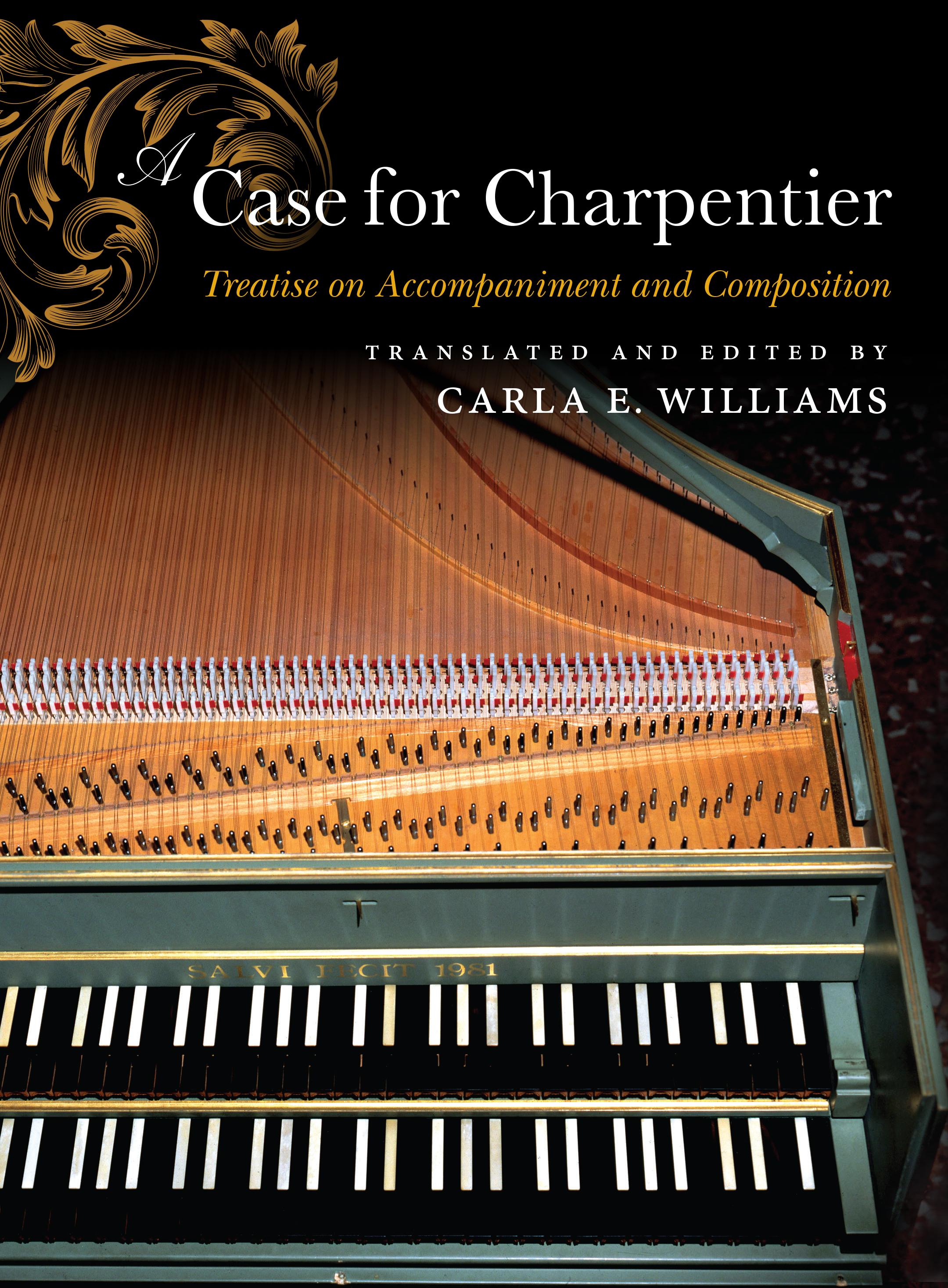
Who originally authored the anonymous, undated French manuscript Traité d'accompagnement et de composition?
Carla E. Williams tackles this mystery while providing the first English translation of this rare manuscript, which resides in the collections of the Lilly Library at Indiana University Bloomington. A Case for Charpentier presents a side-by-side transcription and translation of the treatise along with an introduction that offers historical context. In the manuscript itself, late 17th-century and early 18th-century writers discuss principal musical elements of composition including major and minor modes, the fundamental chords of both modes, dissonances and consonances, meter, tempo, and continuo realization, as well as basse continue. While these writers have not been formally identified, Williams argues that the handwriting of one is that of composer Marc-Antoine Charpentier. By providing a full physical description of the manuscript, along with comparisons of Charpentier's other writings and his handwriting, Williams sheds new light on both the treatise and Charpentier's theoretical writings.
With this translation, Williams not only shares invaluable insights into the pedagogical approaches for composition and continuo realization in late 17th-century France but also finally makes Traité d'accompagnement et de composition available to a broader audience.
Betal nemt med kort, Klarna, Apple Pay eller Google Pay. Ikke tilfreds? Du har altid 14 dages fortrydelsesret. Læs mere i vores vilkår. Har du spørgsmål, så send os en mail på hello@memmo.org.
Memmo gør det nemmere at studere – uanset hvor du er i verden. Hos os samler du dine kursusbøger og smarte studieværktøjer ét sted: resuméer, quizzer, podcasts og flashcards. Og så er der Ted, din studieven, der svarer på alt, du undrer dig over. Over 50 000 studerende studerer allerede her – bygget til at hjælpe dig med at lære hurtigere og stresse mindre.