
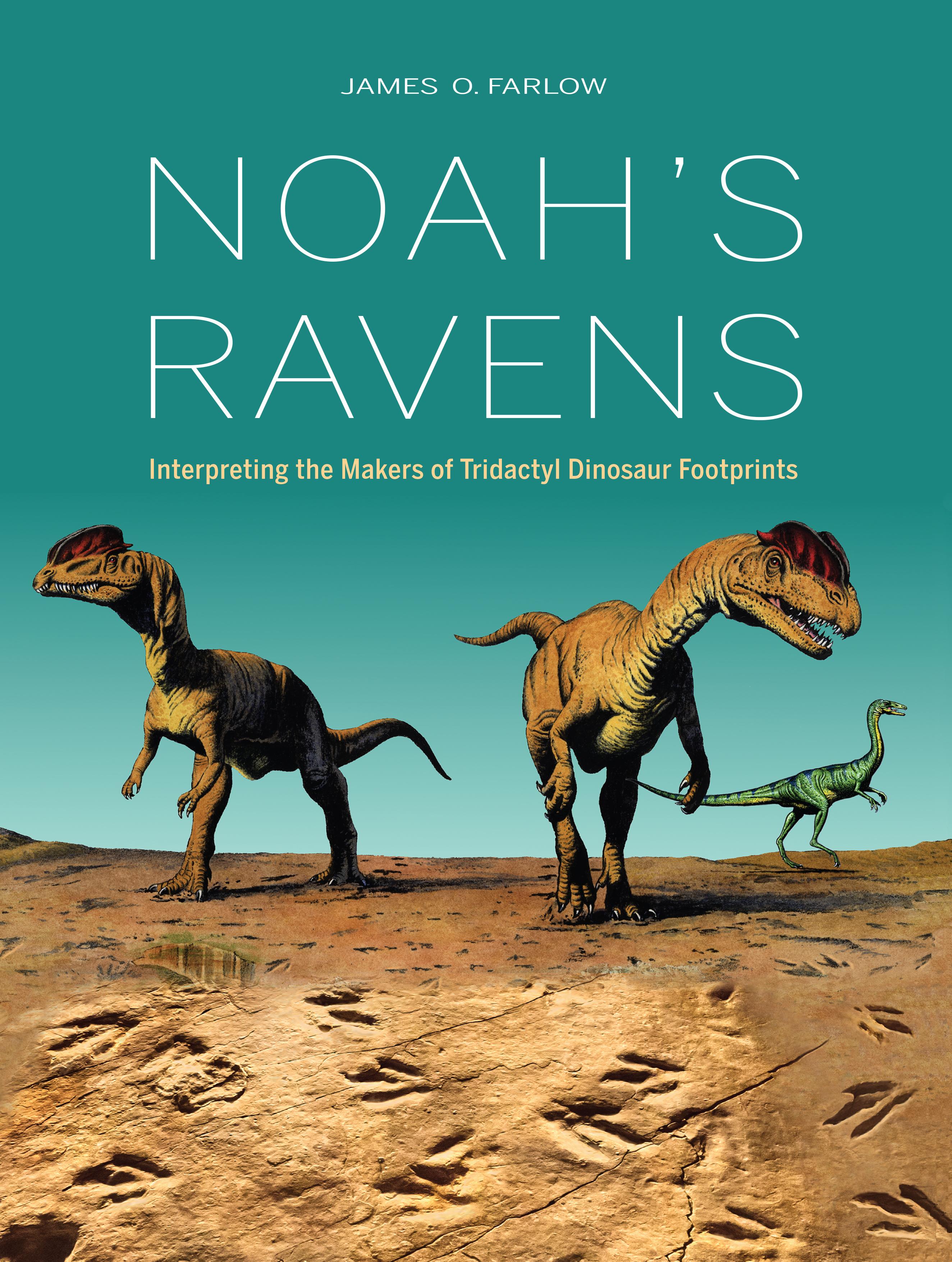
How can the tracks of dinosaurs best be interpreted and used to reconstruct them? In many Mesozoic sedimentary rock formations, fossilized footprints of bipedal, three-toed (tridactyl) dinosaurs are preserved in huge numbers, often with few or no skeletons. Such tracks sometimes provide the only clues to the former presence of dinosaurs, but their interpretation can be challenging: How different in size and shape can footprints be and yet have been made by the same kind of dinosaur? How similar can they be and yet have been made by different kinds of dinosaurs? To what extent can tridactyl dinosaur footprints serve as proxies for the biodiversity of their makers?
Profusely illustrated and meticulously researched, Noah's Ravens quantitatively explores a variety of approaches to interpreting the tracks, carefully examining within-species and across-species variability in foot and footprint shape in nonavian dinosaurs and their close living relatives. The results help decipher one of the world's most important assemblages of fossil dinosaur tracks, found in sedimentary rocks deposited in ancient rift valleys of eastern North America. Those often beautifully preserved tracks were among the first studied by paleontologists, and they were initially interpreted as having been made by big birds—one of which was jokingly identified as Noah's legendary raven.
Betal nemt med kort, Klarna, Apple Pay eller Google Pay. Ikke tilfreds? Du har altid 14 dages fortrydelsesret. Læs mere i vores vilkår. Har du spørgsmål, så send os en mail på hello@memmo.org.
Memmo gør det nemmere at studere – uanset hvor du er i verden. Hos os samler du dine kursusbøger og smarte studieværktøjer ét sted: resuméer, quizzer, podcasts og flashcards. Og så er der Ted, din studieven, der svarer på alt, du undrer dig over. Over 50 000 studerende studerer allerede her – bygget til at hjælpe dig med at lære hurtigere og stresse mindre.