
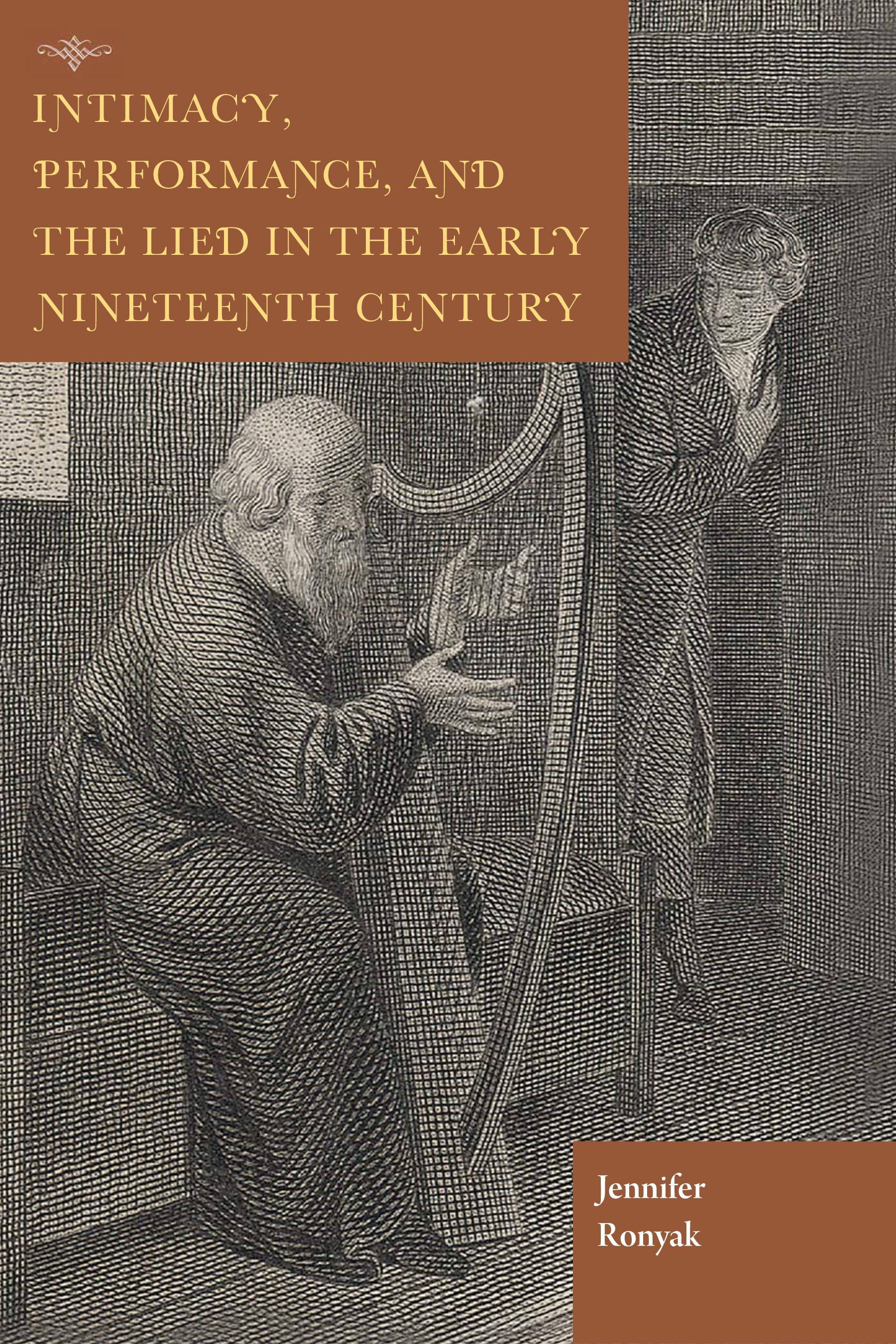
The German lied, or art song, is considered one of the most intimate of all musical genres—often focused on the poetic speaker's inner world and best suited for private and semi-private performance in the home or salon. Yet, problematically, any sense of inwardness in lieder depends on outward expression through performance.
With this paradox at its heart, Intimacy, Performance, and the Lied in the Early Nineteenth Century explores the relationships between early nineteenth-century theories of the inward self, the performance practices surrounding inward lyric poetry and song, and the larger conventions determining the place of intimate poetry and song in the public concert hall. Jennifer Ronyak studies the cultural practices surrounding lieder performances in northern and central Germany in the first quarter of the nineteenth century, demonstrating how presentations of lieder during the formative years of the genre put pressure on their sense of interiority. She examines how musicians responded to public concern that outward expression would leave the interiority of the poet, the song, or the performer unguarded and susceptible to danger. Through this rich performative paradox Ronyak reveals how a song maintains its powerful intimacy even during its inherently public performance.
Betal nemt med kort, Klarna, Apple Pay eller Google Pay. Ikke tilfreds? Du har altid 14 dages fortrydelsesret. Læs mere i vores vilkår. Har du spørgsmål, så send os en mail på hello@memmo.org.
Memmo gør det nemmere at studere – uanset hvor du er i verden. Hos os samler du dine kursusbøger og smarte studieværktøjer ét sted: resuméer, quizzer, podcasts og flashcards. Og så er der Ted, din studieven, der svarer på alt, du undrer dig over. Over 50 000 studerende studerer allerede her – bygget til at hjælpe dig med at lære hurtigere og stresse mindre.