
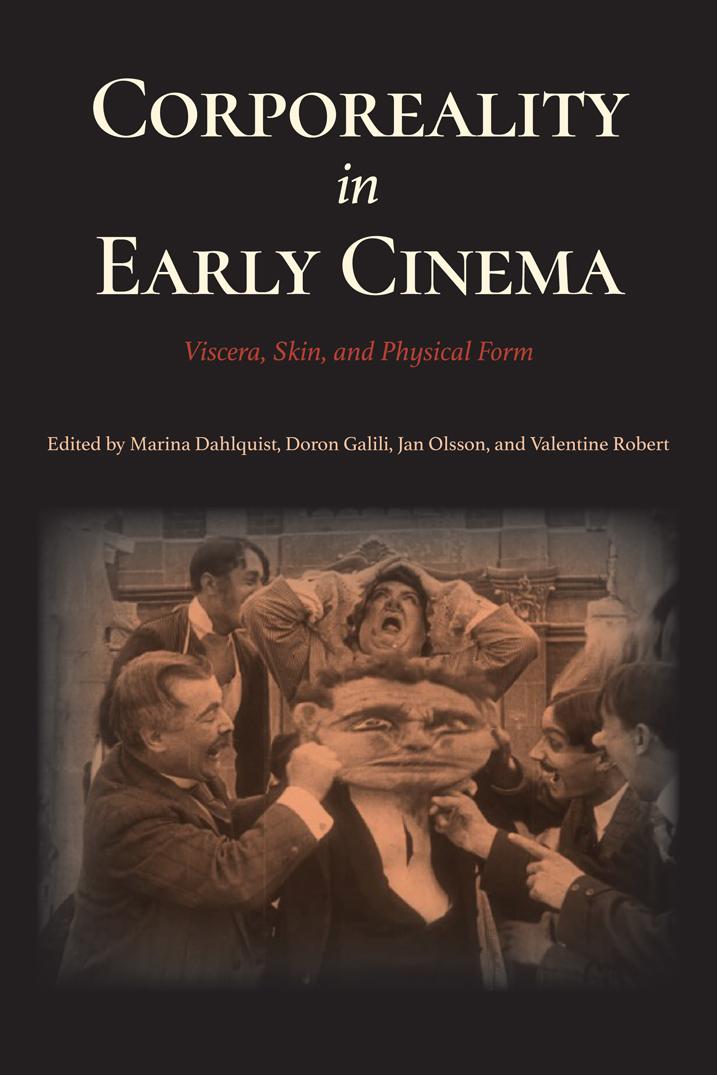
Corporeality in Early Cinema inspires a heightened awareness of the ways in which early film culture, and screen praxes overall are inherently embodied. Contributors argue that on- and offscreen (and in affiliated media and technological constellations), the body consists of flesh and nerves and is not just an abstract spectator or statistical audience entity.
Audience responses from arousal to disgust, from identification to detachment, offer us a means to understand what spectators have always taken away from their cinematic experience. Through theoretical approaches and case studies, scholars offer a variety of models for stimulating historical research on corporeality and cinema by exploring the matrix of screened bodies, machine-made scaffolding, and their connections to the physical bodies in front of the screen.
Betal nemt med kort, Klarna, Apple Pay eller Google Pay. Ikke tilfreds? Du har altid 14 dages fortrydelsesret. Læs mere i vores vilkår. Har du spørgsmål, så send os en mail på hello@memmo.org.
Memmo gør det nemmere at studere – uanset hvor du er i verden. Hos os samler du dine kursusbøger og smarte studieværktøjer ét sted: resuméer, quizzer, podcasts og flashcards. Og så er der Ted, din studieven, der svarer på alt, du undrer dig over. Over 50 000 studerende studerer allerede her – bygget til at hjælpe dig med at lære hurtigere og stresse mindre.