
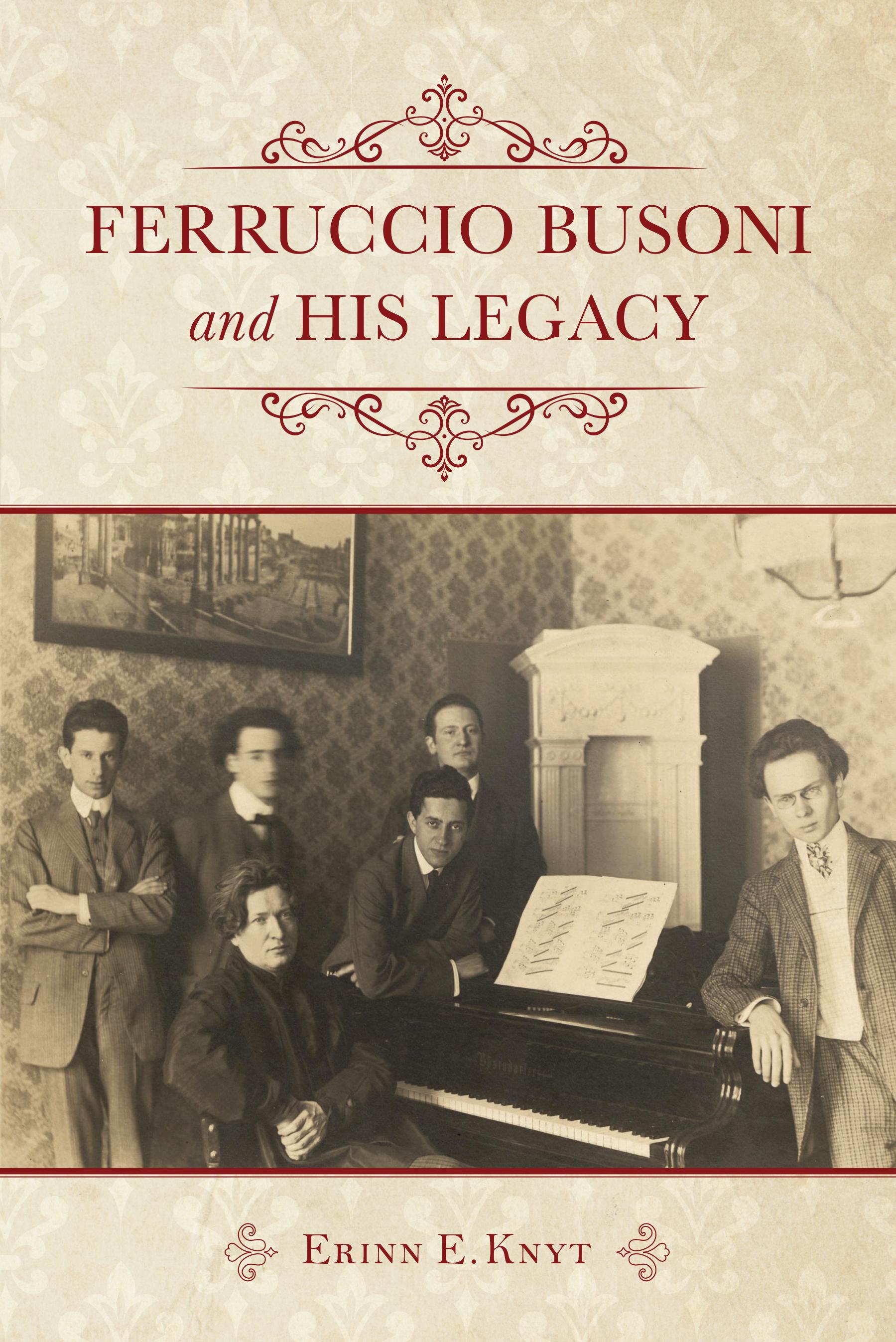
Many students of renowned composer, conductor, and teacher Ferruccio Busoni had illustrious careers of their own, yet the extent to which their mentor's influence helped shape their success was largely unexplored until now. Through rich archival research including correspondence, essays, and scores, Erinn E. Knyt presents an evocative account of Busoni's idiosyncratic pedagogy—focused on aesthetic ideals rather than methodologies or techniques—and how this teaching style and philosophy can be seen and heard in the Nordic-inspired musical works of Sibelius, the unusual soundscapes of Varèse, the polystylistic meldings of music and technology in Louis Gruenberg's radio operas and film scores, the electronic music of Otto Luening, and the experimentalism of Philip Jarnach. Equal parts critical biography and interpretive analysis, Knyt's work compels a reconsideration of Busoni's legacy and puts forth the notion of a "Busoni School" as one that shaped the trajectory of twentieth-century music.
Betal nemt med kort, Klarna, Apple Pay eller Google Pay. Ikke tilfreds? Du har altid 14 dages fortrydelsesret. Læs mere i vores vilkår. Har du spørgsmål, så send os en mail på hello@memmo.org.
Memmo gør det nemmere at studere – uanset hvor du er i verden. Hos os samler du dine kursusbøger og smarte studieværktøjer ét sted: resuméer, quizzer, podcasts og flashcards. Og så er der Ted, din studieven, der svarer på alt, du undrer dig over. Over 50 000 studerende studerer allerede her – bygget til at hjælpe dig med at lære hurtigere og stresse mindre.