
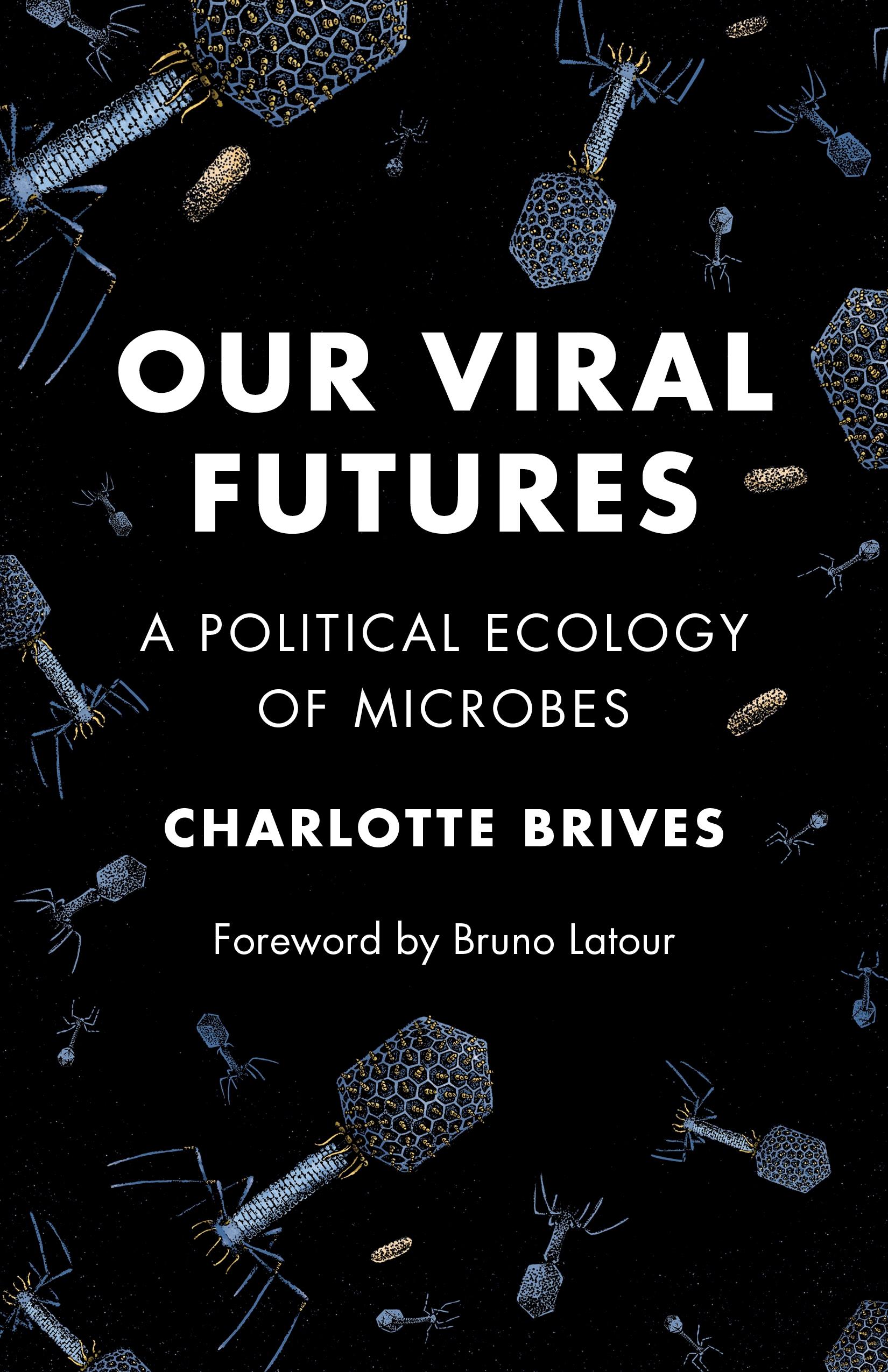
Increasing bacterial resistance to antibiotics is one of today’s greatest threats to public health. Yet a possible solution has emerged from a surprising source. Phage therapy deploys viruses called bacteriophages, “bacteria eaters,” to treat bacterial infections. What concerns—both biological and social—arise from using viruses in this way? What does phage therapy reveal about the links between humans and microbes?
In Our Viral Futures, Charlotte Brives examines the development and implications of this therapy, providing new ways to understand our interconnections with the microbial world. Considering patients seeking treatment for chronic infections, the establishment of new regulatory frameworks, and the processes of laboratory research and clinical trials, she highlights the complexity and variety of the relationships among humans, phages, and bacteria. Brives places phage therapy in the context of the widespread use of antibiotics under industrial capitalism, which has deployed these treatments in order to enable ecologically devastating forms of mass production and consumption. She argues that the connections between human societies and microbial communities defy the usual categories through which science and medicine understand the world, giving rise to new moral and political questions. Interdisciplinary and nuanced, Our Viral Futures poses a provocative challenge: Instead of continuing to assert that we can control and master microbes, we must learn to coexist with them.
Betal nemt med kort, Klarna, Apple Pay eller Google Pay. Ikke tilfreds? Du har altid 14 dages fortrydelsesret. Læs mere i vores vilkår. Har du spørgsmål, så send os en mail på hello@memmo.org.
Memmo gør det nemmere at studere – uanset hvor du er i verden. Hos os samler du dine kursusbøger og smarte studieværktøjer ét sted: resuméer, quizzer, podcasts og flashcards. Og så er der Ted, din studieven, der svarer på alt, du undrer dig over. Over 50 000 studerende studerer allerede her – bygget til at hjælpe dig med at lære hurtigere og stresse mindre.