
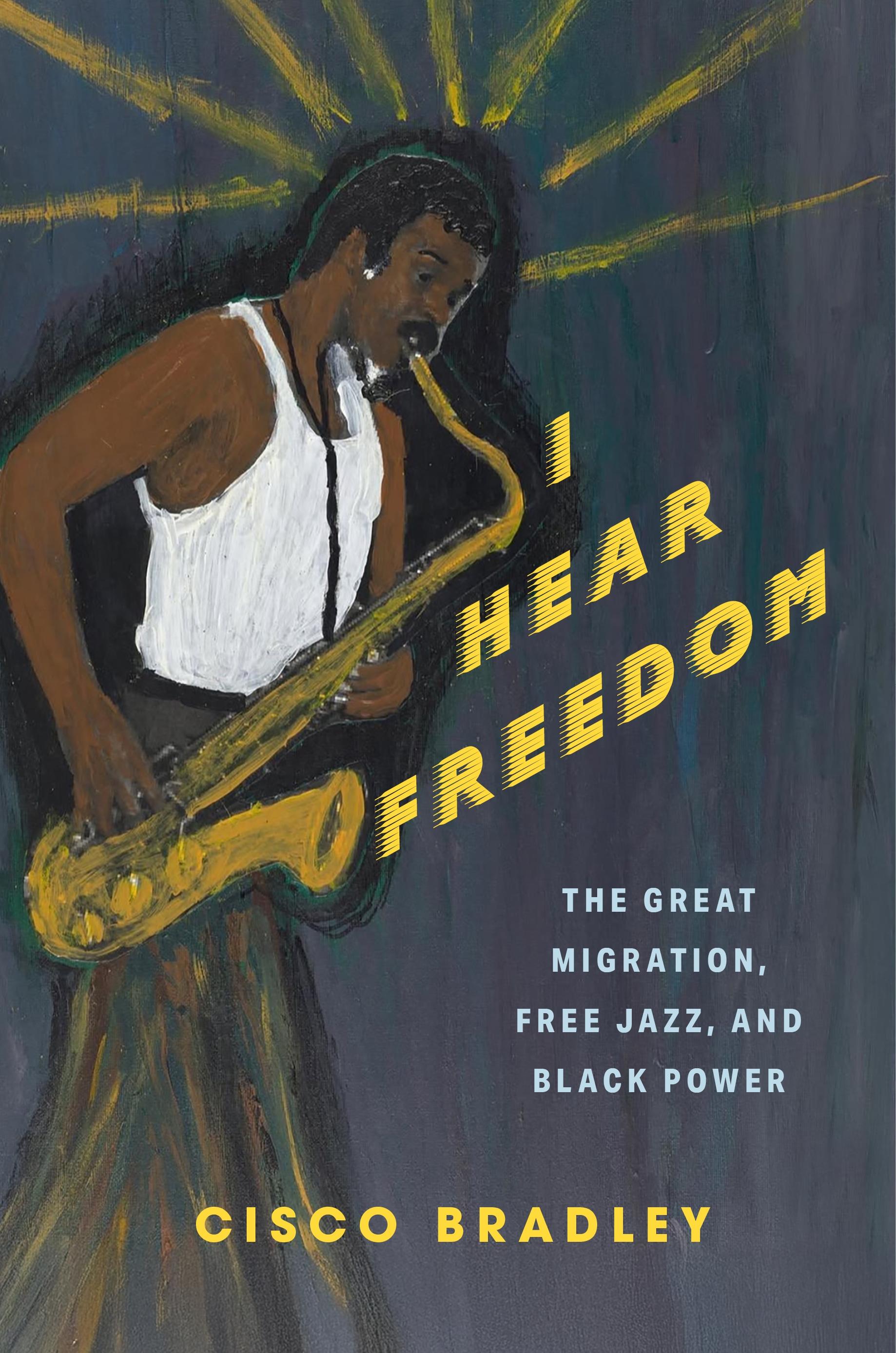
In the 1960s, a musical revolution took place in the industrial landscapes of Cleveland and Detroit. Disenchanted with the strictures of bebop, musicians forged a new style—free jazz—that took inspiration from a vast range of sources, including figures such as Ornette Coleman, Cecil Taylor, and John Coltrane; African and Middle Eastern music; avant-garde modernism; and the politics and aesthetics of Black Power. How did this radical movement come about, and what explains its creativity and vitality?
Based on interviews with dozens of musicians, I Hear Freedom tells the story of free jazz and its connection to the broader Black experience. Cisco Bradley demonstrates that although this part of the free jazz movement arose in the Midwest, it is deeply rooted in the musical traditions and aesthetics that the Great Migration brought from the South. As postwar urban renewal projects fractured Black communities, musicians drew on this heritage to create new forms of expression. Figures such as Albert Ayler, Donald Ayler, Charles Tyler, Frank Wright, Bobby Few, Charles Moore, and Faruq Z. Bey developed distinct artistic visions, often influenced by their involvement in Black liberation movements. I Hear Freedom chronicles the Cleveland and Detroit free jazz scenes, and it follows musicians to New York, Los Angeles, Paris, and beyond. A revelatory oral history, this book shows that free jazz is a uniquely Black style shaped by mobility, community, and the struggle for freedom.
Betal nemt med kort, Klarna, Apple Pay eller Google Pay. Ikke tilfreds? Du har altid 14 dages fortrydelsesret. Læs mere i vores vilkår. Har du spørgsmål, så send os en mail på hello@memmo.org.
Memmo gør det nemmere at studere – uanset hvor du er i verden. Hos os samler du dine kursusbøger og smarte studieværktøjer ét sted: resuméer, quizzer, podcasts og flashcards. Og så er der Ted, din studieven, der svarer på alt, du undrer dig over. Over 50 000 studerende studerer allerede her – bygget til at hjælpe dig med at lære hurtigere og stresse mindre.