
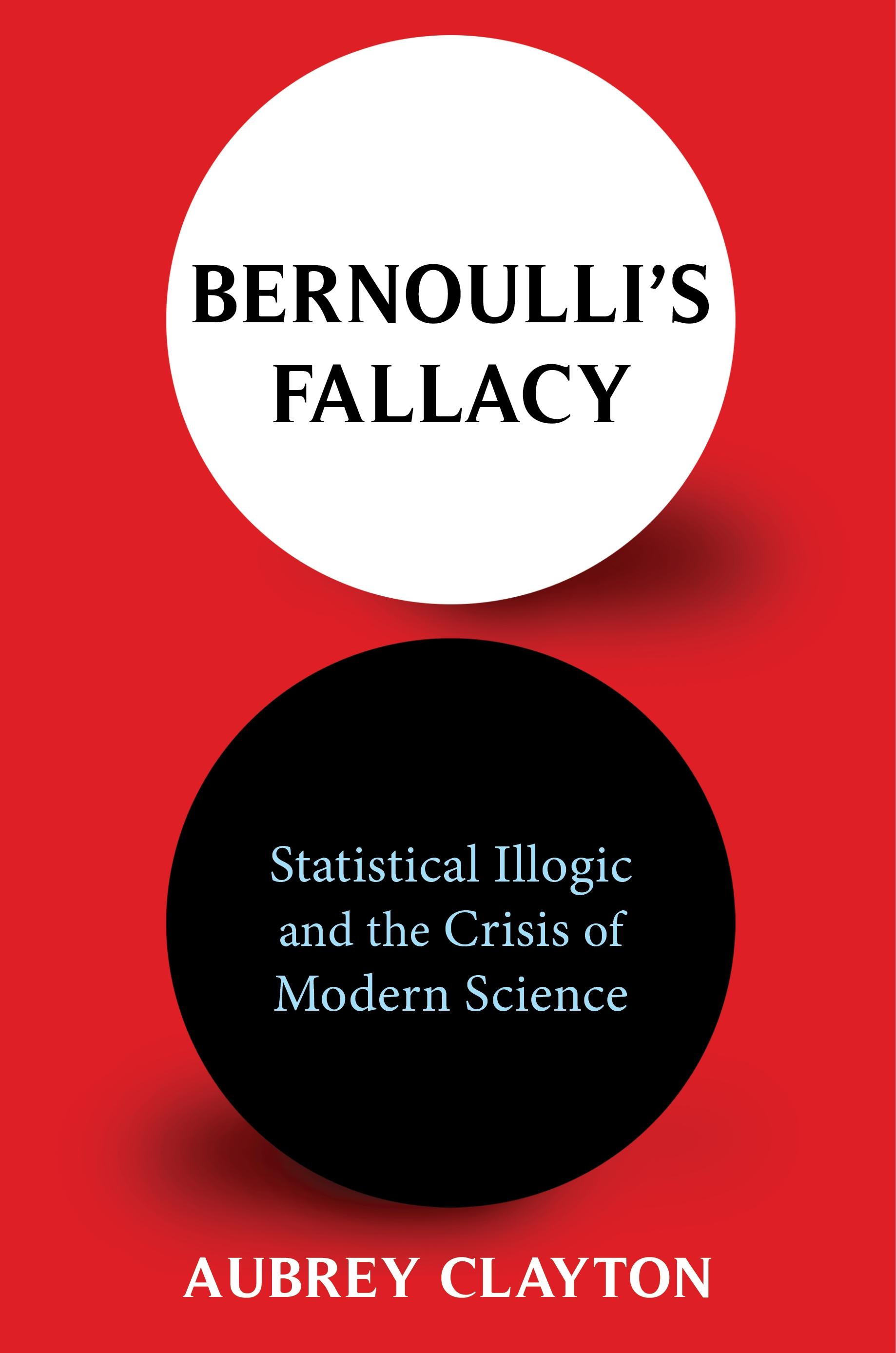
There is a logical flaw in the statistical methods used across experimental science. This fault is not a minor academic quibble: it underlies a reproducibility crisis now threatening entire disciplines. In an increasingly statistics-reliant society, this same deeply rooted error shapes decisions in medicine, law, and public policy with profound consequences. The foundation of the problem is a misunderstanding of probability and its role in making inferences from observations.
Aubrey Clayton traces the history of how statistics went astray, beginning with the groundbreaking work of the seventeenth-century mathematician Jacob Bernoulli and winding through gambling, astronomy, and genetics. Clayton recounts the feuds among rival schools of statistics, exploring the surprisingly human problems that gave rise to the discipline and the all-too-human shortcomings that derailed it. He highlights how influential nineteenth- and twentieth-century figures developed a statistical methodology they claimed was purely objective in order to silence critics of their political agendas, including eugenics.
Clayton provides a clear account of the mathematics and logic of probability, conveying complex concepts accessibly for readers interested in the statistical methods that frame our understanding of the world. He contends that we need to take a Bayesian approach—that is, to incorporate prior knowledge when reasoning with incomplete information—in order to resolve the crisis. Ranging across math, philosophy, and culture, Bernoulli’s Fallacy explains why something has gone wrong with how we use data—and how to fix it.
Betal nemt med kort, Klarna, Apple Pay eller Google Pay. Ikke tilfreds? Du har altid 14 dages fortrydelsesret. Læs mere i vores vilkår. Har du spørgsmål, så send os en mail på hello@memmo.org.
Memmo gør det nemmere at studere – uanset hvor du er i verden. Hos os samler du dine kursusbøger og smarte studieværktøjer ét sted: resuméer, quizzer, podcasts og flashcards. Og så er der Ted, din studieven, der svarer på alt, du undrer dig over. Over 50 000 studerende studerer allerede her – bygget til at hjælpe dig med at lære hurtigere og stresse mindre.