
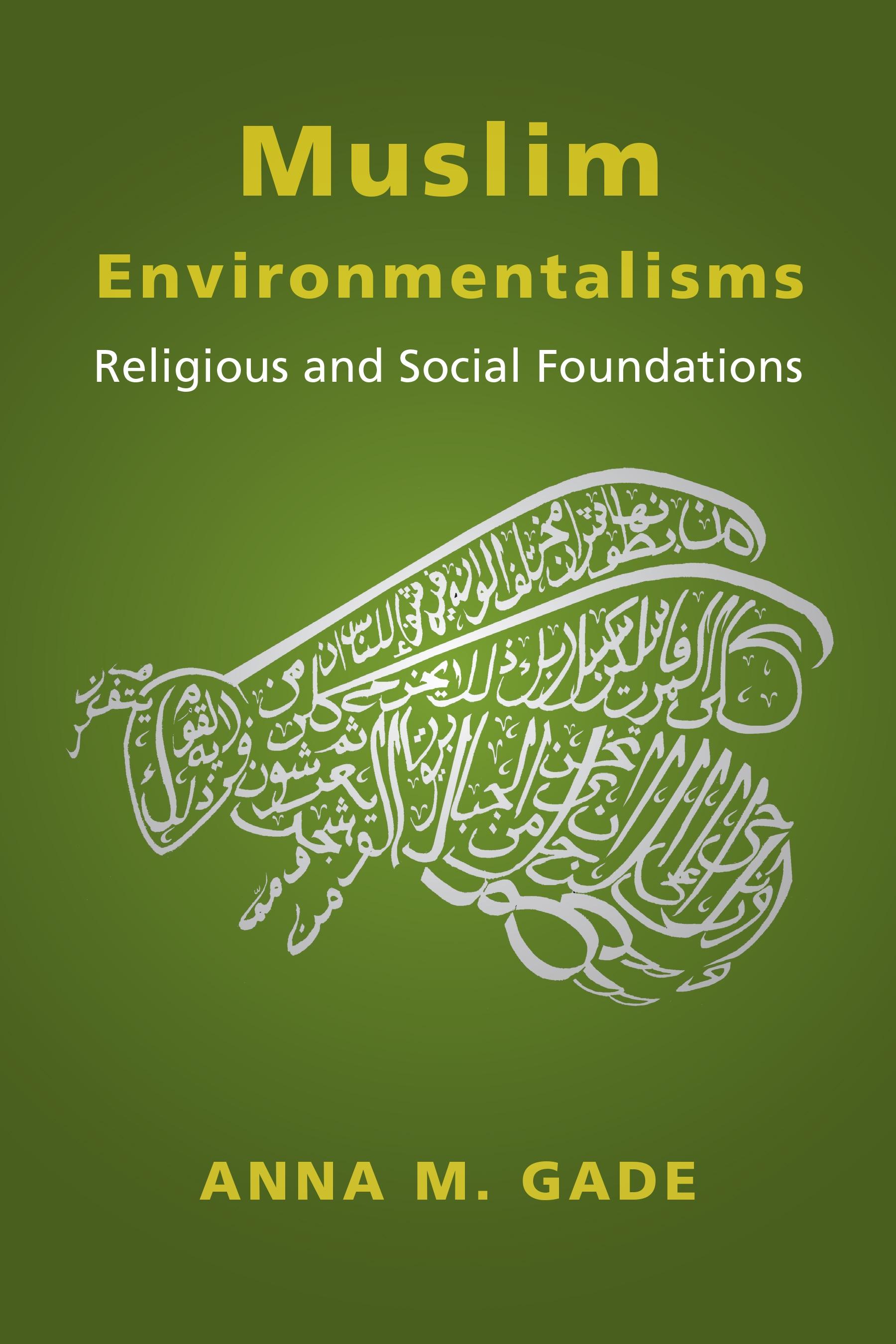
How might understandings of environmentalism and the environmental humanities shift by incorporating Islamic perspectives? In this book, Anna M. Gade explores the religious and cultural foundations of Islamic environmentalisms. She blends textual and ethnographic study to offer a comprehensive and interdisciplinary account of the legal, ethical, social, and empirical principles underlying Muslim commitments to the earth.
Muslim Environmentalisms shows how diverse Muslim communities and schools of thought have addressed ecological questions for the sake of this world and the world to come. Gade draws on a rich spectrum of materials―scripture, jurisprudence, science, art, and social and political engagement―as well as fieldwork in Indonesia and Southeast Asia. The book brings together case studies in disaster management, educational programs, international development, conservation projects, religious ritual and performance, and Islamic law to rethink key theories. Gade shows that the Islamic tradition leads us to see the environment as an ethical idea, moving beyond the established frameworks of both nature and crisis. Muslim Environmentalisms models novel approaches to the study of religion and environment from a humanistic perspective, reinterpreting issues at the intersection of numerous academic disciplines to propose a postcolonial and global understanding of environment in terms of consequential relations.
Betal nemt med kort, Klarna, Apple Pay eller Google Pay. Ikke tilfreds? Du har altid 14 dages fortrydelsesret. Læs mere i vores vilkår. Har du spørgsmål, så send os en mail på hello@memmo.org.
Memmo gør det nemmere at studere – uanset hvor du er i verden. Hos os samler du dine kursusbøger og smarte studieværktøjer ét sted: resuméer, quizzer, podcasts og flashcards. Og så er der Ted, din studieven, der svarer på alt, du undrer dig over. Over 50 000 studerende studerer allerede her – bygget til at hjælpe dig med at lære hurtigere og stresse mindre.