
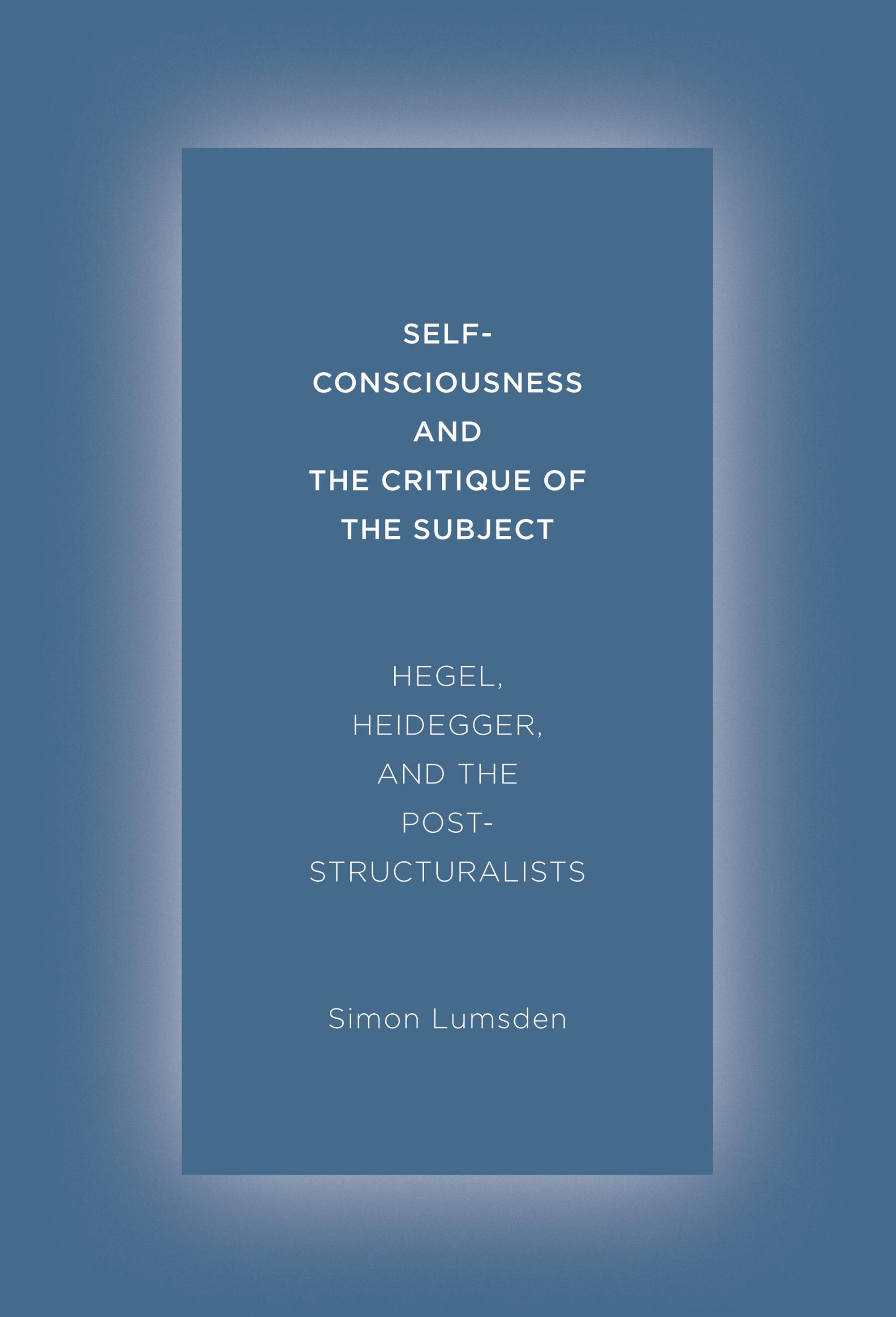
Poststructuralists hold Hegel responsible for giving rise to many of modern philosophy's problematic concepts—the authority of reason, self-consciousness, the knowing subject. Yet, according to Simon Lumsden, this animosity is rooted in a fundamental misunderstanding of Hegel's thought, and resolving this tension can not only heal the rift between poststructuralism and German idealism but also point these traditions in exciting new directions.
Revisiting the philosopher's key texts, Lumsden calls attention to Hegel's reformulation of liberal and Cartesian conceptions of subjectivity, identifying a critical though unrecognized continuity between poststructuralism and German idealism. Poststructuralism forged its identity in opposition to idealist subjectivity; however, Lumsden argues this model is not found in Hegel's texts but in an uncritical acceptance of Heidegger's characterization of Hegel and Fichte as "metaphysicians of subjectivity." Recasting Hegel as both post-Kantian and postmetaphysical, Lumsden sheds new light on this complex philosopher while revealing the surprising affinities between two supposedly antithetical modes of thought.
Betal nemt med kort, Klarna, Apple Pay eller Google Pay. Ikke tilfreds? Du har altid 14 dages fortrydelsesret. Læs mere i vores vilkår. Har du spørgsmål, så send os en mail på hello@memmo.org.
Memmo gør det nemmere at studere – uanset hvor du er i verden. Hos os samler du dine kursusbøger og smarte studieværktøjer ét sted: resuméer, quizzer, podcasts og flashcards. Og så er der Ted, din studieven, der svarer på alt, du undrer dig over. Over 50 000 studerende studerer allerede her – bygget til at hjælpe dig med at lære hurtigere og stresse mindre.