
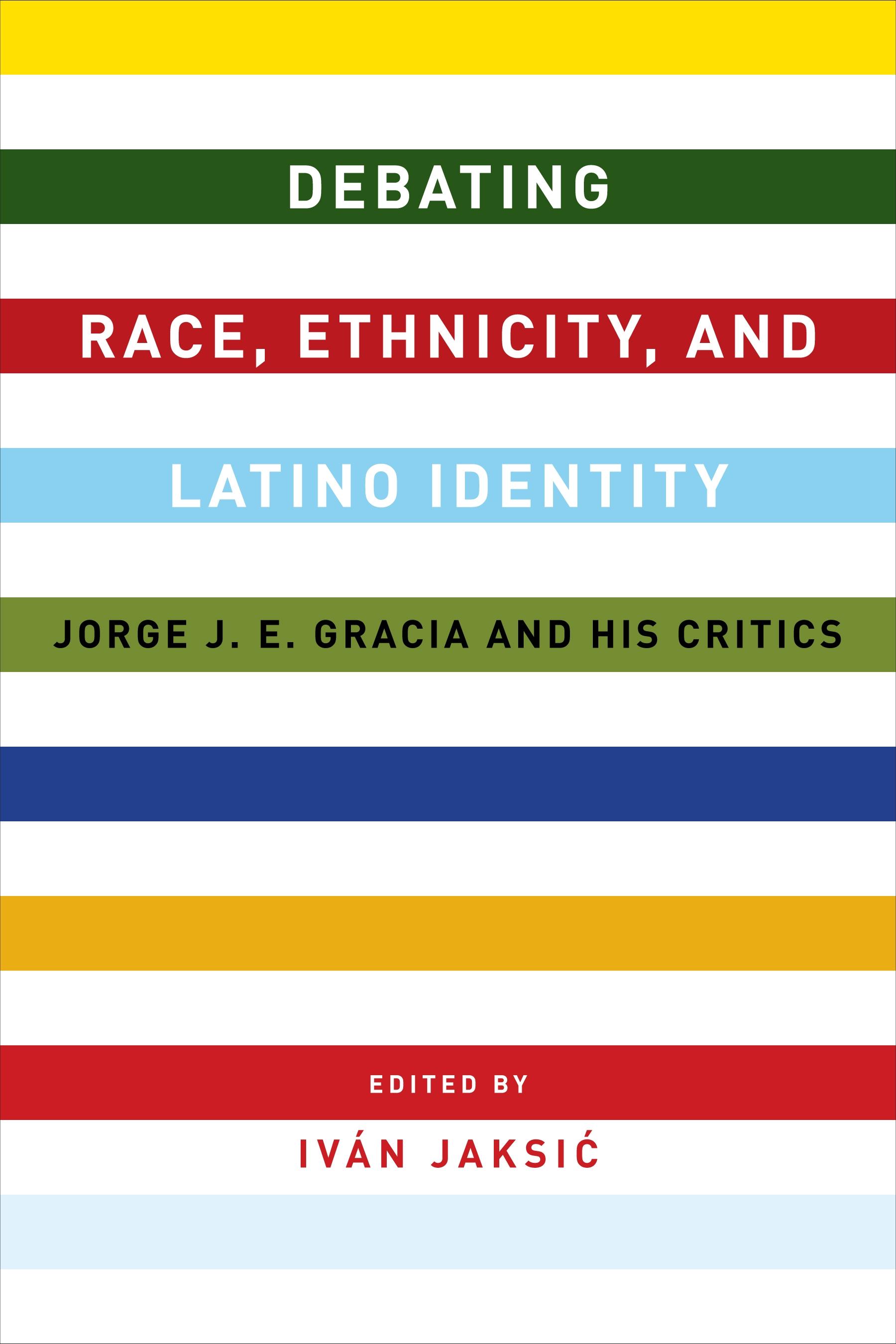
The philosopher Jorge J. E. Gracia engages fifteen prominent scholars on race, ethnicity, nationality, and Hispanic/Latino identity in the United States. Their discussion joins two distinct traditions: the philosophy of race begun by African Americans in the nineteenth century, and the search for an understanding of identity initiated by Latin American philosophers in the sixteenth century. Participants include Linda M. Alcoff, K. Anthony Appiah, Richard J. Bernstein, Lawrence Blum, Robert Gooding-Williams, Eduardo Mendieta, and Lucius T. Outlaw Jr., and their dialogue reflects the analytic, Aristotelian, Continental, literary, Marxist, and pragmatic schools of thought.
These intellectuals start with the philosophy of Hispanics/Latinos in the United States and then move to the philosophy of African Americans and Anglo Americans in the United States and the philosophy of Latin Americans in Latin America. Gracia and his interlocutors debate the nature of race and ethnicity and their relation to nationality, linguistic rights, matters of identity, and Affirmative Action, binding the concepts of race and ethnicity together in ways that open new paths of inquiry. Gracia's Familial-Historical View of ethnic and Hispanic/Latino identity operates at the center of each of these discussions, providing vivid access to the philosopher's provocative arguments while adding unique depth to issues that each of us struggles to understand.
Betal nemt med kort, Klarna, Apple Pay eller Google Pay. Ikke tilfreds? Du har altid 14 dages fortrydelsesret. Læs mere i vores vilkår. Har du spørgsmål, så send os en mail på hello@memmo.org.
Memmo gør det nemmere at studere – uanset hvor du er i verden. Hos os samler du dine kursusbøger og smarte studieværktøjer ét sted: resuméer, quizzer, podcasts og flashcards. Og så er der Ted, din studieven, der svarer på alt, du undrer dig over. Over 50 000 studerende studerer allerede her – bygget til at hjælpe dig med at lære hurtigere og stresse mindre.