
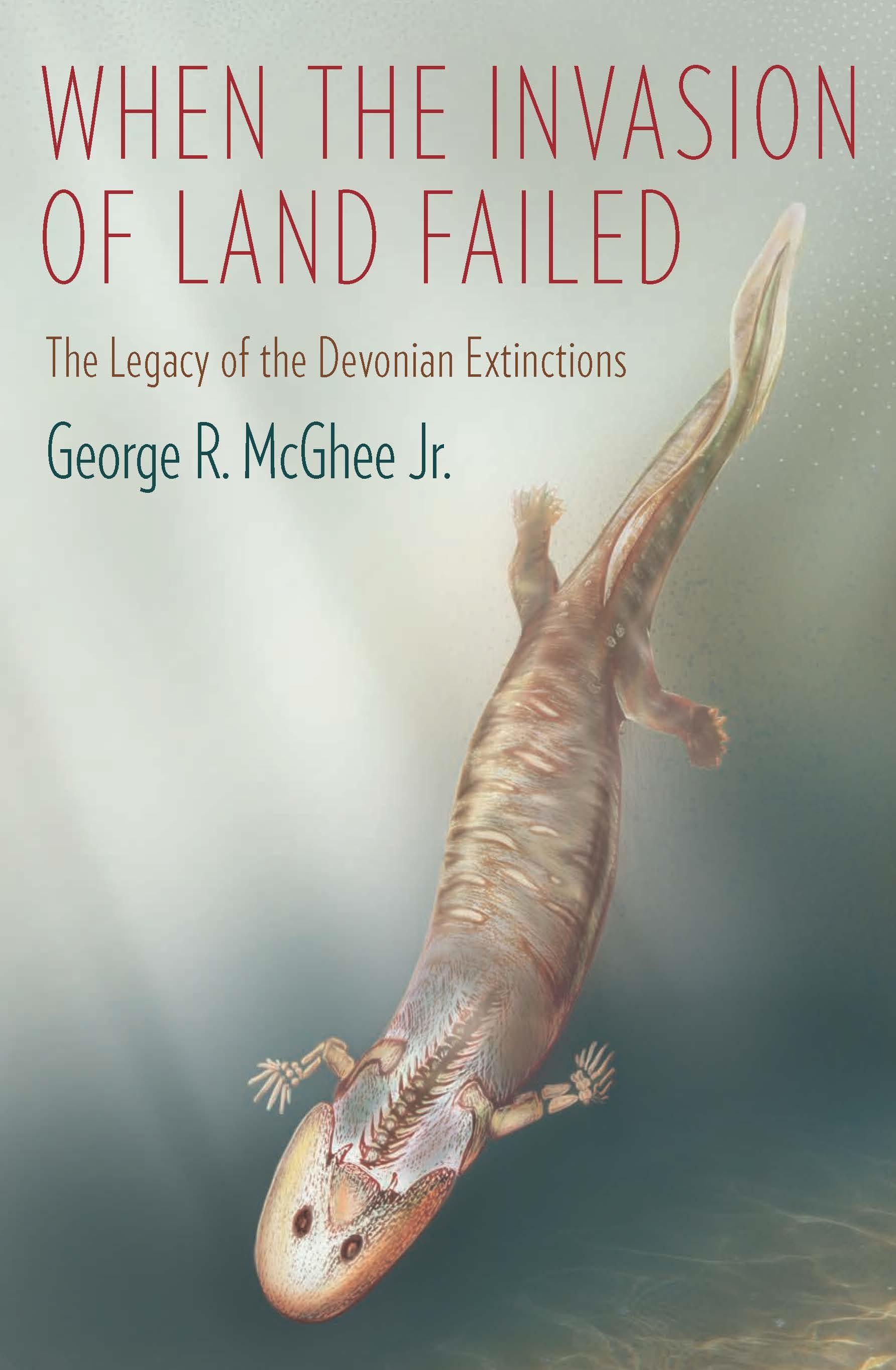
The invasion of land by ocean-dwelling plants and animals was one of the most revolutionary events in the evolution of life on Earth, yet the animal invasion almost failed—twice—because of the twin mass extinctions of the Late Devonian Epoch. Some 359 to 375 million years ago, these catastrophic events dealt our ancestors a blow that almost drove them back into the sea. If those extinctions had been just a bit more severe, spiders and insects—instead of vertebrates—might have become the ecologically dominant forms of animal life on land.
This book examines the profound evolutionary consequences of the Late Devonian extinctions and the various theories proposed to explain their occurrence. Only one group of four-limbed vertebrates exists on Earth, while other tetrapod-like fishes are extinct. This gap is why the idea of "fish with feet" seems so peculiar to us, yet such animals were once a vital part of our world, and if the Devonian extinctions had not happened, members of these species, like the famous Acanthostega and Ichthyostega, might have continued to live in our rivers and lakes. Synthesizing decades of research and including a wealth of new discoveries, this accessible, comprehensive text explores the causes of the Devonian extinctions, the reasons vertebrates were so severely affected, and the potential evolution of the modern world if the extinctions had never taken place.
Betal nemt med kort, Klarna, Apple Pay eller Google Pay. Ikke tilfreds? Du har altid 14 dages fortrydelsesret. Læs mere i vores vilkår. Har du spørgsmål, så send os en mail på hello@memmo.org.
Memmo gør det nemmere at studere – uanset hvor du er i verden. Hos os samler du dine kursusbøger og smarte studieværktøjer ét sted: resuméer, quizzer, podcasts og flashcards. Og så er der Ted, din studieven, der svarer på alt, du undrer dig over. Over 50 000 studerende studerer allerede her – bygget til at hjælpe dig med at lære hurtigere og stresse mindre.