
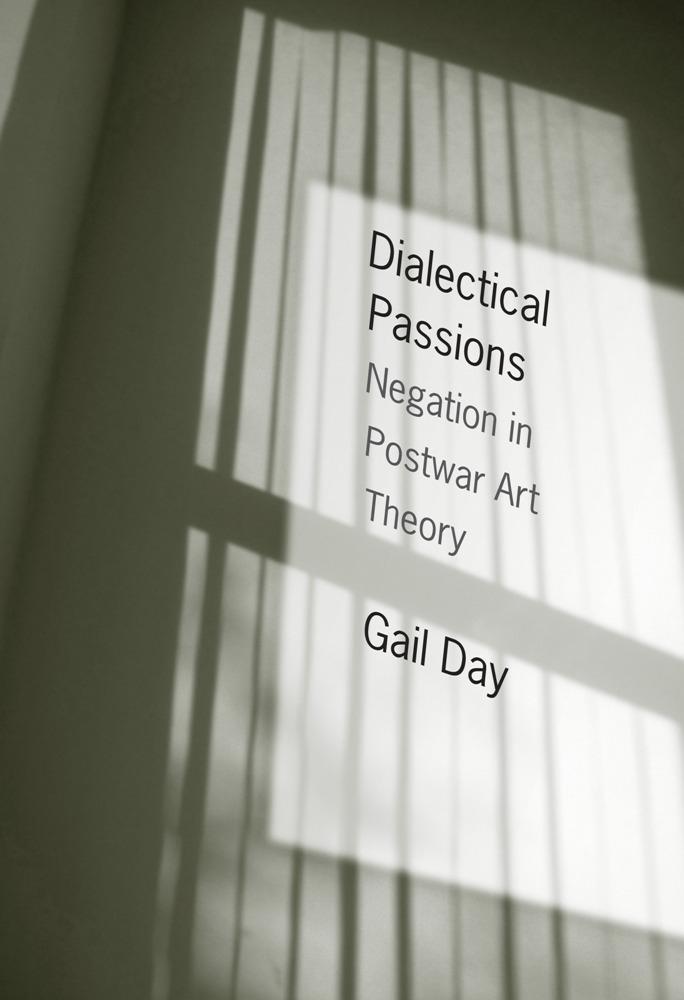
Representing a new generation of theorists reaffirming the radical dimensions of art, Gail Day launches a bold critique of late twentieth-century art theory and its often reductive analysis of cultural objects. Exploring core debates in discourses on art, from the New Left to theories of "critical postmodernism" and beyond, Day counters the belief that recent tendencies in art fail to be adequately critical. She also challenges the political inertia that results from these conclusions.
Day organizes her defense around critics who have engaged substantively with emancipatory thought and social process: T. J. Clark, Manfredo Tafuri, Fredric Jameson, Benjamin H. D. Buchloh, and Hal Foster, among others. She maps the tension between radical dialectics and left nihilism and assesses the interpretation and internalization of negation in art theory.
Chapters confront the claim that exchange and equivalence have subsumed the use value of cultural objectsand with it critical distance and interrogate the proposition of completed nihilism and the metropolis put forward in the politics of Italian operaismo. Day covers the debates on symbol and allegory waged within the context of 1980s art and their relation to the writings of Walter Benjamin and Paul de Man. She also examines common conceptions of mediation, totality, negation, and the politics of anticipation. A necessary unsettling of received wisdoms, Dialectical Passions recasts emancipatory reflection in aesthetics, art, and architecture.
Betal nemt med kort, Klarna, Apple Pay eller Google Pay. Ikke tilfreds? Du har altid 14 dages fortrydelsesret. Læs mere i vores vilkår. Har du spørgsmål, så send os en mail på hello@memmo.org.
Memmo gør det nemmere at studere – uanset hvor du er i verden. Hos os samler du dine kursusbøger og smarte studieværktøjer ét sted: resuméer, quizzer, podcasts og flashcards. Og så er der Ted, din studieven, der svarer på alt, du undrer dig over. Over 50 000 studerende studerer allerede her – bygget til at hjælpe dig med at lære hurtigere og stresse mindre.