
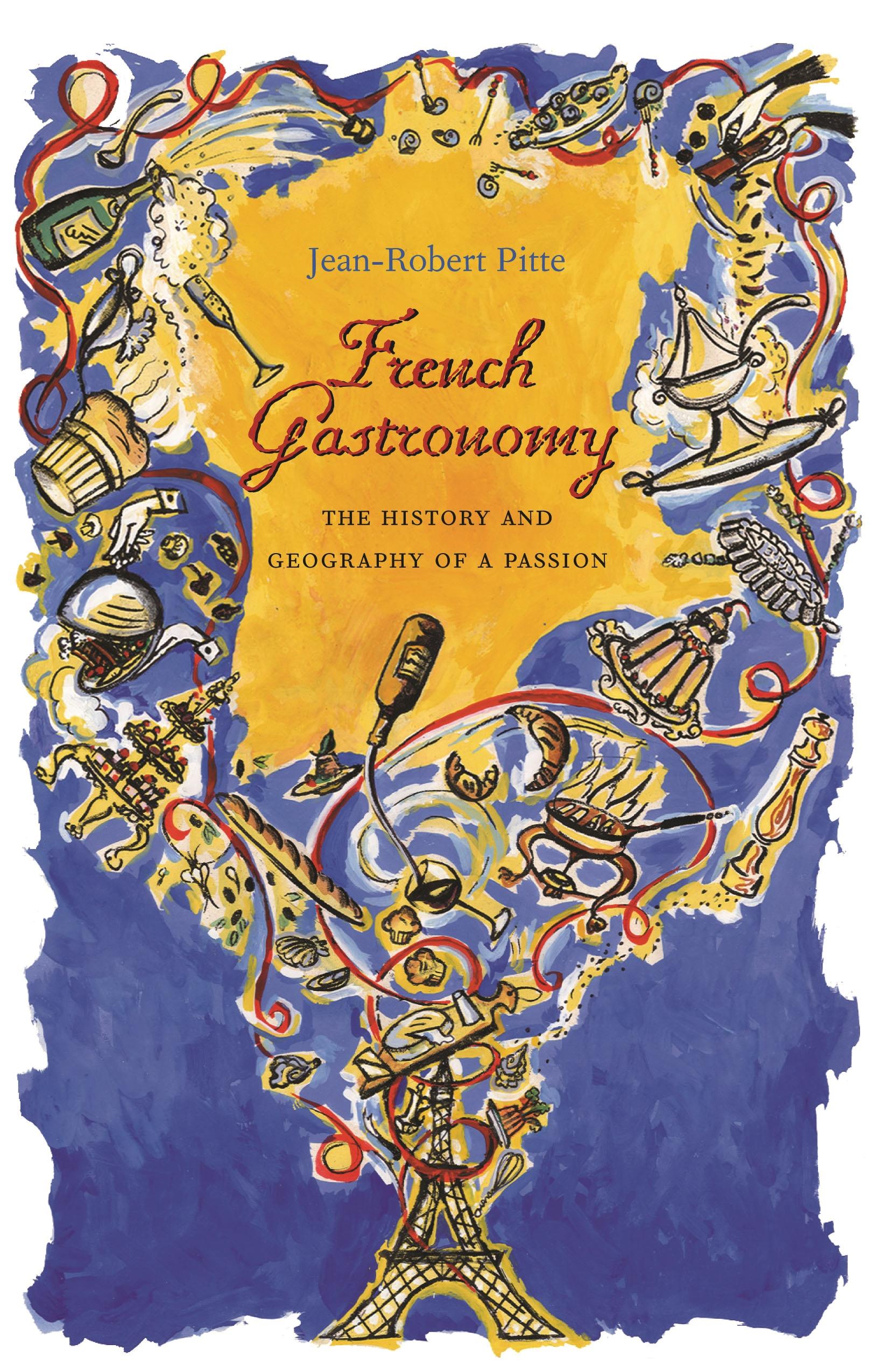
This we can be sure of: when a restaurant in the western world is famous for its cooking, it is the tricolor flag that hangs above the stove, opined one French magazine, and this is by no means an isolated example of such crowing. Indeed, both linguistically and conceptually, the restaurant itself is a French creation. Why are the French recognized by themselves and others the world over as the most enlightened of eaters, as the great gourmets? Why did the passion for food—gastronomy—originate in France? In French Gastronomy, geographer and food lover Jean-Robert Pitte uncovers a novel answer. The key, it turns out, is France herself. In her climate, diversity of soils, abundant resources, and varied topography lie the roots of France's food fame.
Pitte masterfully reveals the ways in which cultural phenomena surrounding food and eating in France relate to space and place. He points out that France has some six hundred regions, or microclimates, that allow different agricultures, to flourish, and fully navigable river systems leading from peripheral farmlands directly to markets in the great gastronomic centers of Paris and Lyon. With an eye to this landscape, Pitte wonders: Would the great French burgundies enjoy such prestige if the coast they came from were not situated close to the ancient capital for the dukes and a major travel route for medieval Europe?
Yet for all the shaping influence of earth and climate, Pitte demonstrates that haute cuisine, like so much that is great about France, can be traced back to the court of Louis XIV. It was the Sun King's regal gourmandise—he enacted a nightly theater of eating, dining alone but in full view of the court—that made food and fine dining a central affair of state. The Catholic Church figures prominently as well: gluttony was regarded as a "benign sin" in France, and eating well was associated with praising God, fraternal conviviality, and a respect for the body. These cultural ingredients, in combination with the bounties of the land, contributed to the full flowering of French foodways.
This is a time of paradox for French gourmandism. Never has there been so much literature published on the subject of culinary creativity, never has there been so much talk about good food, and never has so little cooking been done at home. Each day new fast-food places open. Will French cuisine lose its charm and its soul? Will discourse become a substitute for reality? French Gastronomy is a delightful celebration of what makes France unique, and a call to everyone who loves French food to rediscover its full flavor.
Betal nemt med kort, Klarna, Apple Pay eller Google Pay. Ikke tilfreds? Du har altid 14 dages fortrydelsesret. Læs mere i vores vilkår. Har du spørgsmål, så send os en mail på hello@memmo.org.
Memmo gør det nemmere at studere – uanset hvor du er i verden. Hos os samler du dine kursusbøger og smarte studieværktøjer ét sted: resuméer, quizzer, podcasts og flashcards. Og så er der Ted, din studieven, der svarer på alt, du undrer dig over. Over 50 000 studerende studerer allerede her – bygget til at hjælpe dig med at lære hurtigere og stresse mindre.