
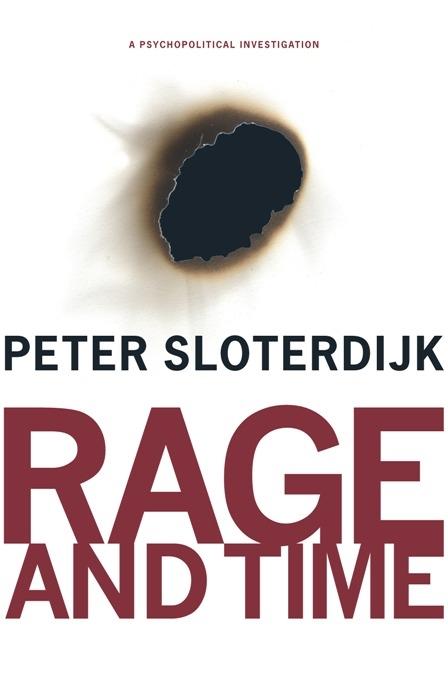
While ancient civilizations worshipped strong, active emotions, modern societies have favored more peaceful attitudes, especially within the democratic process. We have largely forgotten the struggle to make use of thymos, the part of the soul that, following Plato, contains spirit, pride, and indignation. Rather, Christianity and psychoanalysis have promoted mutual understanding to overcome conflict. Through unique examples, Peter Sloterdijk, the preeminent posthumanist, argues exactly the opposite, showing how the history of Western civilization can be read as a suppression and return of rage.
By way of reinterpreting the Iliad, Alexandre Dumas's Count of Monte Cristo, and recent Islamic political riots in Paris, Sloterdijk proves the fallacy that rage is an emotion capable of control. Global terrorism and economic frustrations have rendered strong emotions visibly resurgent, and the consequences of violent outbursts will determine international relations for decades to come. To better respond to rage and its complexity, Sloterdijk daringly breaks with entrenched dogma and contructs a new theory for confronting conflict. His approach acknowledges and respects the proper place of rage and channels it into productive political struggle.
Betal nemt med kort, Klarna, Apple Pay eller Google Pay. Ikke tilfreds? Du har altid 14 dages fortrydelsesret. Læs mere i vores vilkår. Har du spørgsmål, så send os en mail på hello@memmo.org.
Memmo gør det nemmere at studere – uanset hvor du er i verden. Hos os samler du dine kursusbøger og smarte studieværktøjer ét sted: resuméer, quizzer, podcasts og flashcards. Og så er der Ted, din studieven, der svarer på alt, du undrer dig over. Over 50 000 studerende studerer allerede her – bygget til at hjælpe dig med at lære hurtigere og stresse mindre.