
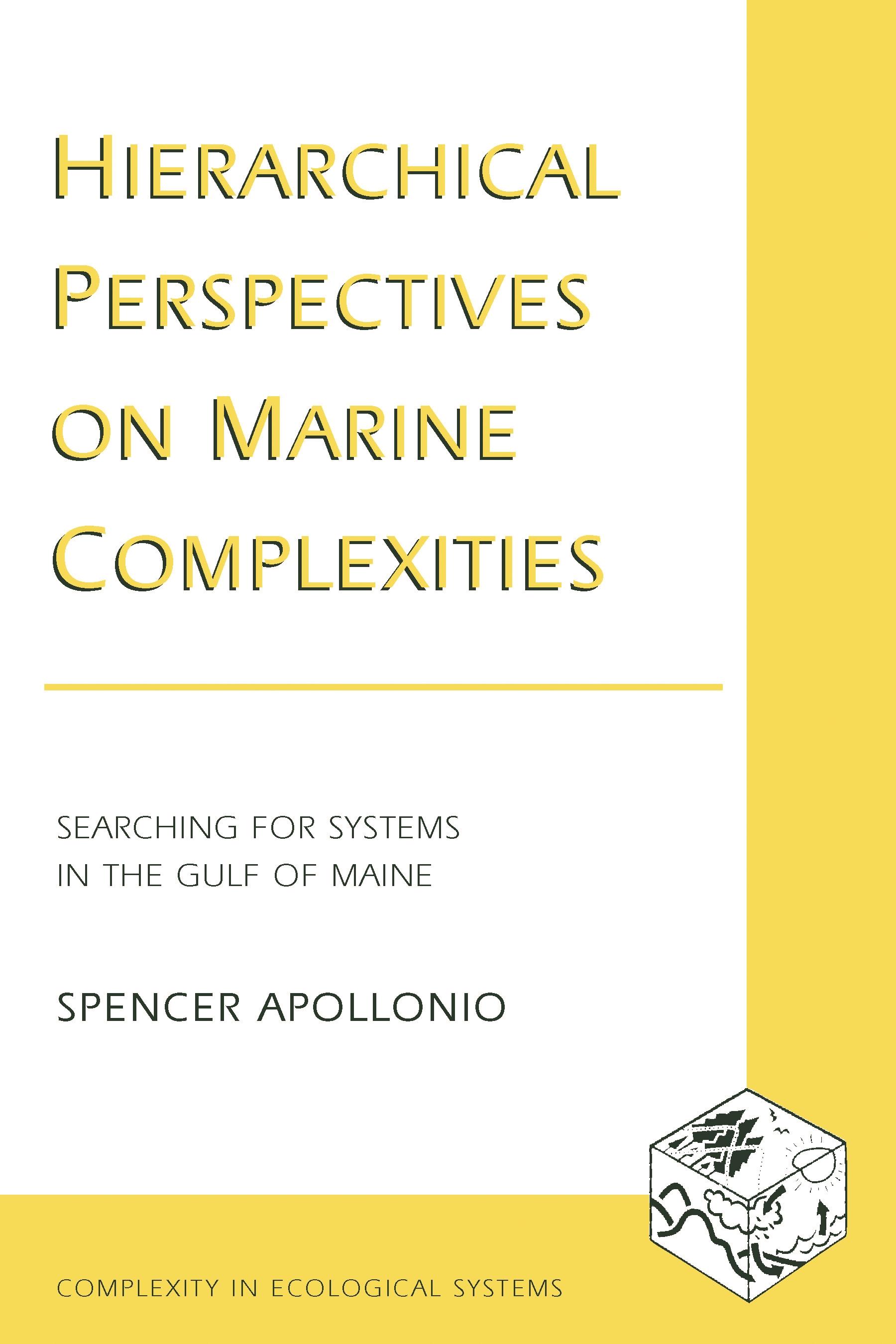
The Gulf of Maine supports a vital fishery for North America and is one of the most intensely studied marine ecosystems in the world. An understanding of its ecology has practical applications to management of other marine systems and fisheries. This book is the first application of Hierarchy Theory to the ecological workings of the Gulf of Maine and of marine ecosystems in general. Hierarchy Theory offers a perspective that simplifies the apparent complications and contradictions of ecosystems, which encompass a number of scales of time (from minutes to decades or longer) and of space (from centimeters to kilometers). Spencer Apollonio explores in detail the idea of natural constraints inherent in hierarchical ecosystems and the impact upon such systems when constraints are reduced or removed. He argues that conventional fisheries management, which practices the removal of these constraints, may be doomed to failure. Apollonio focuses in particular on the "groundfish crisis" in the Gulf, the precipitous decline due to overfishing in populations of cod, haddock, pollock, hakes, and various types of flounders, which have together constituted the mainstay of the Maine fishing industry for centuries. Hierarchical Perspectives on Marine Complexities presents a compelling case for a new approach that holds the promise of resource sustainability in the face of enormously complicated natural and cultural forces.
Betal nemt med kort, Klarna, Apple Pay eller Google Pay. Ikke tilfreds? Du har altid 14 dages fortrydelsesret. Læs mere i vores vilkår. Har du spørgsmål, så send os en mail på hello@memmo.org.
Memmo gør det nemmere at studere – uanset hvor du er i verden. Hos os samler du dine kursusbøger og smarte studieværktøjer ét sted: resuméer, quizzer, podcasts og flashcards. Og så er der Ted, din studieven, der svarer på alt, du undrer dig over. Over 50 000 studerende studerer allerede her – bygget til at hjælpe dig med at lære hurtigere og stresse mindre.
Du kan måske også lide
Køb bogen0