
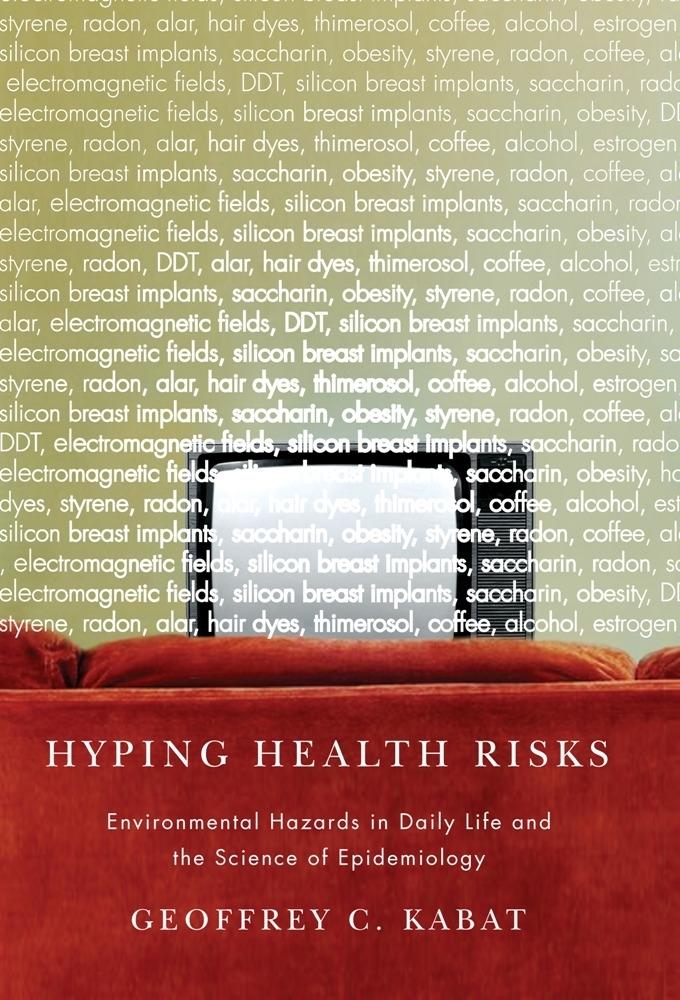
The media constantly bombard us with news of health hazards lurking in our everyday lives, but many of these hazards turn out to have been greatly overblown. According to author and epidemiologist Geoffrey C. Kabat, this hyping of low-level environmental hazards leads to needless anxiety and confusion on the part of the public concerning which exposures have important effects on health and which are likely to have minimal or no effect.
Kabat approaches health scares as "social facts" and shows that a variety of factors can contribute to the inflating of a hazard. These include skewed reporting by the media, but also, surprisingly, the actions of researchers who may emphasize certain findings while ignoring others; regulatory and health agencies eager to show their responsiveness to the health concerns of the public; and politicians and advocates with a stake in a particular outcome.
By means of four case studies, Kabat demonstrates how a powerful confluence of interests can lead to overstating or distorting the scientific evidence. He considers the health risks of pollutants such as DDT as a cause of breast cancer, electromagnetic fields from power lines, radon within residences, and secondhand tobacco smoke. Tracing the trajectory of each of these hazards from its initial emergence to the present, Kabat shows how publication of more rigorous studies and critical assessments ultimately help put hazards in perspective.
Betal nemt med kort, Klarna, Apple Pay eller Google Pay. Ikke tilfreds? Du har altid 14 dages fortrydelsesret. Læs mere i vores vilkår. Har du spørgsmål, så send os en mail på hello@memmo.org.
Memmo gør det nemmere at studere – uanset hvor du er i verden. Hos os samler du dine kursusbøger og smarte studieværktøjer ét sted: resuméer, quizzer, podcasts og flashcards. Og så er der Ted, din studieven, der svarer på alt, du undrer dig over. Over 50 000 studerende studerer allerede her – bygget til at hjælpe dig med at lære hurtigere og stresse mindre.