
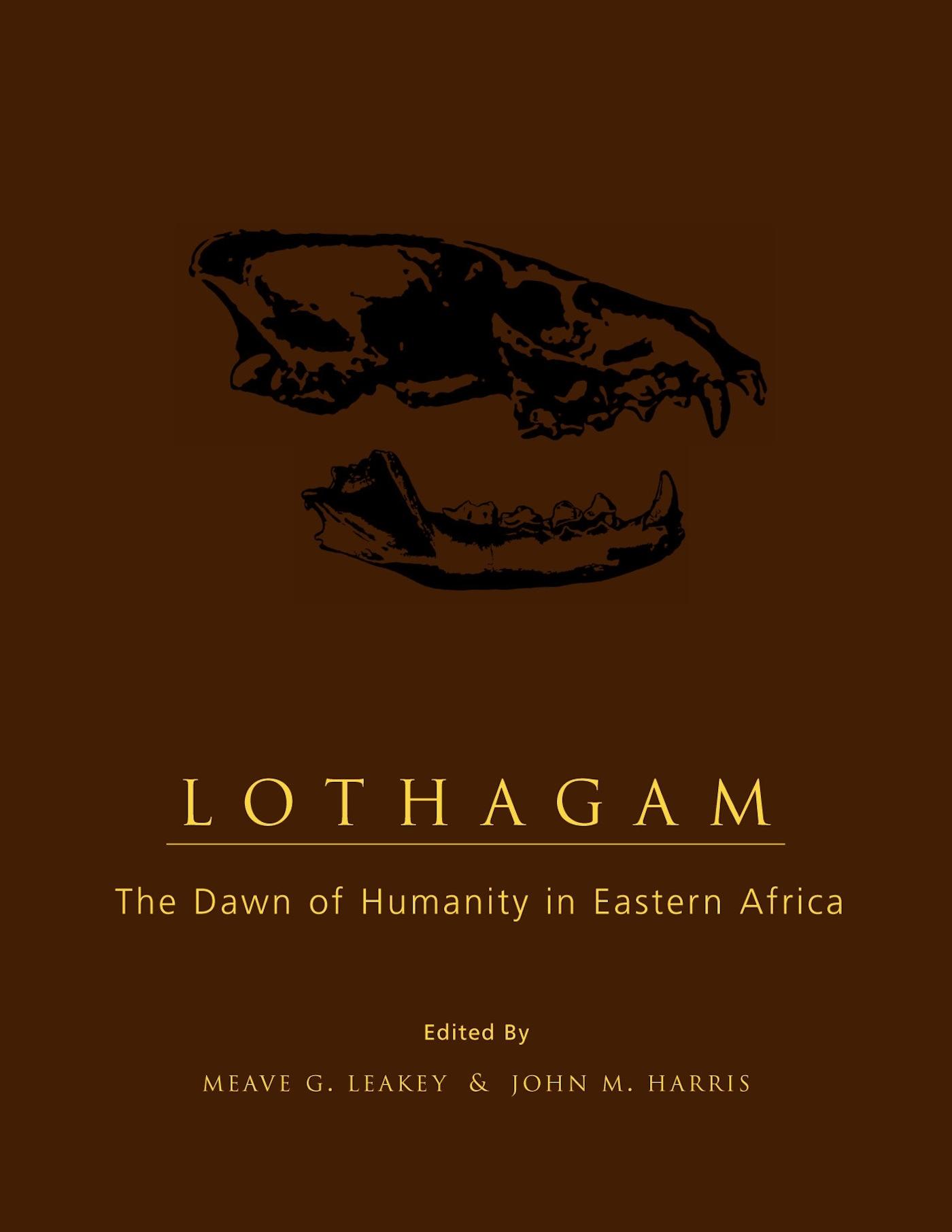
Located at the southwest corner of Lake Turkana in northern Kenya, Lothagam represents one of the most important intervals in African prehistory. Early human remains are restricted in distribution to Africa and the acquisition of an upright bipedal striding gait, the hallmark of humanity, appears to be at least circumstantially linked to the reduction of equatorial forests and the spread of grasslands on that continent. The diverse Lothagam fauna documents the end-Miocene transition from forested to more open habitats that were exploited by grazing horses and antelopes, hippos, giant pigs, and true elephants. It also includes spectacularly complete fossil carnivore skeletons and some of the oldest human remains.
Enlisting a team of highly qualified specialists, this book provides the geologic context and dating framework for the Lothagam fossiliferous sequences, describes the immense diversity of vertebrate fossils recovered from the Late Miocene and Early Pliocene sediments, and synthesizes the results to interpret the changing paleoenvironments that prevailed at this site. The book will interest anthropologists, paleontologists, geologists, and anyone interested in human origins.
Betal nemt med kort, Klarna, Apple Pay eller Google Pay. Ikke tilfreds? Du har altid 14 dages fortrydelsesret. Læs mere i vores vilkår. Har du spørgsmål, så send os en mail på hello@memmo.org.
Memmo gør det nemmere at studere – uanset hvor du er i verden. Hos os samler du dine kursusbøger og smarte studieværktøjer ét sted: resuméer, quizzer, podcasts og flashcards. Og så er der Ted, din studieven, der svarer på alt, du undrer dig over. Over 50 000 studerende studerer allerede her – bygget til at hjælpe dig med at lære hurtigere og stresse mindre.