
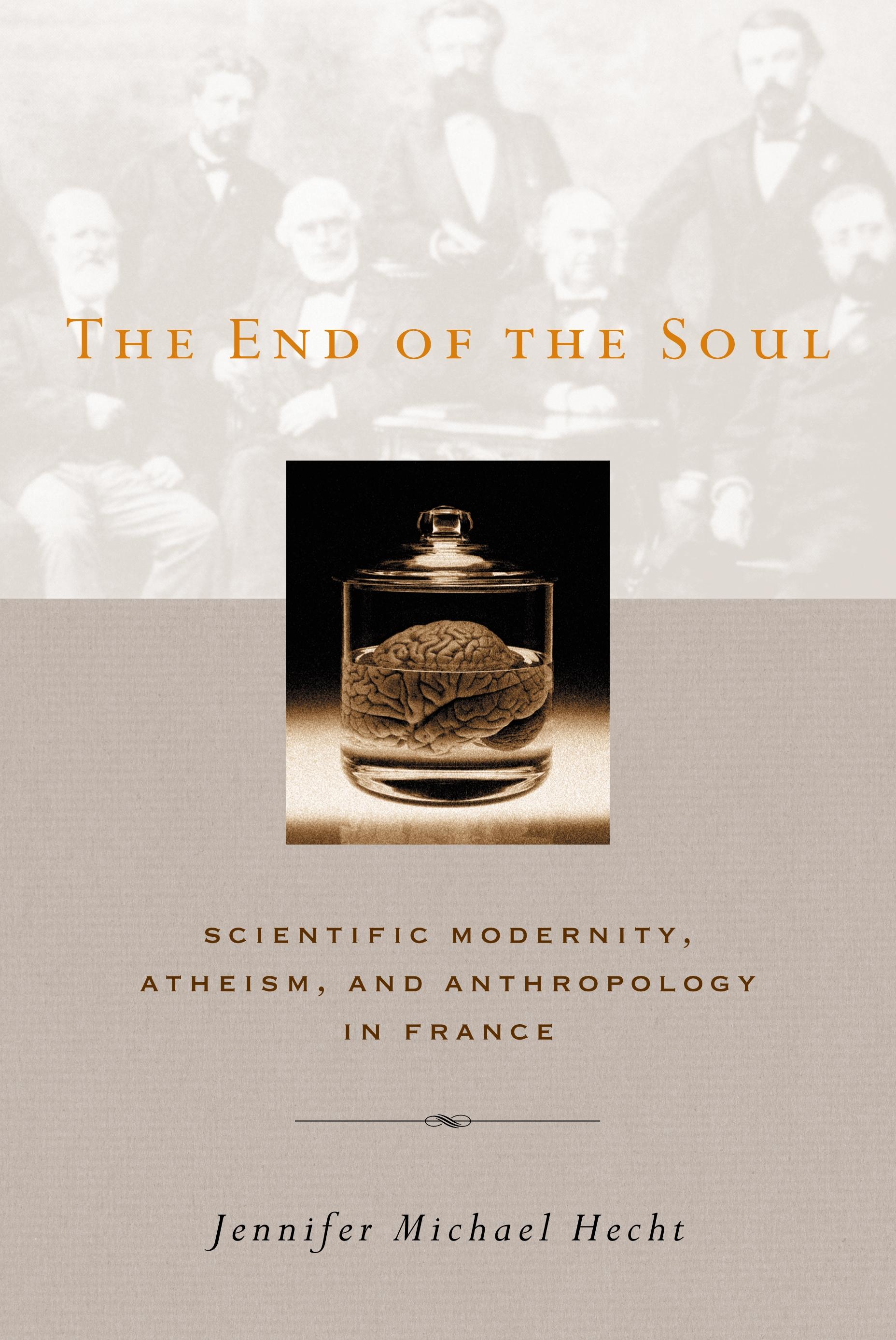
On October 19, 1876 a group of leading French citizens, both men and women included, joined together to form an unusual group, The Society of Mutual Autopsy, with the aim of proving that souls do not exist. The idea was that, after death, they would dissect one another and (hopefully) show a direct relationship between brain shapes and sizes and the character, abilities and intelligence of individuals. This strange scientific pact, and indeed what we have come to think of as anthropology, which the group's members helped to develop, had its genesis in aggressive, evangelical atheism.
With this group as its focus, The End of the Soul is a study of science and atheism in France in late nineteenth and early twentieth centuries. It shows that anthropology grew in the context of an impassioned struggle between the forces of tradition, especially the Catholic faith, and those of a more freethinking modernism, and moreover that it became for many a secular religion. Among the adherents of this new faith discussed here are the novelist Emile Zola, the great statesman Leon Gambetta, the American birth control advocate Margaret Sanger, and Arthur Conan Doyle, whose Sherlock Holmes embodied the triumph of ratiocination over credulity.
Boldly argued, full of colorful characters and often bizarre battles over science and faith, this book represents a major contribution to the history of science and European intellectual history.
Betal nemt med kort, Klarna, Apple Pay eller Google Pay. Ikke tilfreds? Du har altid 14 dages fortrydelsesret. Læs mere i vores vilkår. Har du spørgsmål, så send os en mail på hello@memmo.org.
Memmo gør det nemmere at studere – uanset hvor du er i verden. Hos os samler du dine kursusbøger og smarte studieværktøjer ét sted: resuméer, quizzer, podcasts og flashcards. Og så er der Ted, din studieven, der svarer på alt, du undrer dig over. Over 50 000 studerende studerer allerede her – bygget til at hjælpe dig med at lære hurtigere og stresse mindre.