
Zanim poznałem Memmo, moje notatki były rozrzucone po PDF-ach. Teraz obszar roboczy zbiera wszystko w jednym miejscu — widzę dokładnie, co jeszcze muszę powtórzyć.
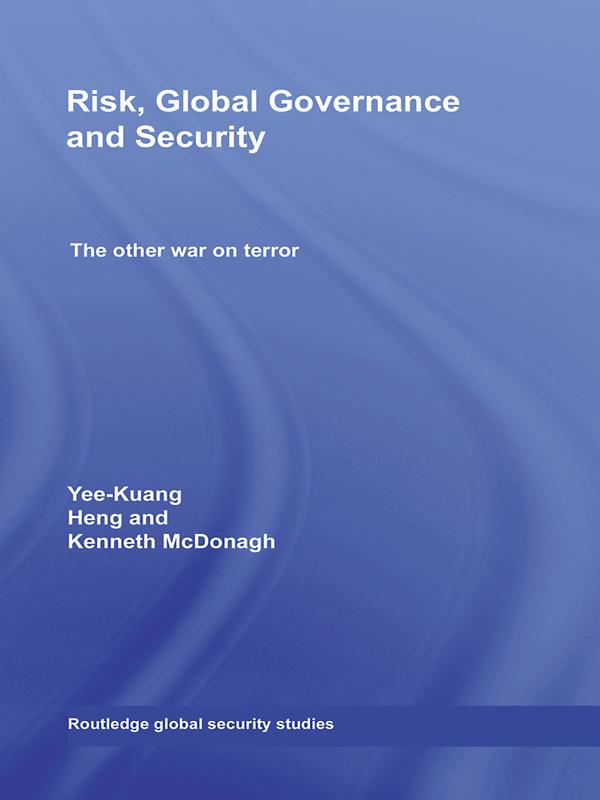
This book applies risk society theory to the 'War on Terror', steering the discussion away from the militaristic discourse of the Bush era towards an emphasis on global cooperation and a new cosmopolitan agenda.
The literature and rhetoric of the 'War on Terror' has been dominated by dramatic high-profile military campaigns and division in the international community. This overlooks the various multilateral practices and cooperative processes that are emerging to combat global terrorism. President Bush himself had initially been at pains to stress that his 'war' on terror would be like no other; it would involve not just military tools but financial, intelligence, police and diplomatic measures too. More than eight years later, the time is right for an in-depth evaluation of this 'other' war on terror. Yet these relatively mundane regulatory dimensions have received much less attention than the 'hot' wars in Afghanistan and Iraq, where ongoing difficulties suggest that military force alone is inadequate in controlling globalised terrorism.
This book aims to redress this imbalance, by foregrounding these initiatives, tracing their implementation and reflecting on the implications for International Relations. Adopting an analytical approach that seeks to incorporate theories of risk, global governance and security, this book aims to explore the overlapping multi-level and multi-lateral dynamics of the emerging global security architecture which have remained neglected and unmapped thus far in the war on terror.
This book will be of interest to students of risk politics, security studies, global governance and IR in general.
Yee-Kuang Heng is Lecturer in International Relations, University of St Andrews, UK. Kenneth McDonagh is Lecturer in International Relations in the School of Law and Government, Dublin City University.
Zanim poznałem Memmo, moje notatki były rozrzucone po PDF-ach. Teraz obszar roboczy zbiera wszystko w jednym miejscu — widzę dokładnie, co jeszcze muszę powtórzyć.
Podsumowania Memmo to złoto przed egzaminami. Nie muszę czytać 800 stron dwa tygodnie wcześniej — tylko to, co najważniejsze.
Czat AI uratował mnie niejeden raz w noc przed egzaminem. Pytam, dopóki nie zrozumiem — i nie muszę czekać na odpowiedź od grupy studyjnej.
Quizy trafiają w punkt, jeśli chodzi o to, co muszę wiedzieć. Memmo śledzi, na czym się zacinam — więc ćwiczę tylko to, co naprawdę się liczy.
Fiszki z powtórkami rozłożonymi w czasie to magia. Memmo wie, kiedy mam coś zapomnieć i przypomina mi o tym.
Podcasty AI to mój faworyt. Słucham w drodze do szkoły i powtarzam materiał, nie siedząc przed komputerem.

Handbok i kvalitativa metoder
281 kr

Hållbar utveckling: en introduktion för ingenjörer och andra problemlösare
334 kr

Brymans Samhällsvetenskapliga metoder
390 kr

Projektledning
491 kr

Den orättvisa hälsan: om socioekonomiska skillnader i hälsa och livslängd
326 kr

Organizational Leadership
429 kr

Vetenskapsteori för nybörjare
196 kr

På väg mot läraryrket
172 kr

Det sociala livet i skolan: Socialpsykologiska perspektiv
253 kr

Betygsättningens didaktik
151 kr

Personality
402 kr

Studying Leadership
404 kr

Managing Innovation
477 kr

Introduktion till samhällsvetenskaplig metod
347 kr

The Psychology of Sex and Gender
698 kr

Introduction to Leadership
605 kr

Evidens och kunskap för socialt arbete
207 kr