
Vor Memmo waren meine Notizen überall in PDFs verstreut. Jetzt sammelt ein Arbeitsbereich alles an einem Ort – ich sehe genau, was noch zu lernen ist.
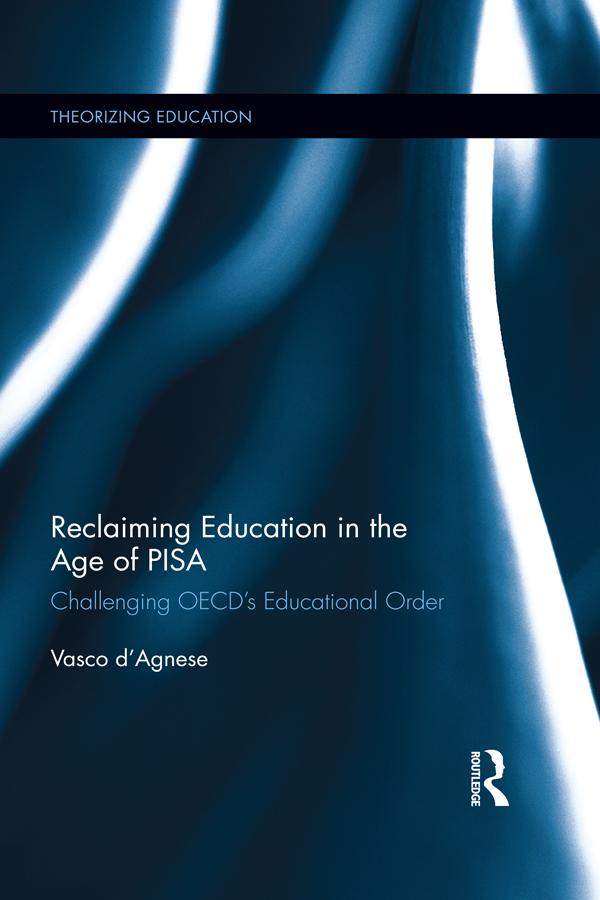
Reclaiming Education in the Age of PISA provides a critical analysis of the OECD’s educational agenda and its main tool, namely, PISA (Programme for International Student Assessment). Based on an analysis of the OECD’s public documents, including publications, webpages, and videos, d’Agnese argues that PISA is not just an assessment tool, but rather an all-encompassing framework that intends to govern education, schooling, living and society worldwide. This creation of what d’Agnese calls a life-brand raises concerns that education and learning are becoming wares and that, consequently, we run the risk of transforming schools into providers and teachers into agents of preconceived learning packages.
In pursuing only one concept of education, and a very narrow one at that, d’Agnese argues that OECD not only narrows down education to a mere reproductive process, but that such an approach also erases the basic rules by which living develops and evolves. In this sense PISA is but another form of authoritarian teaching, authoritarian teaching being understood as any and every educational project which sets aims and purposes of education without giving the possibility to discuss and challenge such aims and purposes.
Reclaiming Education in the Age of PISA suggests a different educational logic, emphasizing that schooling is not just a place to produce the correct skills, but is also a matter of experimentation, hesitation and wait, one in which teachers and students attempt to dwell in pure potentiality for growth.
Providing a strong argument that a different way to conceive of schooling deserves our attention, this book will be essential reading for academics, researchers and postgraduates in the fields of educational philosophy and theory, inclusive education and social justice. It should also be of interest to policymakers and educational activists.
Vor Memmo waren meine Notizen überall in PDFs verstreut. Jetzt sammelt ein Arbeitsbereich alles an einem Ort – ich sehe genau, was noch zu lernen ist.
Memmos Zusammenfassungen sind Gold wert vor Prüfungen. Ich muss nicht zwei Wochen vorher 800 Seiten neu lesen – nur die wichtigsten Teile.
Der KI-Chat hat mich schon mehr als einmal am Abend vor einer Prüfung gerettet. Ich frage einfach so lange, bis ich es kapiere – ohne auf eine Antwort in einer Lerngruppe warten zu müssen.
Die Quizzes treffen genau das, was ich wissen muss. Memmo merkt sich, wo ich Schwierigkeiten habe – so übe ich nur das, was sich lohnt.
Lernkarten mit Spaced Repetition sind Magie. Memmo weiß, wann ich etwas vergessen könnte und zeigt es mir wieder.
Die KI-Podcasts sind mein Favorit. Ich höre sie auf dem Weg zur Uni und bekomme eine Wiederholung, ohne am Computer sitzen zu müssen.

Handbok i kvalitativa metoder
281 kr

Hållbar utveckling: en introduktion för ingenjörer och andra problemlösare
334 kr

Brymans Samhällsvetenskapliga metoder
390 kr

Projektledning
491 kr

Den orättvisa hälsan: om socioekonomiska skillnader i hälsa och livslängd
326 kr

Organizational Leadership
429 kr

Vetenskapsteori för nybörjare
196 kr

På väg mot läraryrket
172 kr

Det sociala livet i skolan: Socialpsykologiska perspektiv
253 kr

Betygsättningens didaktik
151 kr

Personality
402 kr

Studying Leadership
404 kr

Managing Innovation
477 kr

Introduktion till samhällsvetenskaplig metod
347 kr

The Psychology of Sex and Gender
698 kr

Introduction to Leadership
605 kr

Evidens och kunskap för socialt arbete
207 kr